



SuaLab Releases Deep Learning Machine Vision Software "SuaKit 2.3"
 Published2019.09.02 11:01
| A complete overhaul of the One Class Learning feature
| Up to 5 projects can be carried out simultaneously
Sua Lab announced on the 2nd that it has released 'Sua Kit 2.3', an upgraded version of 'Sua Kit 2.2' released in November 2018.
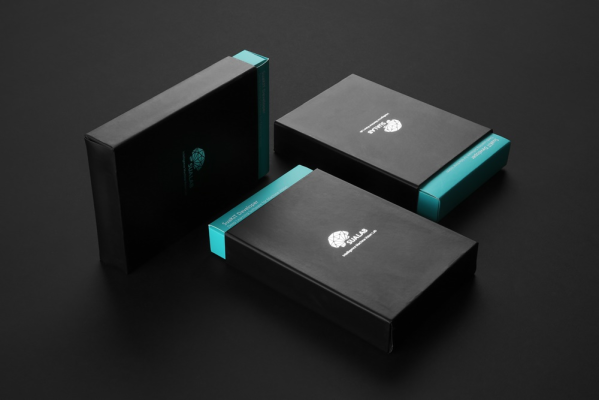
SuaKIT is a deep learning-based machine vision defect inspection software that can detect atypical and irregular defects that could not be detected with conventional machine vision inspection through deep learning. It can be applied to product inspection in various industries, including the electrical and electronic industries such as displays, semiconductors, and solar power, as well as the automotive and food and beverage industries.
Since the first release of 'SuaKit 1.0' in June 2017, SuaLab has continuously updated its products with a focus on solving various variables and difficulties that occur in actual manufacturing vision inspection sites, such as image comparison and the Visual Debugger, a function that shows the area that serves as the basis for judgment in an image that has been judged to be defective.
In SuaKit 2.3, the 'Label Noise Detection' function has been newly added, the 'One Class Learning' function has been completely revamped, and user-friendly features have been increased.
The label noise detection feature identifies which types of images are unclear during training with the provided data and which types of additional data are needed to improve the performance of the deep learning network. This feature not only saves time during image label review but also improves detection performance.
The One-Class Learning feature has been enhanced. In cases where collecting defective images for product defect detection is difficult or time-consuming, training is now performed using only normal images, enabling the system to distinguish between normal and abnormal images. Additionally, unlike the typical learning method where labeling is done directly by humans, applying this function can reduce labeling costs by utilizing the defective location detection function.
In addition, it supports the 'Multi Project' function that allows up to 5 projects to be carried out simultaneously, and the 'Task Manager' function that automatically manages GPU resources to optimize the productivity of concurrent tasks. It has additionally equipped various functions to increase the convenience of machine vision engineers and general users who actually use the tool, such as the 'Image Tag' function that allows for detailed classification of defect detection, and the 'Memo' function that allows for easy recording of detection contents during product inspection.
“With the advent of the Fourth Industrial Revolution, one of the biggest challenges facing Korean manufacturing companies is leveraging AI technology to improve productivity,” said Song Ki-young, CEO of Suarab. “We will continue to develop products with more convenient features from the user’s perspective and showcase the best technology.”
Meanwhile, Suarlab will participate in the '2019 Busan International Smart Factory Conference & Expo' held in Busan from September 18th to 20th and hold an exhibition and demonstration of Suarlab 2.3.
Comments
Related news
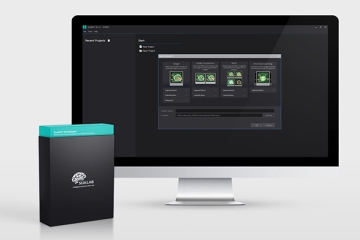
Suaralab Demonstrates Machine Vision Defect Inspection SW "Suakit" at 'Smart Factory & Automation Industry Exhibition 2019'
Sualab will participate in the Smart Factory & Automation Industry Exhibition 2019 being held for three days at Seoul COEX. At this exhibition, Sualab will not only display its flagship product SuaKit but also introduce the product in greater detail to visitors through demonstration equipment and videos. SuaKit is a deep learning-based machine vision defect inspection software that can detect irregular and unpredictable defects using deep learning, which could not be detected by conventional machine vision inspection. It is applicable to product inspection across diverse industrial sectors ranging from electrical and electronic industries such as display, semiconductor, and solar power to automotive and food and beverage industries.
2019.03.25by 이수민 기자
"Deep Learning Acceleration on Laptops" Intel Unveils 10th Generation 'Ice Lake' Core Processor
Intel has launched eleven 10th generation Intel Core processors. Intel's new processors, designed to implement large-scale high-performance AI on PCs, feature Intel Iris Plus Graphics for entertainment performance. They also support Wi-Fi 6 and up to four Thunderbolt 3 ports. Most PC OEMs plan to showcase systems utilizing Intel's new processors by year-end. The 10th generation Intel Core processors are designed to enable AI functionality on notebooks and 2-in-1 devices. Intel Deep Learning Boost is a new dedicated instruction set that accelerates neural networks on the CPU, maximizing responsiveness in scenarios such as automatic image enhancement, photo indexing, and photorealistic effects.
2019.08.03by 이수민 기자
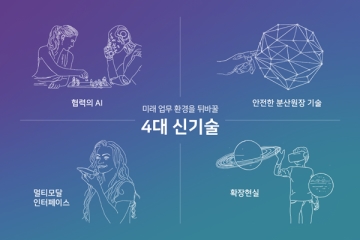
Human-Machine Partnership: Transforming the 2030 Corporate Landscape
Dell Technologies has released the Future of Work report. The report presents a vision of the future shaped by emerging technologies that will strengthen "partnership between humans and machines," such as AI and deep learning technologies, along with accompanying social dilemmas. The report forecasts that cooperation between humans and machines, led by AI, will rapidly expand across all industry sectors in the coming years and will have a substantial impact on the work environment of future workers. In fact, the World Economic Forum compared the labor hours of people and machines in its Future of Jobs report. As a result, it projected that machine labor hours will surge from 29% in 2018 to 42% in 2022 out of total working hours.
2019.08.20by 이수민 기자

[e4ds Tech Day 2026 ⑨] Sim Sang-gyu, Autocrypt CTO: "In the Physical AI Era, Automotive Security Must Extend Beyond the Vehicle"
At e4ds Tech Day 2026, Sim Sang-gyu, CTO of Autocrypt, explained automotive cybersecurity strategies in the era of Physical AI and SDV (Software-Defined Vehicle). Automobiles are evolving as part of an ecosystem connected to AI, cloud, chargers, IoT, and robots, and he emphasized that the scope of security must expand beyond the vehicle interior to the entire connected environment. In particular, AI model tampering, adversarial attacks, OTA updates, and EV charger hacking were identified as major threats. He explained that response measures require zero trust, AI model integrity protection, intrusion detection, Security by Design and Default, and full lifecycle security management, and that proactive security system establishment beyond regulatory compliance is critical for securing future mobility competitiveness.
2026.10.12by 배종인 기자
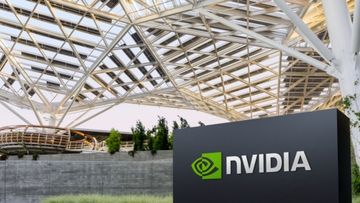
NVIDIA to Invest $1 Billion in U.S. Science Over Next Five Years
NVIDIA has announced plans to invest $1 billion over the next five years to strengthen U.S. scientific and technological competitiveness. The company will enhance cutting-edge artificial intelligence research and development capabilities in key areas including quantum computing, healthcare, and energy security, while expanding support for higher education research institutions and cloud service providers. NVIDIA is participating as a major industry partner in the White House Office of Science and Technology Policy's Genesis Mission, and is promoting supercomputer construction in collaboration with national laboratories including Argonne and Los Alamos.
2026.10.12by 배종인 기자











