



Technology needed for autonomous vehicles, transparent window display
 Published2019.10.30 23:12
Today, drivers communicate their intentions to other drivers and pedestrians in various ways, such as turning on turn signals or using hand gestures. But what happens when there is no longer a driver in the driver's seat?
In this automotive feature, we cover TI's innovative transparent window display technology for the coming era of autonomous vehicles in the DLP auto display division
Contributed by: Jason Thompson, Manager, TI DLP Auto Display Division
The advent of autonomous vehicles is not far away. The signals used to convey vehicle information need to be expanded to enable more effective communication between vehicles and road users.
In particular, unmanned vehicles need more effective methods to convey vehicle information and driver intent, and display technology can become an important interface connecting the vehicle and its surroundings.
Today's automobiles are equipped with many types of displays. However, few of them are designed to communicate with the vehicle's surrounding environment. Transparent window display technology can be a solution.
Transparent window display technology helps pedestrians, cyclists, and drivers on the road understand the intentions of autonomous vehicles. There are several compelling reasons to expand deployment of vehicles equipped with transparent window display technology.
Signals visible from anywhere
Traffic signals have a long history, beginning with hand gestures and wooden signs. As cities grew, more cars, buses, pedestrians, and cyclists appeared on the roads.
Traffic lights for communication and control between road users also spread. But how do drivers communicate with each other or between drivers and pedestrians?
For nearly a century, automobiles have evolved from hand signals to light-based signals. Turn indicators are an example of the language drivers use today. Everyone understands a driver's intention when a turn signal flashes.
Until now, drivers had to manually activate turn signals to indicate their intentions. However, modern vehicles are equipped with sensors that support advanced driver assistance systems (ADAS), which automatically display signals to indicate the driver's intentions.
Now drivers no longer need to manually operate the signals. However, despite these advanced features, there are cases where pedestrians standing at a crosswalk require analog-style communication, such as making eye contact and waving—a capability autonomous vehicles cannot provide.
Autonomous vehicles and autonomous public transportation vehicles need to enhance the vehicle's exterior to display signals. For example, using a digital display, although an unmanned vehicle cannot speak, it can clearly communicate "go ahead" to pedestrians.
However, installing multiple external signaling devices on an ordinary vehicle not only takes up external space on the vehicle but also requires more wiring for design, increasing complexity.
Fortunately, vehicles already have several windows suitable for displaying signals. The combination of vehicle-certified projection display technology and new transparent films has made it possible to use existing vehicle windows for various forms of communication.
The new display shows the driver's intentions directly on the transparent window, allowing road users to communicate with unmanned vehicles and use them safely.
Transparent window display technology
Vehicle-certified transparent display solutions use the window surface to display detailed images and text, such as pedestrian crossing signals, visible to other drivers and pedestrians. It has significant potential to solve the communication challenges faced by unmanned vehicles.
By installing a compact vehicle-grade projector, information is displayed on the side, rear, or front window of the vehicle (see Figure 1). A transparent film layer embedded between multiple window panes enables information to be displayed on the transparent window.
.jpg)
Figure 1: Projector-based transparent window display configuration diagram
Projector-based technology is already being used to enhance the driving experience. A prime example is augmented reality (AR) head-up display (HUD), which displays information on a vehicle's windshield. It can provide necessary information without distracting the driver while driving.
This light-based technology converts existing vehicle windows into displays when needed and provides transparent windows as usual when not needed. Vehicles can maintain their aesthetic appeal while the display device does not need to run continuously, resulting in very low power consumption.
Outlook
Transparent window displays are most likely to be applied in simple forms, enhancing signal transmission for information sharing between drivers or pedestrians. However, much more is possible.
Even before autonomous vehicles become widespread, transparent window displays could augment today's signaling technology and hand gestures to provide information.
Taxi services are likely to be early adopters of transparent window displays. Transparent window displays are a sure way to notify passengers that their called taxi has arrived.
Buses can also share information with other vehicles on the road and with passengers at bus stops or on the bus, such as information about the next stop or a stop signal lit on the rear window. Additionally, transparent window displays can serve as an important communication channel for weather warnings and other emergency situations.
Beyond displaying intentions and signals, both buses and taxis can use windows as a medium. They can display dynamic advertising that changes more easily than static displays. These next-generation advertising displays can be easily programmed.
Moreover, by using the vehicle's GPS data to deliver more sophisticated advertising to people in specific areas, revenue generation can be increased, providing significant benefits to new ride-sharing vehicles as well.
Advertising can also be provided to people riding in vehicles. Taxis, as well as hotels and airport shuttle buses, can provide travel information and infotainment, generating additional revenue streams.
In the not-too-distant future, robot taxis and autonomous public transportation are expected to become a reality. Once unmanned vehicles begin operating on roads, the language of communication needs to be expanded so that intentions can be effectively conveyed between drivers, pedestrians, and cyclists to maintain optimal traffic flow and safety.
Transparent window displays extend today's automobiles and provide a reliable and harmonious way for future vehicles to convey intentions even without a driver.
Comments
Related news
TI Implements High-Performance DLP Displays with Low-Cost Processors
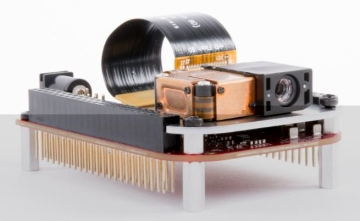
Texas Instruments (TI) has opened the way for developers to implement high-performance DLP displays using low-cost processors. TI's new 0.2-inch DLP2000 chipset and the $99 DLP LightCrafter Display 2000 evaluation module (EVM) enable DLP technology to be applied at reasonable cost, allowing development of on-demand and free-form display applications such as mobile smart TVs, pico projectors, digital signage, projection display solutions for smart homes/smartphones/tablets, and display solutions for control panels/IoT.
2017.08.03by 김지혜 기자
TI DLP technology applied to automotive HUDs expands commercial product offerings.
Texas Instruments (TI) has introduced DLP (Digital Light Processing) technology, which has expanded its application range from lighting control switches to automotive solutions through high resolution and brightness, fast implementation speed, compact size, and cost-effectiveness. DLP technology implements high-precision image display using a DMD (Digital Micromirror Device) chip. The chip features countless microscopic mirrors arranged on the surface of the display device, with each mirror corresponding to one pixel. Unlike conventional cathode ray tubes, liquid crystal, and plasma methods, the reflective approach eliminates color fringing and image distortion caused by magnetic effects, accurately reproducing the original image. TI first launched an ultra-portable projector using DLP technology in 1996 and introduced DLP Cinema technology to theaters in 2011. With the launch of a DLP development kit in 2012, the company expanded the market and has since broadened its application areas from display solutions including pico solutions and HUD to industrial, sensing, and automotive applications.
2017.08.22by 김지혜 기자
TI Unveils DLP Technology for Automotive Headlight Systems
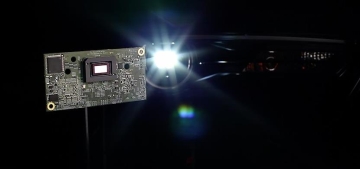
TI showcased advanced DLP technology for high-resolution headlight systems at CES 2018. The new DLP chipset is the only product in the industry capable of implementing all types of beam images at the highest resolution. The resolution has improved more than 10,000 times compared to conventional adaptive driving beam (ADB) technology, enabling implementation of over 1 million pixels per headlight.
2018.01.10by 김지혜 기자
.jpg)
Designing Smaller Display Applications with DLP Pico
Texas Instruments' new DLP Pico 0.23-inch chipset enables the design of HD high-resolution displays for portable devices while reducing size and power consumption. With the DLP Pico 0.23-inch chipset, developers can create various next-generation portable displays such as smart home displays, pico projectors, smart speaker displays, and AR and VR wearable device displays. The DLP Pico 0.23-inch product family includes the currently smallest HD display chipset, making it possible to design ultra-low-power pico projectors that fit in a shirt pocket. Brightness efficiency supports 20-inch to 40-inch displays (up to 200 lumens), and the form factor is less than 78mm x 78mm x 15mm (at 100 lumens).
2018.11.25by 이수민 기자
QNX, "SDV Development Complexity Reaches Limit, AI is a Tool to Enhance Developer Capabilities, Not Replace Them"
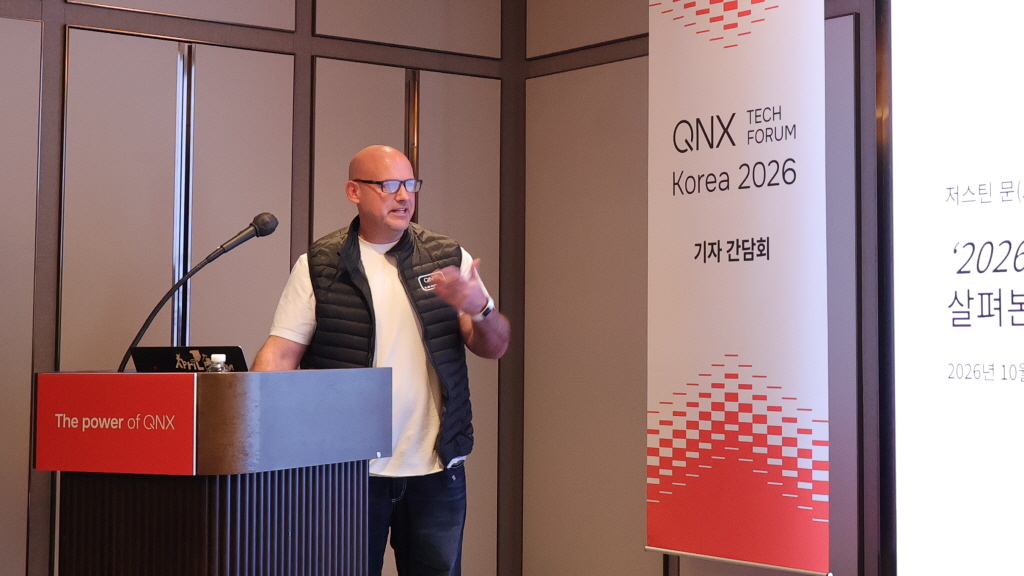
QNX has diagnosed that software-defined vehicle (SDV) development has reached a critical level of complexity due to increased vehicle software, strengthened security and safety regulations. AI is not intended to replace developers but rather to enhance productivity by supporting repetitive tasks such as documentation, requirements management, and verification, the company emphasized. Additionally, QNX stressed that a "Human in the Loop" structure where humans make final judgments is essential even when utilizing artificial intelligence. QNX Vice President Justin Moon explained that the company will expand its business beyond automobiles into physical AI fields including robotics, smart factories, and defense. QNX plans to leverage open-source ecosystems such as Eclipse SDV, position microkernel-based security and safety certification capabilities as key strengths, and expand industry-academia cooperation in the Korean market
2026.10.22by 배종인 기자











