

.png)

ETRI Develops DetNet Technology to Prevent Data Loss and Maintain Latency Even During Traffic Surges
 Published2019.12.10 12:03
Developed in a form applicable to high-capacity transmission network systems
Performance proven in KOREN interoperability test between Seoul and Daejeon
Domestic researchers have developed a technology that prevents increased latency and data loss even when traffic surges on a communication network. This is expected to aid in the construction of 5G ultra-low latency network infrastructure.
.jpg)
The Korea Electronics and Telecommunications Research Institute (ETRI) announced on the 10th that it has successfully tested 'Deterministic Networking (DetNet) technology' on the Korea Research Network for Future Networks (KOREN).
By utilizing this technology, data transmission time between devices connected remotely over a network can be minimized and predicted, and precise control is possible without data loss. As a result, it is expected to be widely utilized in industrial fields such as remote control, telemedicine, smart factories, and drone control, as well as in ultra-realistic services such as remote VR and holographic communication.
ETRI, together with the National Information Society Agency (NIA), succeeded in demonstrating gigabit (Gbps) data transmission between nodes connecting optical transmission systems over a round trip of 430 km between Daejeon and Seoul for two weeks starting in late October.
The packet equipment currently comprising the Internet cannot predict how much delay will occur during traffic transmission if interference arises. If a network failure occurs, information being transmitted is lost during the recovery process. Even after recovery, additional tasks, such as resending information, are required, resulting in a decline in service quality.
The technology developed by ETRI features a fixed maximum latency even in situations of traffic overload. Data can be transmitted with a latency of no more than one hundred thousandth of a second per node at the latest. Even if a network failure occurs during transmission, there is no data loss, fundamentally preventing additional delays or the loss of critical information.
The research team improved existing technology, which was limited to local area networks (LANs), to enable communication over a wider range, including nationwide corporate networks. Currently, this technology is undergoing standardization by the Internet International Standardization Organization (IETF).
Jeong Tae-sik, Head of the Ultra-Low Latency Network Research Lab at ETRI, stated, “By securing core technologies for ultra-low latency and lossless packet delivery—key technologies for next-generation networking—at an early stage, we have created an opportunity to lead the co-growth of convergence industries as well as generate economic benefits.”
This technology is significant in that it successfully tested not only the DetNet research prototype developed by ETRI through joint research with SK Telecom and SMEs such as Cowiver and Woorinet, but also the Time Sensitive Networking (TSN) switches from the SMEs.
Moving forward, the research team plans to reduce latency per node to 4 millionths of a second, improving latency performance by 2.5 times compared to the current level, and further enhance the system to ensure no loss even in the event of multiple failures. In addition, they intend to increase transmission time from the existing 1 Gigabit class to 10 Gigabits (Gbps) or higher. Furthermore, while developing core technologies for ultra-low latency and lossless networking and pursuing international standardization of time-deterministic high-reliability network technologies, they also plan to transfer these technologies to domestic transmission companies.
관련뉴스
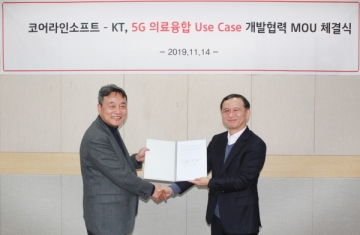
KT Applyes AI to 5G-Based Medical Imaging… Increased Safety and Speed
KT가 5G 기반 의료영상 솔루션에 AI기술을 적용하는 의료융합 서비스 제공을 위해 코어라인소프트와 유스케이스 발굴 MOU를 체결했다. 협약에 따라 초처지연 5G 기반 의료용 3D VR 수술가이드 개발, 의료용 3D 영상 협업솔루션 고도화, 5G 플랫폼 기반 의료산업 협업 생태계 구축, 5G 의료영상 콘텐츠 개발 및 확보 등을 추진한다.
2019.11.17by 최인영 기자
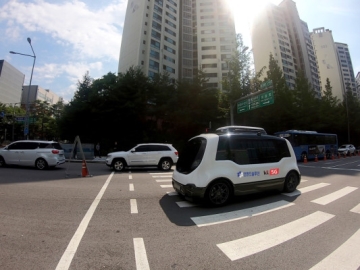
레벨 4 자율주행 실현되나? KT, 세종시 5G 자율협력주행 실증사업 참여
KT가 운전자 없는 자율주행 레벨 4 실현을 위해 언맨드솔루션과 세종시 시민친화형 도심공원 자율주행 서비스 실증사업에 참여한다. 5G 기반 V2X 자율주행을 포함해 다이내믹맵, 클라우드 형태 자율주행 통합관제플랫폼 등을 구축한다.
2019.11.26by 최인영 기자
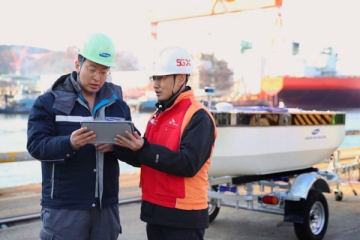
SKT-삼성重, 5G 기반 모형선박 시험 운항 성공
SK텔레콤과 삼성중공업이 거제조선소 인근 해역에서 5G 기반 원격관제가 가능한 모형선박 시험 운항에 성공했다. 이번에 실시한 운항 테스트는 삼성중공업 거제조선소에 구축한 5G망을 이용해 조선조 인근 해상으로부터 약 250km 떨어진 대전 원격제어센터에서 동시에 이뤄졌다.
2019.12.10by 이수민 기자
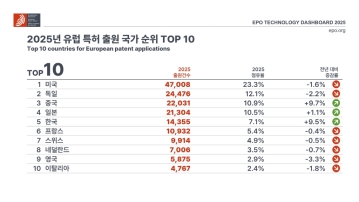
European Patent Applications Surpass 200,000 for the First Time… South Korea Maintains 5th Place, Led by Batteries and Telecommunications
유럽특허청(EPO)의 ‘기술 대시보드 2025’에 따르면 지난해 유럽 특허 출원은 20만1974건으로 처음 20만건을 넘었다. 한국 기업과 발명가의 출원은 1만4355건으로 전년보다 9.5% 증가해 국가별 5위를 유지했다. 배터리와 디지털 통신, 반도체가 증가세를 이끌었고, 삼성은 2년 연속 EPO 최대 출원 기업, LG는 3위에 올랐다. 서울·수원·용인 등 국내 주요 도시의 존재감도 확인됐다. 한국의 유럽 특허 전략이 개별 기술을 넘어 산업 전반으로 확장되고 있다는 점도 드러났다.
2026.03.24by 명세환 기자
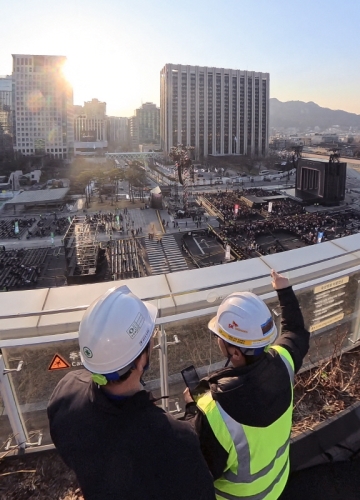
SK Telecom First Applies AI-Based Network Operations at Gwanghwamun K-Pop Concert
SK텔레콤이 3월 21일 서울 광화문 일대에서 열린 대형 K-팝 공연에 AI 기반 네트워크 운영 시스템을 처음 적용해 통신 품질을 관리했다고 밝혔다. 공연 전후 3시간 동안 모바일 데이터 사용량은 12.15TB로 직전 주말 같은 시간대보다 약 2배 늘었다. SK텔레콤은 AI 시스템 ‘A-One’을 활용해 5분 단위, 50m 단위로 트래픽을 감시하며 과부하 가능성에 대응했고, 임시 통신 시설과 현장 인력 운영도 병행했다. 밀집 행사와 외국인 이용 수요가 동시에 늘어나는 환경에서 AI 기반 자율 네트워크 운영의 현장 적용 가능성을 확인한 사례로 해석된다.
2026.03.23by 명세환 기자











