



Altera Announces 20nm Technology Innovation
 Published2012.09.06 20:19
The innovations in Altera's 20nm mixed-system fabric include 40Gbps transceiver technology, next-generation variable precision digital signal processing (DSP) block architecture delivering over 5 TFLOPs of IEEE 754 floating-point performance, and heterogeneous 3D ICs integrating FPGAs with custom HardCopy® ASICs or other diverse technologies (including memory, third-party ASICs, and optical interfaces via innovative high-speed interconnects). Altera is the only company in the industry capable of integrating FPGAs and ASICs into a single device.
The 20nm mixed-system fabric also delivers continuous innovation in power management through adaptive voltage scaling, Programmable Power Technology, and optimized process technology. As a result, Altera can reduce device power consumption by up to 60 percent compared to previous-generation devices.
For designers developing heterogeneous 20nm systems, Altera supports a comprehensive high-level design environment that includes system-level design tools (Qsys), C-based design tools (OpenCL™), and DSP development software (DSP Builder). Altera continues to focus on design engineer productivity and is enhancing development tools to achieve the industry's fastest compile times at 20nm.
Bradley Howe, Senior Vice President of Research and Development at Altera, stated: "Designers of next-generation communications, networking, broadcast, and computing applications increasingly face the challenge of meeting demands for higher bandwidth, higher performance, and lower power. The innovations we are introducing at 20nm enable the development of a highly efficient and flexible mixed-system fabric that delivers the highest-performance dedicated circuits using advanced 20nm FPGA process technology. As a result, we can provide devices that support the industry's lowest power consumption with the highest level of IC integration, performance, and bandwidth."
Altera's next-generation devices utilize TSMC's 20nm process technology and will deliver the industry's highest level of system integration, including hard ARM® processor subsystems. The 20nm SoC FPGA enables software portability from 28nm to 20nm and delivers a 50 percent improvement in processor subsystem performance.
Key innovations at 20nm are as follows:
• High Serial Bandwidth: 40Gbps Chip-to-Chip and 28Gbps Backplane Transceivers
Innovations in transceiver technology at 20nm provide the industry's highest serial bandwidth, enabling transition to 100G backplanes and 400G systems. The 20nm device includes both 28Gbps transceivers to drive CEI-25G-LR Ethernet 4x25G backplanes and 40Gbps transceivers designed to interface with chip-to-chip or chip-to-optical modules. The transceiver technology innovations Altera is applying at 20nm provide the foundation to develop CEI-56G-compliant transceivers that deliver connectivity enabling next-generation 400G optical networks, 400G line cards, and beyond.
• Heterogeneous 3D IC with High-Speed Chip-to-Chip Interfaces
At 20nm, Altera introduces innovative high-speed chip-to-chip interfaces that can integrate multiple dies into 3D packages. By introducing this innovative interface, Altera can deliver customer-tailored heterogeneous 3D systems combining FPGAs with custom HardCopy ASICs or diverse other technologies (such as memory, third-party ASICs, and optical interfaces). By integrating FPGAs with HardCopy ASICs or third-party ASICs, Altera can deliver a single-device solution achieving over 10 times higher system integration levels compared to 28nm products. Altera's heterogeneous 3D ICs are manufactured using TSMC's CoWoS (chip-on-wafer-on-substrate) process. These devices enable developers to significantly enhance system integration, system performance, and product differentiation while simultaneously reducing system power, board space, and cost.
• Superior DSP Performance and TFLOPs/Watt
With 20nm devices, Altera sets a new benchmark for TFLOPs. Enhancements with next-generation variable precision DSP blocks enable achievement of over 5 TFLOPs of IEEE 754 floating-point performance. At this performance level, Altera's 20nm devices deliver over 5 times superior TFLOPs per watt compared to competing FPGAs. Altera's 20nm devices provide the ultimate heterogeneous computing platform by combining the productivity advantages of OpenCL C-based design flows, ARM hard processor subsystems, and superior silicon efficiency of TFLOPs per watt.
Altera is collaborating with customers to develop 20nm products and is discussing product roadmaps. More detailed information on Altera's 20nm products can be found at www.altera.com/20nm. A white paper on Altera's 20nm innovations can be found at www.altera.com/20nm_innovations. For new information on Altera's 20nm products or the benefits of using Altera solutions in next-generation systems, please contact Altera's sales representative (Axios(Uniquest) 031-776-9888).

Related news
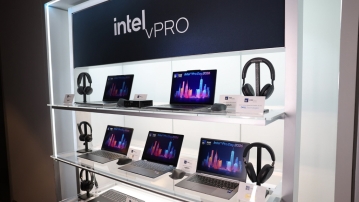
Intel Unveils Next-Generation 'Core Ultra Series 3' and vPro Platform for Enterprise PCs
Intel has officially unveiled the "Intel Core Ultra Series 3" for next-generation enterprise PCs and the latest vPro platform, addressing a wide range of demands from enterprise notebooks to high-performance workstations.
2026.03.26by 배종인 기자
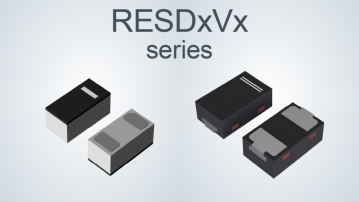
ROHM Launches ESD Protection Diode Compatible with High-Speed Interfaces of 10Gbps or Higher
Semiconductor specialist ROHM has developed the 'RESDxVx series' of ESD (electrostatic discharge) protection diodes capable of responding to next-generation high-speed data communication environments exceeding 10Gbps, simultaneously enhancing both signal quality maintenance required in high-speed interfaces and IC protection performance.
2026.03.26by 배종인 기자
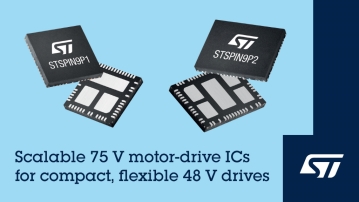
ST Launches 75V Drive IC Targeting 48V Industrial Motor Driving
ST Microelectronics has unveiled the 'STSPIN9P' series of 75V motor drive ICs tailored for 48V-class industrial drive system design. The new product family is characterized by half-bridge and full-bridge configurations that enable design scalability according to motor type and output conditions. Power supply circuits, protection functions, and current sensing circuits are integrated on-chip to simplify system configuration, and the devices are designed to support applications up to 500W maximum. The company plans to provide reference designs and demo boards to support development and evaluation in industrial automation, robotics, pumps, fans, lighting, and textile machinery.
2026.03.26by 배종인 기자

Nordic supports security updates for the entire lifecycle of IoT devices at a single fixed cost
Nordic Semiconductor, a global leader in low-power wireless connectivity solutions, has unveiled a single fixed-cost licensing model that delivers FOTA (Firmware Over-the-Air) and device management capabilities throughout the device lifecycle via nRF Cloud, and introduced a new firmware update solution to prepare for the enforcement of the European Union's Cyber Resilience Act (CRA).
2026.03.26by 배종인 기자

Practical Training in Low-Noise, Low-Power Circuit Design All in One Place… Training Fee Support
The "2026 Advanced Engineer Practical Masterclass" to strengthen competencies in high-sensitivity analog circuit and sensor-based system design will be held on April 16 at the e4ds Conference Center in Gasan-dong, Seoul. This program will be conducted as an offline paid hands-on training session, not online, and is targeted at engineers seeking on-site intensive learning. Texas Instruments will provide educational support for this training, allowing participation at 150,000 won, a 100,000 won discount from the original price of 250,000 won.
2026.03.26by 배종인 기자











