



Investing 1 trillion won over 10 years in the development of next-generation intelligent semiconductors
 Published2020.01.20 16:27
Fostering SoC design technology for automobiles, high-tech home appliances, bio, energy, robotics, etc.
The government has joined forces to respond to the changing semiconductor market in the era of the Fourth Industrial Revolution and to change the unbalanced industrial structure centered on memory.
The Ministry of Science and ICT and the Ministry of Trade, Industry and Energy will invest 1 trillion won over 10 years with the goal of securing core and source technologies for next-generation intelligent semiconductors. This is the first time in the last five years that an R&D project subject to a preliminary feasibility study has exceeded 1 trillion won.
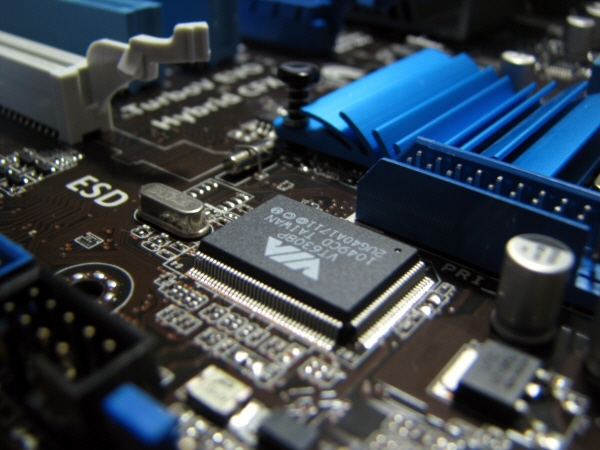
The Ministry of Science and ICT and the Ministry of Trade, Industry and Energy will invest 1 trillion won in the development of intelligent semiconductors over 10 years.
On January 20, the Ministry of Science and ICT and the Ministry of Trade, Industry and Energy announced plans to implement projects for the development of world-class next-generation intelligent semiconductor technologies, including artificial intelligence semiconductors, advanced semiconductors for key industries, new low-power and high-performance devices, and atomic-level microfabrication technology.
The Ministry of Science and ICT is pursuing the development of future devices to reduce power consumption and achieve high performance (42.4 billion KRW in 2020), and the Ministry of Trade, Industry and Energy is pursuing the development of atomic-level process and equipment technologies to overcome miniaturization limitations (46.7 billion KRW in 2020), and they are jointly responding to the development of design technologies to improve computational speed.
With a total of 89.1 billion won to be invested in 2020 and 1 trillion won over the next 10 years, technologies covering the entire cycle, including devices, design, equipment, and processes, will be developed. The final projects were selected through a project planning committee involving external experts from various fields and a technology demand survey involving industry, academia, and research institutes.
Development of artificial intelligence semiconductor design technology
We develop platform technology that integrates AI processors (NPU, etc.), ultra-high-speed interfaces, and software (compilers, etc.), taking into account the product completeness and reliability of AI semiconductors.
Developing platform technologies for server, mobile, and edge fields depending on the application, and leading the global market with innovative products such as AI processors (NPUs) featuring world-class computational performance and power efficiency.Secure the alcohol.
The developed platform technology supports the reduction of time and costs required for AI semiconductor development so that specialized design firms (fabless) and others can utilize it for product development and verification; to this end, a platform community involving industry, academia, and research institutes is operated.
Project implementing organizations are selected in a consortium format to strengthen connectivity between detailed tasks for each platform, and support is provided for the participation of fabless and IP specialized companies and talent development to enable the early establishment of an artificial intelligence semiconductor industry ecosystem.
Technology development in the field of new materials
The field of novel devices focuses on fostering areas capable of securing source IP, with the goal of developing new ultra-low power, high-performance devices to overcome the limitations of existing devices.
To this end, the Ministry of Science and ICT provides 11.5 billion won for the development of source technologies for new devices based on various principles, 4.5 billion won for the development of integration and verification technologies to link the early commercialization of developed technologies, and 1.4 billion won for challenging basic technologies based on creative ideas.
For source technologies for new devices, a competitive R&D approach is introduced, and the continuation of support is determined through phased evaluations. At the time the first phase of research, which is the fifth year of the project, is completed, device technologies capable of joint research with the design field will be intensively identified, and in the second phase, ultra-low power artificial intelligence semiconductors will be realized through full-scale device and design convergence research.
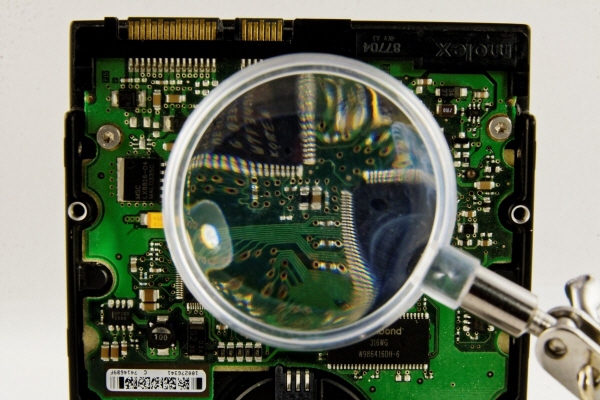
▲ The government supports the development of system semiconductor design technologies, such as automotive SoCs.
Development of next-generation semiconductor design technology
We develop system-on-a-chip (SoC) design technologies required by the market in conjunction with five strategic industries, including automobiles, high-tech home appliances, medical and bio, energy, and high-tech robots, as well as public demand.
We develop five core technologies applicable to various applications, including lightweight processors, storage, sensing, connectivity and security, and control and actuation.
Representative projects starting in 2020 include: a vehicle communication SoC with enhanced multi-signal processing and security functions for safe autonomous driving; an integrated display SoC for self-image enhancement and AR/VR; an electronic ankle monitor SoC for 5G-based crime prevention; and an SoC for detecting gas leaks in underground buried facilities.
At the time of project conclusion, it supports the strengthening of capabilities across the entire system semiconductor ecosystem, including world-class high-resolution display driver SoCs, ultra-high-speed data transmission SoCs, and ultra-long-range situational awareness SoCs.
Development of equipment and process technology for microfabrication
In the equipment and process sectors, process miniaturization, which is the core of semiconductor manufacturing competitiveness, We develop equipment and component technologies for microprocessing.
In 2020, the focus will be on ▲atomic-level deposition equipment and automated inspection technology for manufacturing next-generation memory and high-density system semiconductors ▲heat treatment and neutron-based software error detection technology for next-generation high-density packages.
By the time the project ends, it will support the strengthening of the overall competitiveness of the semiconductor industry by securing world-class semiconductor manufacturing process equipment for 10 nanometers or smaller and 3D packaging equipment technology.
To strengthen inter-sectoral linkage and cooperation and private-sector-led project execution for the next-generation intelligent semiconductor technology development project, a single project team will be established. By dividing roles across sectors ranging from project planning to evaluation and management, fairness, expertise, and efficiency will be enhanced.

▲ The government is focusing on the development of artificial intelligence semiconductors to leap beyond being a memory powerhouse into a comprehensive semiconductor powerhouse.
Minister of Science and ICT Choi Ki-young said, “Artificial intelligence semiconductors are a key element and battleground in the competition for global leadership in the AI era, but the industry is still in its early stages with no dominant player,” adding, “If we secure core technologies one step ahead, we can not only lead the global market but also develop world-class artificial intelligence semiconductors.”
Minister of Trade, Industry and Energy Sung Yun-mo stated, “System semiconductors are a core component of the Fourth Industrial Revolution and one of the three major new industries, along with future vehicles and biotechnology, that will be responsible for our future growth engines,” adding, “Based on our world-leading technological capabilities in the memory semiconductor field, the core of the next-generation semiconductor sector"By securing core technology, we will leap beyond being a memory powerhouse to become a comprehensive semiconductor powerhouse," they stated.
Comments
Related news

The ICT budget has been released. 72.2 billion won has been secured for high-tech startups and other projects.
The government has secured a budget for supporting high-tech startups by middle-aged and older entrepreneurs. It will provide 31.8 billion won to support technology startups for the Baby Boomer generation aged 40-50, who account for 66% of the startup market, and allocate a total of 15.4 billion won to emerging technology startup sectors such as artificial intelligence, big data, and Internet of Things. Additionally, support will be provided to the materials, components, and equipment sectors in response to Japan's export restrictions.
2019.08.19by 명세환 기자
"5G Bandwidth Will Double": Second Inter-Ministerial, Public-Private Joint 5G+ Strategy Committee Convened
The government held the second pan-governmental private-public joint 5G+ Strategy Committee meeting. At the second strategy committee meeting, agendas regarding private sector implementation results and plans, 5G trade insurance support strategy, 5G+ strategy 2020 implementation plan, and 5G+ spectrum plan were reported. Having laid the foundation for establishing a 5G ecosystem this year, the government will increase 5G-related budget by approximately 87% next year and pursue testbed expansion by 2.4 times, among other measures. Additionally, the government decided to double the 5G frequency bandwidth by 2026.
2019.12.06by 이수민 기자
Global semiconductor equipment sales this year down 10.5% from last year… Room for rebound in next year and the year after
Global semiconductor equipment sales in 2019 fell approximately 10.5% from the record high of $64.4 billion in 2018, recording $57.6 billion. Semiconductor equipment sales in 2020 are expected to reach $60.8 billion, representing approximately 5.5% growth compared to this year, and are projected to record an all-time high of $66.8 billion in 2021. This is because major semiconductor manufacturers are expected to expand capital investments in equipment for sub-10 nanometer process nodes for foundry and logic semiconductor production.
2019.12.11by 이수민 기자
Successful domestic production of 'high-purity hydrogen fluoride', one of Japan's three major export-regulated items
Solbrain has secured mass production capacity for 12 Nine ultra-high purity hydrogen fluoride. 12 Nine (99.9999999999%) refers to a state where impurities remain at one part per trillion. This is a purity level that can be supplied to semiconductor companies that require relatively higher purity compared to display manufacturers. Prior to Japan's export restrictions, domestic semiconductor and display companies primarily used Japanese-made ultra-high purity hydrogen fluoride. Subsequently, Solbrain expanded production volume by newly constructing and expanding related facilities, and as it began supplying a significant portion of domestic ultra-high purity hydrogen fluoride demand, domestic supply stability was secured.
2020.01.03by 이수민 기자

Global semiconductor sales in 2019 down 11.9% YoY
Global semiconductor sales in 2019 recorded $41.83 billion, representing an 11.9% decline year-over-year, with memory market downturn persisting. In 2020, semiconductor sales are expected to recover as semiconductor chip ASP rises. According to Gartner, memory market sales, which had accounted for 26.7% of semiconductor unit sales in 2019, declined by 31.5%, and DRAM sales dropped by 37.5% from 2018 to 2019 due to oversupply.
2020.01.15by 최인영 기자











