



"Power design chaos solved by adopting integrated modules."
 Published2021.03.30 18:12
Maxim, Himalaya uSLIC power modules and EE-Sim
Simplify power design with simulation tools
ICT development is rapidly progressing due to increasing demand for non-face-to-face services and automation.
Last year was the most prolific year since the discovery of electricity, with the largest number of electrically powered devices and equipment entering the market. This means that development and launch times for electronic products are shortening.
Power design is the foundation of electronic product design, but due to tight time constraints, power design used in existing products is often adopted as is.
The market is demanding smaller, higher-performance, and less-powerful electronic products every day. Existing power design theories cannot meet these market demands.
Since most of the ICs on the PCB operate on DC (direct current), the selection and placement of DC-DC power devices in particular directly affect the performance of electronic products.
Maxim Integrated's Himalaya uSLIC DC-DC power module family is designed to support high-efficiency, low-heat industrial power designs.
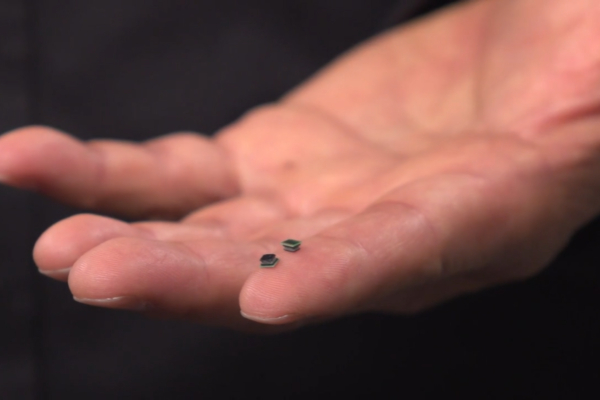
This is an ultra-small power module that integrates peripheral components. [Capture = Maxim]
This product family integrates components commonly found in DC-DC power devices while reducing size and power loss. Furthermore, it is supported by Maxim's EE-Sim design and simulation tool, enabling fast and accurate power supply design.
We asked Jepil Ryu, Director of Distributor Technical Support at Maxim Integrated Korea, about the latest power design issues, the Himalaya uSLIC DC-DC power module family, and how to leverage the EE-Sim design and simulation tool.
Q. Market demands for electronic products are becoming increasingly complex. What challenges do power design engineers currently face?
A. Today's power design engineers are struggling to improve the reliability of applications operating in harsh environments. However, form factors continue to shrink, and the challenge is to better address EMI and heat issues.
Q. As electronic products become smaller, PCB space is also shrinking. What support is Maxim providing to help engineers overcome this?
A. Maxim has long been releasing compact, efficient power ICs. In recent years, it has been releasing ultra-small power modules that integrate peripheral components into the power IC. Through these products, Maxim offers the advantage of simplifying power supply design.
Q. What is the Smart Compensation feature applied to Maxim's ultra-small integrated power modules, such as the Himalaya DC-DC power module ?
A. Maxim's integrated power modules don't simply integrate peripheral components; they also incorporate wideband internal compensation to improve output characteristics. This is called smart compensation.
Q. How are Maxim's ultra-small integrated power modules typically manufactured?
A. We manufacture the compensation circuit by packaging the inductor and FET elements verified and optimized for the latest synchronous buck converter IC in uSLIC.
Q. If you integrate the power IC and peripheral components, which are separate devices, into a single module, it seems likely that internal EMI issues will arise. How did you solve this?
A. We placed the uSLIC package to minimize the switching section and inductor connection section where large current changes occur, and adjusted each pin to be easily connected to the PCB to prevent EMI problems caused by the placement.
Q. What is the difference between Himalaya Power IC and Himalaya uSLIC power module?
A. Maxim's industrial power solutions are designed for rugged, high-efficiency, low-heat operation, and can withstand harsh environments like the Himalayas. The Himalaya uSLIC power module is an ultra-compact power module that integrates peripheral components such as an inductor into the Himalaya power IC. The uSLIC power module can be used in place of the power IC. Maxim provides application notes and videos on its website to help engineers smoothly navigate the unfamiliar soldering process of uSLIC packaging devices.
Q. What is the purpose and use of the EE-Sim design and simulation tool?
A. The EE-Sim tool is designed to improve the accuracy and speed of analog circuit simulation. It can simulate analog circuits in both steady-state and dynamic states. Furthermore, it enables online and offline simulations that are more than 10 times faster than existing SPICE simulation tools supported by Maxim.
Q. Beyond devices and tools, what additional services does Maxim offer to simplify power design?
A. As mentioned earlier, Maxim provides a variety of application notes and video guides for power design engineers to reference, and we work with customers on tasks such as circuit design and PCB layout to help accelerate power design.
Comments
Related news
.jpg)
Vicor Releases Radiation-Fault Tolerant DC/DC Converter Module
Vicor announced the launch of its first radiation-hardened DC-DC converter module fabricated in a new plated SM-ChiP package. The module can deliver up to 300W of power to low-voltage ASICs from a 100V nominal supply, and Boeing testing has demonstrated resilience to a total ionizing dose of 50Krad and immunity to single event upset.
2021.01.05by 이수민 기자
DC/DC Converter Design: Understanding Electrical Characteristics First
Most devices on a PCB operate on DC only, and each device has its own operating voltage range and different voltage accuracy requirements. DC/DC converters are necessary to prevent device malfunction and characteristic degradation. Power supply design engineers must be able to evaluate electrical characteristics of DC/DC converters such as load regulation, inductor current, output voltage, and power efficiency.
2021.02.24by 이수민 기자
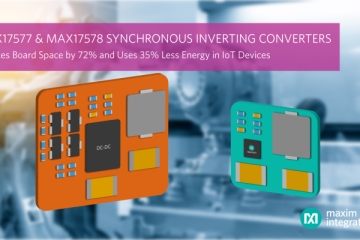
Maxim Unveils Two New DC-DC Step-Down Converters with Reduced Board Space
Maxim Integrated has launched the MAX17577 and MAX17578, synchronous inverting DC-DC step-down converters. The two new converters integrate level-shifting circuitry to reduce component cost and count by up to 50% compared to competing solutions, while reducing board space by 72%.
2021.03.23by 이수민 기자

Intel Unveils Next-Generation 'Core Ultra Series 3' and vPro Platform for Enterprise PCs
Intel has officially unveiled the "Intel Core Ultra Series 3" for next-generation enterprise PCs and the latest vPro platform, addressing a wide range of demands from enterprise notebooks to high-performance workstations.
2026.03.26by 배종인 기자
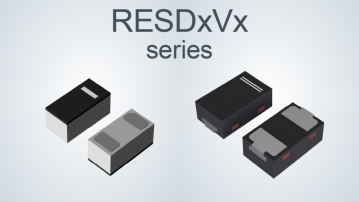
ROHM Launches ESD Protection Diode Compatible with High-Speed Interfaces of 10Gbps or Higher
Semiconductor specialist ROHM has developed the 'RESDxVx series' of ESD (electrostatic discharge) protection diodes capable of responding to next-generation high-speed data communication environments exceeding 10Gbps, simultaneously enhancing both signal quality maintenance required in high-speed interfaces and IC protection performance.
2026.03.26by 배종인 기자











