


Modules with Infineon's thermally conductive TIM paste well received in the market
 Published2013.05.24 20:47
May 9, 2013, Seoul – Infineon Technologies (Korea CEO Lee Seung-soo) has successfully launched products featuring TIM (thermal interface material) developed to reduce contact resistance between the metal surface of power semiconductors and heat sinks. Customers using the new EconoPACK™+ D series products are directly experiencing significantly improved conductivity with this thermal conductive paste. As customer demand increases, Infineon plans to rapidly expand the range of products incorporating TIM. In the first quarter of 2014, Infineon plans to supply 62mm EconoDUAL™ 3 and PrimePACK™ 2 product families with TIM. By the first half of 2014, TIM will be applied to EconoPACK™ 4, PrimePACK™ 3, and Econo 2 and 3 product families, while TIM material application to Easy 1B and 2B, Smart 2 and 3, and IHM/IHV series is scheduled for 2015.
To respond to steadily increasing demand, Infineon has established a production line for applying TIM to modules at its power semiconductor backend assembly site in Cegléd, Hungary. This thermal conductive material is applied to modules using a stencil printing process. By implementing a precise and quality-assured process, optimal bonding characteristics are achieved when joining the module and heat sink. Special technical processes and equipment have been developed for this manufacturing process.
Dr. Martin Schulz, Application Engineering Verification Manager at Infineon Technologies, stated, "The TIM material and the process Infineon has developed for applying this paste enable maximum effectiveness that was previously impossible to achieve. With power density continuously increasing, it is now possible to plan thermal prediction more accurately during the application design phase."
TIM (thermal interface material) significantly reduces contact resistance between the metal portion of power semiconductors and heat sinks. In the case of the new D series of EconoPACK™+, contact resistance between the module and heat sink has been reduced by approximately 20 percent. This optimized thermal transfer improves module lifespan and reliability. Since this material provides reliable and improved thermal contact resistance characteristics from the moment the module is first turned on, it does not require a separate burn-in cycle that is commonly used in many competing materials exhibiting phase change characteristics. TIM is silicon-free and electrically non-conductive.

Related news

Intel Unveils Next-Generation 'Core Ultra Series 3' and vPro Platform for Enterprise PCs
Intel has officially unveiled the "Intel Core Ultra Series 3" for next-generation enterprise PCs and the latest vPro platform, addressing a wide range of demands from enterprise notebooks to high-performance workstations.
2026.03.26by 배종인 기자
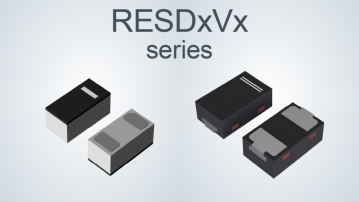
ROHM Launches ESD Protection Diode Compatible with High-Speed Interfaces of 10Gbps or Higher
Semiconductor specialist ROHM has developed the 'RESDxVx series' of ESD (electrostatic discharge) protection diodes capable of responding to next-generation high-speed data communication environments exceeding 10Gbps, simultaneously enhancing both signal quality maintenance required in high-speed interfaces and IC protection performance.
2026.03.26by 배종인 기자
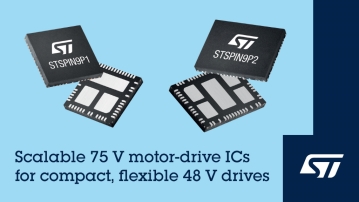
ST Launches 75V Drive IC Targeting 48V Industrial Motor Driving
ST Microelectronics has unveiled the 'STSPIN9P' series of 75V motor drive ICs tailored for 48V-class industrial drive system design. The new product family is characterized by half-bridge and full-bridge configurations that enable design scalability according to motor type and output conditions. Power supply circuits, protection functions, and current sensing circuits are integrated on-chip to simplify system configuration, and the devices are designed to support applications up to 500W maximum. The company plans to provide reference designs and demo boards to support development and evaluation in industrial automation, robotics, pumps, fans, lighting, and textile machinery.
2026.03.26by 배종인 기자

Nordic supports security updates for the entire lifecycle of IoT devices at a single fixed cost
Nordic Semiconductor, a global leader in low-power wireless connectivity solutions, has unveiled a single fixed-cost licensing model that delivers FOTA (Firmware Over-the-Air) and device management capabilities throughout the device lifecycle via nRF Cloud, and introduced a new firmware update solution to prepare for the enforcement of the European Union's Cyber Resilience Act (CRA).
2026.03.26by 배종인 기자
Practical Training in Low-Noise, Low-Power Circuit Design All in One Place… Training Fee Support
The "2026 Advanced Engineer Practical Masterclass" to strengthen competencies in high-sensitivity analog circuit and sensor-based system design will be held on April 16 at the e4ds Conference Center in Gasan-dong, Seoul. This program will be conducted as an offline paid hands-on training session, not online, and is targeted at engineers seeking on-site intensive learning. Texas Instruments will provide educational support for this training, allowing participation at 150,000 won, a 100,000 won discount from the original price of 250,000 won.
2026.03.26by 배종인 기자











