



“Competitiveness of Core Autonomous Driving and Mobility Components to Reach 100% by 2027”
 Published2022.10.04 12:15
.jpg)
Level 4 Commercialization by 2027, Preemptive Securing of New Component Technologies
The government is taking full action to strengthen the competitiveness of the automotive industry, including securing competitiveness in core components with the goal of commercializing fully autonomous driving by 2027 and innovating the supply chain to actively respond to the accelerating protectionism in the automotive sector.
On the 28th, the Ministry of Trade, Industry and Energy held the 'Automotive Industry Strategy Roundtable' at the Korea Chamber of Commerce and Industry and discussed future strategies for the automotive industry with the industry.
At the meeting, the results of negotiations with the U.S. regarding the U.S. inflation reduction bill, which has recently emerged as the automotive industry's top priority, were shared, and future strategies for the automotive industry were explored.
First, according to the global top 3 strategy for the automotive industry announced by the Ministry of Trade, Industry and Energy, the four major strategies presented are: △ leaping to the global top tier in electrification △ flexible transition of the entire ecosystem △ establishment of a stable supply chain △ creation of new industries in autonomous driving and mobility.
In addition, the following goals were set to achieve the goal of becoming one of the top three global automakers: △ global electric vehicle production of 3.3 million units and a 12% global market share by 2030 △ investment of 95 trillion won + α in the automotive industry over the next five years (2022–2026) △ training of 30,000 specialized personnel for future vehicles by 2030.
Among these, regarding the creation of new industries in autonomous driving and mobility, we are actively supporting the development of core autonomous driving technologies, currently leadingWe will raise the competitiveness of core autonomous driving components, which is currently at 84% of the level of advanced nations, to 100% by 2027.
We will continue technology development to achieve the world's highest level for fast-follower components such as sensors, platforms, and communications, and simultaneously proactively secure new technologies related to first-mover components such as artificial intelligence cameras and 4D LiDAR.
In addition, starting in 2024, a comprehensive research complex for the commercialization of autonomous driving components will be established to serve as a demonstration testbed and a training center for research personnel.
Together with relevant ministries, including the Ministry of Land, Infrastructure and Transport, we are promoting the development and demonstration of autonomous driving and connected-based service content, such as public services (mobility support for the transportation vulnerable, patrols, etc.), contactless services (unmanned stores, healthcare), and infotainment (AI tourism guide).
It establishes a foundation for creating new mobility industries by promoting data sharing and utilization, establishing proactive standards, and improving regulations.
To establish a stable supply chain, customized strategies for each major market are pursued in response to the protectionism of major countries.
It supports the strategic allocation of domestic and international production volumes by strengthening exports through the launch of market-responsive vehicles tailored to market characteristics and establishing local production systems.
To ensure supply chain stability, we will strengthen public-private supply chain cooperation and localize key items.
Support the technological self-reliance of key components (14 types) for electric and hydrogen vehicles that have high dependence on overseas sources, such as large motors (Germany 100%) and high-speed bearings (Japan 90%), and increase the localization rate of materials for electric and hydrogen vehicles from 70% to over 90% by 2025.
Regarding the leap to the top tier in electrification, we will strengthen capabilities in the software and semiconductor fields, which are key elements of electrification competitiveness, to develop 'Software-Centric Vehicles' (SDV, SoftAccelerates the transition to a ware Defined Vehicle.
To this end, we will first localize core automotive software, such as operating systems (OS) and over-the-air (OTA) updates, by 2026.
In addition, the future vehicle workforce development project (22.4 billion won in 2022) will be expanded and reorganized to train 10,000 software convergence personnel centered on corporate demand by 2030.
In addition, we will promote open innovation projects among automakers, developers, and the government, and establish a certification support center for automotive software to intensively foster 300 specialized automotive software companies by 2030.
Automotive semiconductors will double their global market share from 3.3% in 2021 to 6.6% in 2030 by intensively developing 16 key items, including processors, sensors, and power semiconductors, through four major strategies: securing core technologies, internalizing supply chains, creating an ecosystem, and supporting companies.
Minister Lee Chang-yang stated, “It is time for the public and private sectors to put their heads together to overcome the current challenges facing the automotive industry amidst difficult circumstances such as the U.S. IRA Act, and to enable our automotive industry to leap to a higher level.” He added, “The strategy announced today presents the broad direction for the automotive industry strategy that the public and private sectors should pursue, and we plan to continue communicating with the industry to further refine policies for specific sectors.”
Comments
Related news

The Ministry of Trade, Industry and Energy will transform 1,200 parts companies into future vehicle companies.
The Ministry of Trade, Industry and Energy is promoting the conversion of 1,200 parts companies into future automotive companies by 2030, and advancing the creation of high-value-added future automotive service industries and strengthening competitiveness.
2022.01.13by 성유창 기자
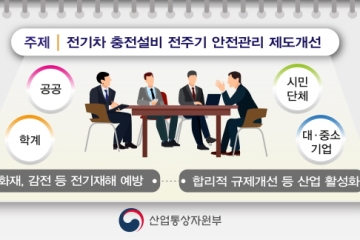
Ministry of Trade, Industry and Energy pushes to establish safety standards for electric vehicle charging facilities
Recent safety incidents related to electric vehicles, including fires occurring after full charging, have raised concerns about becoming a hindrance to the promotion of electric vehicle adoption. Given the heightened necessity to prevent and manage such issues, the Ministry of Industry held a discussion forum to discuss measures for introducing safety standards.
2022.03.31by 성유창 기자
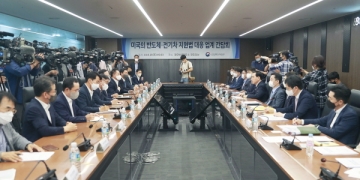
The Ministry of Trade, Industry and Energy announced efforts to minimize the burden on the industry from the US semiconductor support law.
The Ministry of Trade, Industry and Energy announced that it will make efforts to minimize the burden on Korea's semiconductor industry resulting from the 'guardrail' provisions stemming from the U.S. Semiconductor Support Act.
2022.08.29by 배종인 기자
[Technical Contribution] Caltera: "Evolution of Precision Sensing, UWB Infrastructure Enhances Parking Safety"
Discussing new possibilities in parking assistance and precision sensing with UWB, Lee Sang-min, Korea Branch Manager at Caltera.
2026.10.23by 편집부
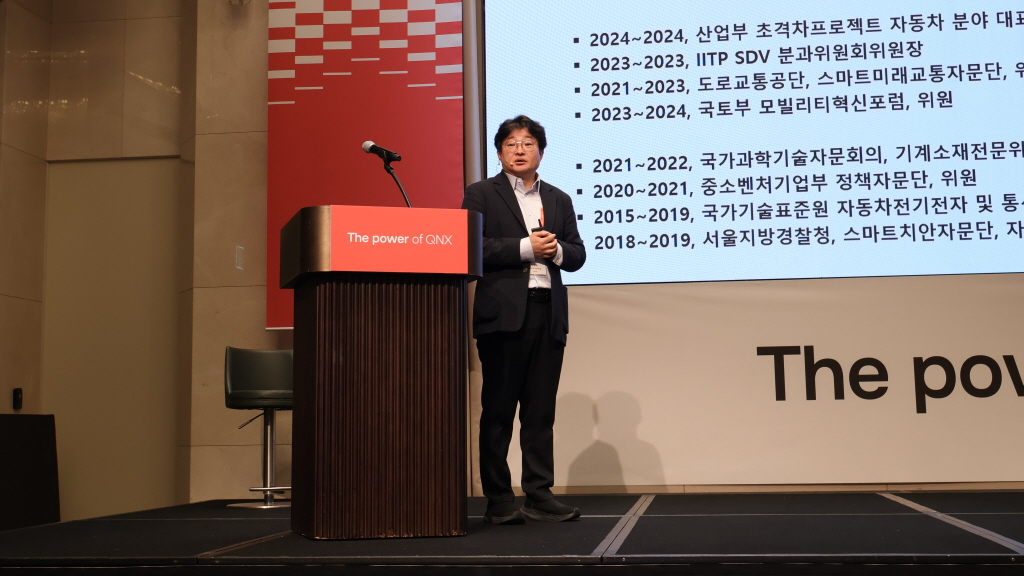
Professor Jeong Gu-min from Kookmin University, "QNX RTOS will become an important foundational technology in the physical AI era"
As software-defined vehicles (SDV) establish themselves as a new standard in the automotive industry, forecasts indicate that future competitiveness will be determined not by vehicle hardware but by software platforms and AI utilization capabilities. With the automotive industry rapidly transitioning to centralized architecture and AI-based development systems, an analysis suggests that how effectively vehicle platforms can be simplified and operated cost-efficiently will become core competitiveness for next-generation SDV and AI-defined vehicles. Professor Jeong Gu-min from Kookmin University emphasized at QNX TechForum Korea 2026 that "the automotive industry is now shifting from hardware competition to software ecosystem competition," highlighting that API-centric platforms and AI utilization will determine success or failure in the future automotive industry.
2026.10.23by 배종인 기자











