



Development of a 'biomimetic chip' that mimics the microenvironment of adipose tissue
 Published2023.03.06 16:12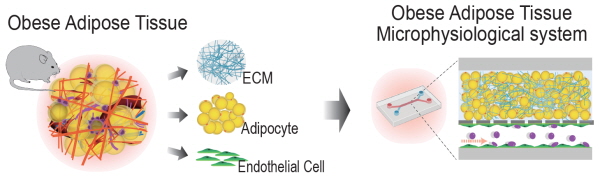
A biomimetic chip that mimics the microenvironment of adipose tissue has been developed, which is expected to enable the identification of obesity-related diseases and the development of treatments.
UNIST (President Yong-Hoon Lee) announced on the 6th that Professor Tae-Eun Park's research team in the Department of Biomedical Engineering has developed a microphysiological system that mimics the physiological and pathological characteristics of human white adipose tissue.
Adipose tissue is a type of connective tissue in the body that is mostly composed of fat cells. Among them, white adipose tissue plays an important role in storing energy in the body and maintaining homeostasis, and is an endocrine organ that secretes various substances such as fatty acids and hormones.
Obesity, which is caused by excessive fat accumulation in white adipose tissue, is the disease with the highest mortality rate worldwide. In addition, obesity can cause various complications such as diabetes and cardiovascular disease, and is also related to the occurrence and worsening of some cancers.
As interest in obesity grows worldwide, models that can mimic the physiological and pathological characteristics of adipose tissue are being developed.
However, existing culture methods have had difficulties in differentiating into adipocytes containing single-sphere-shaped fat lumps and maintaining the functionality of the differentiated cells. Furthermore, there were limitations in mimicking the microenvironment of adipose tissue and reproducing its physiological and pathological characteristics.
The research team successfully developed an adipose tissue biomimetic chip that mimics the physiological and pathological characteristics of obese adipose tissue.
The developed biomimetic chip consists of an upper microchannel in which adipocytes are cultured three-dimensionally in a hydrogel structure based on extracellular matrix (ECM) separated from adipose tissue, and a lower microchannel in which adipose endothelial cells are co-cultured.
The extracellular matrix has a three-dimensional structure that fills the space between multiple cells in a tissue and is composed of molecules secreted and accumulated from cells.
In particular, the extracellular matrix of adipose tissue dynamically changes its composition and properties during the obesity process, directly and indirectly regulating the behavior of adipocytes.
First, the research team created a hydrogel made of an extracellular matrix using a technology that decellularizes normal and obese adipose tissue.
The formed hydrogel possessed tissue-specific physiological and pathological characteristics and could accurately mimic the unique microenvironment of normal and obese adipose tissue. It also helped maintain the function of cultured primary adipocytes for a long period of time.
The research team created biochips of obese and normal adipose tissue, respectively, and reproduced the dysfunction observed in vascular endothelial cells within obese adipose tissue.
Increased intra-adipose inflammatory response due to obesity activates vascular endothelial cells and increases the number of intra-adipose immune cells. These pathological features were observed through approximately twice the immune cell adhesion in the developed obese adipose tissue biochip.
The research team also conducted research on the link between obesity and cancer, which has not been clearly identified. Through the developed adipose tissue biochip, we confirmed that the mobility and tissue attachment of cancer cells increased approximately two-fold under obese conditions. This showed that direct interactions between obese adipose tissue and cancer cells can be easily visualized and quantified.
“Through this study, we were able to mimic the microenvironment of obese adipose tissue,” said first author Researcher Hee-Jung Yoon. “By utilizing a biomimetic chip, we can observe the activation, inflammation, and dysfunction of vascular endothelial cells due to obese tissue, as well as their interactions with other cells. This can be used to elucidate various disease mechanisms related to fat or develop obesity treatments.”
This study was published in the international academic journal in the field of biomaterials, Acta Biomaterialia, on January 29, 2023.

관련뉴스
.jpg)
Semiconductor technology accelerates bio-fusion... A trillion-dollar market for organ chips is on the horizon.
2022년 국내서 집계된 2021년 동물실험에 희생된 숫자가 488만 마리로 역대 최대를 기록했다. 전세계적으로 해마다 2억 마리에 달하는 동물이 화장품·화학물질 등의 독성실험으로 희생되는 가운데 이를 대체하는 소프트 리소그래피 기반의 장기칩 시장이 확대될 것으로 전망되며 관련 장비 시장의 성장 룸이 커질 것으로 기대되고 있다.
2023.02.10by 명세환 기자

Intel Unveils Next-Generation 'Core Ultra Series 3' and vPro Platform for Enterprise PCs
Intel has officially unveiled the "Intel Core Ultra Series 3" for next-generation enterprise PCs and the latest vPro platform, addressing a wide range of demands from enterprise notebooks to high-performance workstations.
2026.03.26by 배종인 기자
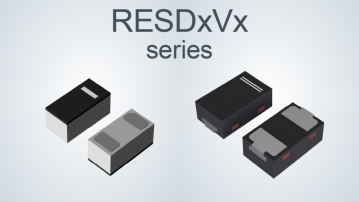
ROHM Launches ESD Protection Diode Compatible with High-Speed Interfaces of 10Gbps or Higher
반도체 전문 기업 로옴(ROHM)이 10Gbps를 넘어서는 차세대 고속 데이터 통신 환경에 대응할 수 있는 ESD(정전기 방전) 보호 다이오드 ‘RESDxVx 시리즈’를 개발하며, 고속 인터페이스에서 요구되는 신호 품질 유지와 IC 보호 성능을 동시에 끌어올렸다.
2026.03.26by 배종인 기자
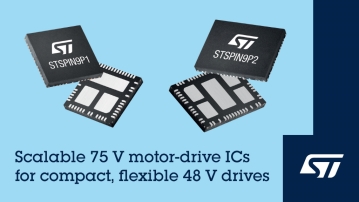
ST Launches 75V Drive IC Targeting 48V Industrial Motor Driving
ST마이크로일렉트로닉스가 48V급 산업용 구동 시스템 설계에 맞춘 75V 모터 드라이브 IC ‘STSPIN9P’ 시리즈를 공개했다. 새 제품군은 하프 브리지와 풀 브리지 구조로 구성돼 모터 종류와 출력 조건에 따라 설계를 확장할 수 있도록 한 것이 특징이다. 전원 회로와 보호 기능, 전류 감지 회로를 칩에 통합해 시스템 구성을 단순화했으며, 최대 500W급 애플리케이션까지 대응하도록 설계됐다. 회사는 레퍼런스 디자인과 데모 보드도 함께 제공해 산업 자동화, 로보틱스, 펌프, 팬, 조명, 섬유 기계 등에서 개발과 평가를 지원할 계획이다.
2026.03.26by 배종인 기자

Nordic supports security updates for the entire lifecycle of IoT devices at a single fixed cost
Nordic Semiconductor, a global leader in low-power wireless connectivity solutions, has unveiled a single fixed-cost licensing model that delivers FOTA (Firmware Over-the-Air) and device management capabilities throughout the device lifecycle via nRF Cloud, and introduced a new firmware update solution to prepare for the enforcement of the European Union's Cyber Resilience Act (CRA).
2026.03.26by 배종인 기자











