



Development of next-generation semiconductor devices that precisely simulate brain activity
 Published2023.05.04 16:27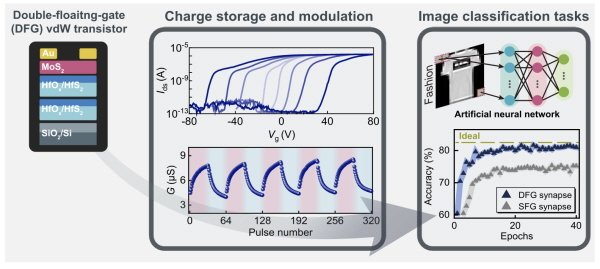
▲Synapse characteristics simulation using dual floating gate elements
Next-generation semiconductor devices capable of precisely controlling high-density data, such as complex analog signals, have been developed, raising expectations for future applications in various fields, including artificial neural networks.
A research team led by Professor Seo Jun-ki of the Department of Materials Science and Engineering and the Graduate School of Semiconductor Materials and Components at UNIST (President Yong-Hoon Lee) has developed a double-floating-gate semiconductor device that can precisely mimic brain functions based on two-dimensional materials.
In general computing systems, data 'computation' and 'storage' are separated into independent areas, so the operation process proceeds sequentially.
These computing systems suffer from high power consumption and slow computational speeds as data becomes more complex and the number of elements per circuit increases.
On the other hand, the human brain has about 100 billion neurons and about 100 trillion synapses connected in parallel between neurons.
The brain integrates the 'computation' and 'storage' functions of data through the strength of synaptic connections, allowing it to process high-density, complex data with a small amount of power, less than about 20W.
Recently, artificial intelligence has been used to process large and complex images and learn natural language. As technology rapidly advances, the need for synaptic devices and neuromorphic computing systems that mimic the human brain is increasing.
To implement an artificial synaptic element, it must be able to simulate complex analog signals that change continuously over time, rather than simple binary digital signals of '0' and '1'.
On the other hand, there were limitations in accuracy and reproducibility when simulating these analog signals in existing semiconductor devices.
The research team successfully developed an artificial synapse device based on a dual floating gate that can precisely simulate brain activity using two-dimensional semiconductor materials.
The developed artificial synapse device is configured to store charges in a distributed manner by dually configuring floating gates that can store charges.
Devices based on dual floating gates can store high-density charges with higher reliability than existing devices, and can also precisely simulate brain activity.
First, the research team recreated a dual-floating gate device using a two-dimensional material that is atomic-thin and has no defects on the surface.
The floating gate plays a role in storing data, but existing single floating gate devices have limitations in reliability and reproducibility because a large amount of charge is stored in only one floating gate.
The double floating gate recreated by the research team has more interfaces than the existing single floating gate because multiple materials are joined together.
In general, it was difficult to simulate the synaptic characteristics due to the defects that inevitably exist at the interface, but by utilizing the defect-free characteristics of two-dimensional materials, the defects existing at the interface were minimized to form a dual floating gate device.was designed.
The research team successfully simulated brain function based on the dual floating gate device's high-density charge storage and precise controllability. This enabled them to achieve excellent accuracy in image classification tasks using artificial neural networks.
“Through this research, we have implemented a two-dimensional material-based dual-floating gate device,” said first author Cho Ho-yeon. “This device can precisely reproduce the brain’s operations, and if used in artificial neural networks, it will be possible to process complex data with low power consumption and fast computation speed.”
Professor Seo Jun-ki of the Department of Materials Science and Engineering and the Graduate School of Semiconductor Materials and Components stated, “This study is very significant in that it designed a high-efficiency neuromorphic new device structure based on the material advantages unique to two-dimensional semiconductors.” He continued, “Furthermore, the fact that high-precision synapse operation was made possible by installing an additional barrier in the charge storage through a simple surface oxidation process is not much different from how we organize spaces for efficient use in our daily lives. In the future, it will contribute to the development of artificial intelligence-oriented semiconductor devices based on new materials and new devices.”
This study was published on April 13th in the international journal ACS Nano in the field of nanoscience. This research was supported by grants from the National Research Foundation of Korea (NRF) through the Excellent Young Researcher Project, the Next-Generation Intelligent Semiconductor Project, the PIM Artificial Intelligence Semiconductor Core Technology Development Project, and the UNIST Semiconductor Innovation Leading Research Group.

Comments
Related news

Intel Unveils Next-Generation 'Core Ultra Series 3' and vPro Platform for Enterprise PCs
Intel has officially unveiled the "Intel Core Ultra Series 3" for next-generation enterprise PCs and the latest vPro platform, addressing a wide range of demands from enterprise notebooks to high-performance workstations.
2026.03.26by 배종인 기자
ROHM Launches ESD Protection Diode Compatible with High-Speed Interfaces of 10Gbps or Higher
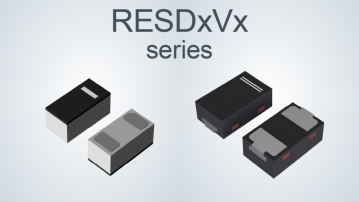
Semiconductor specialist ROHM has developed the 'RESDxVx series' of ESD (electrostatic discharge) protection diodes capable of responding to next-generation high-speed data communication environments exceeding 10Gbps, simultaneously enhancing both signal quality maintenance required in high-speed interfaces and IC protection performance.
2026.03.26by 배종인 기자
ST Launches 75V Drive IC Targeting 48V Industrial Motor Driving
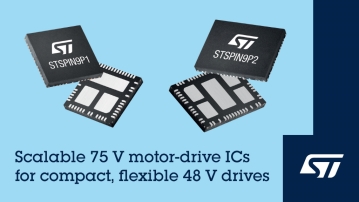
ST Microelectronics has unveiled the 'STSPIN9P' series of 75V motor drive ICs tailored for 48V-class industrial drive system design. The new product family is characterized by half-bridge and full-bridge configurations that enable design scalability according to motor type and output conditions. Power supply circuits, protection functions, and current sensing circuits are integrated on-chip to simplify system configuration, and the devices are designed to support applications up to 500W maximum. The company plans to provide reference designs and demo boards to support development and evaluation in industrial automation, robotics, pumps, fans, lighting, and textile machinery.
2026.03.26by 배종인 기자

Nordic supports security updates for the entire lifecycle of IoT devices at a single fixed cost
Nordic Semiconductor, a global leader in low-power wireless connectivity solutions, has unveiled a single fixed-cost licensing model that delivers FOTA (Firmware Over-the-Air) and device management capabilities throughout the device lifecycle via nRF Cloud, and introduced a new firmware update solution to prepare for the enforcement of the European Union's Cyber Resilience Act (CRA).
2026.03.26by 배종인 기자
Schneider Aims for Building Energy Savings and Operational Stability with Next-Generation HVAC Drives
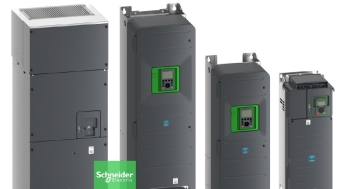
Schneider Electric has unveiled its next-generation HVAC drive product line 'Altivar HVAC'. The new product line's key features center on enhanced energy savings, system operational stability, and building management system integration. The products are divided into 'ATH200' for OEM and small equipment applications, and 'ATH600' for environments requiring continuous operation and advanced control. The company plans to expand the application scope from commercial buildings to facilities where HVAC system stability is critical, such as hospitals, airports, and data centers. The announcement includes over 30% energy savings, operation from -10°C to +60°C, Modbus and BACnet support, and compatibility with low global warming potential refrigerants.
2026.03.26by 명세환 기자











