



The Ministry of Trade, Industry and Energy and the U.S. are discussing detailed plans for an MOU on advanced fields such as semiconductors and batteries.
 Published2023.08.04 15:54
The details are expected to be finalized at the Korea-U.S. Industrial Technology Cooperation Forum held in Seoul in September.
The Ministry of Trade, Industry and Energy held the 'Korea-US Advanced Technology Cooperation Strategy Review Meeting' in Dallas, USA on the 4th (local time), reviewed the progress of cooperation under the advanced technology MOU signed in April, and discussed detailed plans for full-scale technological cooperation.
Last April, the Ministry of Trade, Industry and Energy signed a total of 23 MOUs in the fields of advanced industries and clean energy, and has been discussing detailed projects for specific technological cooperation centered on cutting-edge technologies such as semiconductors, autonomous driving, secondary batteries, and robotics.
At the meeting, the Society of Automotive Engineers (SAE International) in the future vehicle field presented specific Korea-US cooperation tasks, including the development of communication-based autonomous vehicle standards, BRIDG (Florida Semiconductor and AI Research Institute) in the semiconductor field for technological cooperation and personnel exchange, and MIT for the development of a bipedal walking robot. They also decided to attend the 'Korea-US Industrial Technology Cooperation Forum' scheduled to be held in Seoul in September and put these into practice with Korean companies.
Starting with the cooperation projects presented this time, the Ministry of Trade, Industry and Energy plans to identify additional excellent cooperation needs by the end of 2023 and actively pursue them as mid- to large-scale projects starting next year. Furthermore, the Ministry plans to designate the best institutions among U.S. universities and research institutes as the "Korea-U.S. Advanced Technology Cooperation Center" to continuously discover cooperation projects that our companies need.
In addition, First Vice Minister Jang Young-jin explained the Ministry of Trade, Industry and Energy’s efforts to internationalize industrial technology research and development (R&D) through the UKC general meeting, the K-TAG general meeting, and a meeting of Korean-American students. He also listened to suggestions and difficulties for advanced technology cooperation between Korea and the U.S. and stated, “In order to revitalize international cooperation in industrial technology R&D, we will not only expand investment, but also drastically improve the domestic R&D process so that there is no discrimination between domestic and foreign researchers.”

관련뉴스
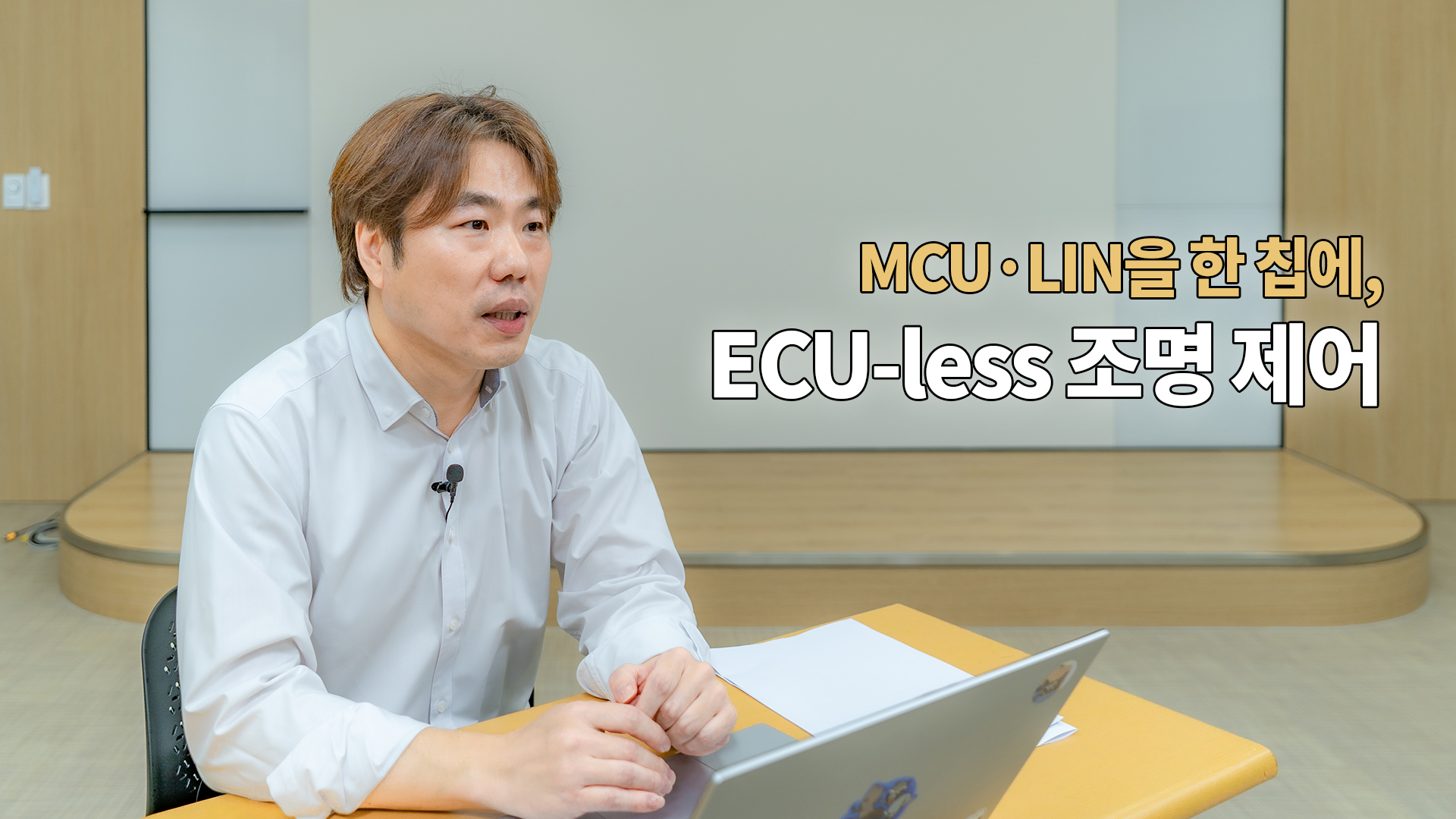
A single misaligned light means 'defect'… Vehicle interior lighting now guarded by semiconductors and software
자동차 실내조명이 '보조 조명'의 자리를 벗어나고 있다. 색상과 애니메이션으로 브랜드 아이덴티티를 드러내고 운전자 취향을 담아내는 사용자 경험(UX)의 핵심 요소로 올라서면서, LED 실내 앰비언트 시장도 빠르게 커지는 중이다. 이에 관하여 '미래 자동차를 밝히는 지능형 LED 실내 조명 솔루션' 이라는 내용으로 기술 웨비나 세션을 발표하는 최영재 다보코퍼레이션 연구위원을 앞서 만나, 시장의 온도와 설계 요구의 변화를 들었다.
2026.08.28by 명세환 기자
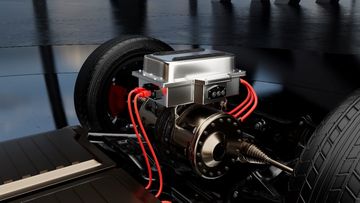
TI, HEV·EV 트랙션 인버터용 다축 코어리스 전류 센서 TMCS2100-Q1 공개
Texas Instruments가 HEV·EV 트랙션 인버터용 다축 코어리스 홀 효과 전류 센서 TMCS2100-Q1을 공개했다. 수평·수직 자기장을 동시에 측정하는 다축 센싱 기술로 기존 단일 축 센서 대비 최대 20배 높은 정확도를 달성하며, 버스바 무개조 설계로 기계 설계 유연성을 확보했다. 800V 아키텍처 확산에 따른 고정확도 요구 충족과 소형화를 동시에 구현한다.
2026.08.27by 배종인 기자
Vector Korea Launches New Version of 'CANoe' with AI Agent and MCP
Vector Korea has released a new version of CANoe 20 SP2 equipped with an AI agent and MCP. With a single natural language prompt, it automates the entire process from CAPL test code generation to execution and error correction, completing tasks that previously took several hours to days in just minutes. The Vector-RAG technology suppresses LLM hallucination phenomena, and it is compatible with existing LLMs such as GitHub Copilot and Claude, provided free of charge on CANoe 20 SP2 and higher versions.
2026.08.27by 배종인 기자
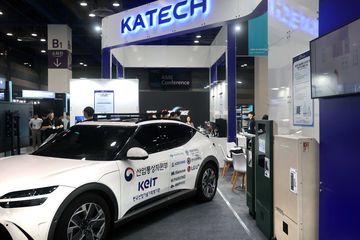
자동차연구원, ‘2026 자율주행모빌리티산업전’ 참가
한국자동차연구원이 2026 자율주행모빌리티산업전에 참가해 AI 기반 자율주행, 고성능 컴퓨팅, 시스템 안전·보안 기술 연구 성과를 공개한다. 산학연 협력을 통해 자율주행 기술을 고도화하고 우주모빌리티 분야로 연구 영역을 확장 중이다.
2026.08.25by 배종인 기자
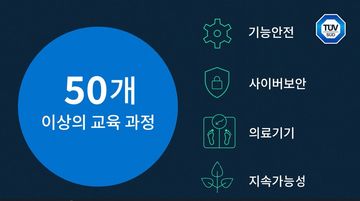
TUV SUD, 자동차 AI 안전·CBAM·방폭 등 5개 전문교육 확대
TUV SUD가 자동차 AI 안전, 탄소국경조정제도(CBAM), 생성형 AI, 품질경영, 국제 방폭 등 5개 분야 전문교육을 9~11월 순차 개설한다. ISO/PAS 8800 기반 자동차 AI 안전성 확보 과정, CBAM 실무 과정, IECEx CoPC 국제 방폭 인증 자격 교육 등이 최신 국제표준과 산업 현장 사례를 반영한 실무 중심으로 구성된다.
2026.08.24by 명세환 기자











