


Samsung Electronics Develops 8th Generation V-NAND-Applied Automotive SSD
 Published2024.09.24 08:36
.jpg)
Samsung Electronics has taken a lead in the automotive memory market by launching an automotive SSD that uses 5nm 8th generation V-NAND, enabling fast access to high-capacity files at the industry's fastest speed.
Samsung Electronics announced on the 24th that it has completed the development of the AM9C1, a PCIe 4.0 automotive SSD that uses the 8th generation V-NAND for the first time in the industry.
Samsung Electronics provided 256GB samples to major customers.
This 256GB product offers sequential read/write speeds of 4,400MB/s and 400MB/s respectively, and power efficiency has been improved by approximately 50% compared to its predecessor, making it optimized to support on-device AI functions in vehicles.
This product features: △5nm-based controller, △enhanced board-level reliability evaluation, and △SLC mode function.
By converting the product from TLC to SLC through the SLC mode function, the sequential read/write speed of the SSD increases, allowing faster access to large-capacity files in the vehicle.
This product satisfies the AEC-Q100 Grade2 automotive semiconductor quality standard, ensuring stable performance over a wide temperature range from -40℃ to +105℃.
Samsung Electronics Memory Business Division Product Planning Team Managing Director Hyun-Deok Cho said, “Samsung Electronics is collaborating with industry-leading global autonomous driving companies, and through this product, we are achieving high capacity and;We expect to be able to satisfy the demand for high-performance products,” he said, adding, “We will continue to lead the physical AI memory technology and related markets, such as autonomous driving and robots.”

Comments
Related news
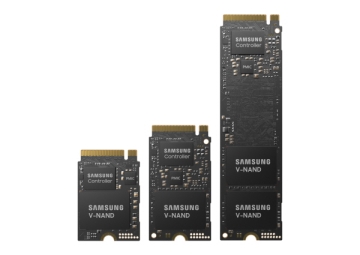
Samsung Electronics Mass-produces SSDs with 5nm Controller
Samsung Electronics will mass-produce the high-performance NVMe SSD 'PM9C1a' for PCs, equipped with a new controller based on 5-nanometer technology.
2023.01.12by 배종인 기자
WD: "SanDisk SSD Targets Prosumers"
Recently, with the rise of video recording, editing, and sharing among general consumers as well as professionals, the need for professional-grade production environments has increased. This has led to the launch of modular storage products targeting professionals and prosumers.
2023.03.28by 명세환 기자
WD Strengthens SanDisk Extreme Pro SD Card and Portable SSD Lineup
Today, high resolutions such as 4K UHD and 6K are driving growth in digital content. Particularly with the proliferation of high-resolution cameras, photography enthusiasts and professionals are capturing, shooting, and sharing important moments in high resolution, which is leading to increased demands in terms of performance, capacity, durability, and cost.
2023.07.31by 명세환 기자
Western Digital Launches New WD Blue SN580 NVMe SSD
Western Digital has launched a new product, the 'WD Blue™ SN580 NVMe™ SSD,' designed for content creators and professionals.
2023.08.23by 배종인 기자
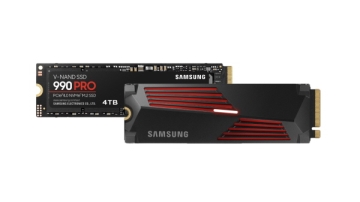
Samsung Electronics Launches High-Performance 4TB SSD '990 PRO'
Samsung Electronics is launching a high-performance SSD featuring cutting-edge 8th generation V-NAND and delivering the fastest random read speed among consumer PCIe 4.0-based SSDs, targeting consumers who specialize in high-performance gaming and 3D/4K graphics work.
2023.09.12by 배종인 기자