

.png)

Exclusive interview on announcement of all-programmable FPGA capable of supporting up to 8 cores.
 Published2015.02.26 13:55
Related news

A single misaligned light means 'defect'… Vehicle interior lighting now guarded by semiconductors and software
Automotive interior lighting is moving beyond its role as 'auxiliary lighting.' As it becomes a core element of user experience (UX) that expresses brand identity through color and animation while reflecting driver preferences, the LED interior ambient lighting market is growing rapidly. In connection with this, we met in advance with Choi Young-jae, Research Director at Dabo Corporation, who will present a technical webinar session on "Intelligent LED Interior Lighting Solutions Illuminating Future Vehicles," to hear about market trends and changes in design requirements.
2026.08.28by 명세환 기자
Ecolab and K-water Discuss Innovation Collaboration in Advanced Industry Water Management
Ecolab and the Korea Water Resources Corporation jointly discussed cooperation directions for maximizing water use efficiency in advanced industries such as semiconductors and data centers and establishing sustainable water circulation. The two companies agreed to gradually develop a long-term cooperation model that combines water resource infrastructure and water management technology to promote water efficiency optimization, water reuse, and carbon reduction.
2026.08.28by 명세환 기자
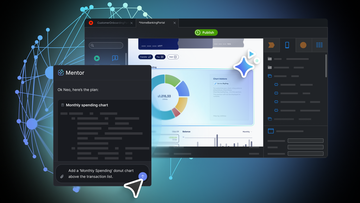
OutSystems Supports Personal Loan Business Automation with Financial Agentic Solution
OutSystems has launched an Authentic Loan application to automate personal lending operations for financial institutions. The solution integrates AI agents, mobile and web apps, and predefined workflows within a governance framework to automate manual tasks including document collection and verification, identity verification, and sanctions screening. By optimizing models based on Amazon Bedrock, it maximizes performance while reducing costs by 82%.
2026.08.28by 명세환 기자

Schneider Electric announces 'Impact 2030' first-half results
Schneider Electric has disclosed the first-half 2026 performance of its decarbonization roadmap 'Impact 2030' for 2030. The company has reduced Scope 1 and 2 emissions by 82% compared to 2017, and has cumulatively avoided and reduced carbon emissions of 913 million tons through customer solutions. The company is expanding AI-based support for 1,500 suppliers through the supply chain decarbonization program 'Zero Carbon Pathway'.
2026.08.27by 명세환 기자
Group-IB Supplies Threat Intelligence Solution to AWS Marketplace
Group-IB is registering and supplying an adversary-centric threat intelligence solution on the AWS Marketplace. Through the AI-based integrated platform 'Prevyn AI', it automatically analyzes stolen credentials, dark web activities, and APT threats, and can be easily adopted through AWS's existing payment system. Following the acquisition of AWS Financial Software Competency, this represents an expansion of supply channels and supports security teams in establishing proactive threat response systems.
2026.08.26by 명세환 기자











