



[Op-Ed] Kim Pil-soo, Professor at Daelim University, “Strengthening Competitiveness of the Three Minor Car Manufacturers is Essential Based on Renault Korea’s New Car Success”
 Published2026.03.27 14:43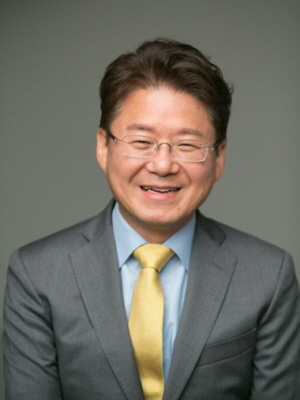
The presence of the remaining three companies, GM Korea, Renault Korea, and KGM, is negligible. On the contrary, imported cars account for about 15%.
This is because the so-called "minor three" companies lack a variety of new cars to entice consumers, resulting in low sales rates and their imported models are not particularly impressive.
In fact, it would be said that Hyundai Motor Group's excessively high market share in the domestic market is not particularly desirable.
Given that there are almost no cases among OECD developed countries where a single country has such a high market share, the role of the remaining three companies is very important.
This is because having such an absolutely high market share in the domestic market limits even fierce marketing strategies, and it lowers confidence in models with weak competitiveness when entering overseas markets.
This means that a desirable and consumer-centric positive automotive market can be established only if the three minor companies increase their market share by launching better models and implement various marketing strategies.
In other words, I hope the market share of the three minor companies will definitely increase.
In the case of Hyundai Motor Group as well, this is because models that have won after such a fierce battle domestically can gain even greater confidence as they expand overseas.
Ultimately, the fierce model competition in the domestic market serves as an opportunity for each party to refine their important confidence and marketing strategies.
Among these three minor companies, the recent trend of Renault Korea is looking very positive.
Recently, the cumulative production of automobiles at Renault Korea's Busan plant surpassed 4 million units, marking a significant chapter in history.
With the continuous production of stable yet popular new cars, the Busan plant has established itself as a key production base with core capabilities within the Renault Group.
With the labor union stabilizing, the continuous release of popular models increases domestic market share and provides a definite sense of stability. That is the reason.
This is because, through Renault Korea's Aurora Project, the first model, the mid-size hybrid SUV 'Gran Koleos,' has successfully established itself with enthusiastic sales growth, and the second model, the near-large coupe-style SUV 'Filante,' has been officially launched.
It is bound to be popular in many aspects, including its sleek exterior design, stable body structure, optimal high-tech options, and price.
The recent trend is that SUVs are more popular than sedans, and hybrid vehicles are more popular than pure internal combustion engine vehicles or electric vehicles.
If the optimal design, options, and price are combined, consumers will respond, and it can be said that it meets the conditions to become a best-selling model.
Renault Korea is the manufacturer that consistently launches popular models following this sequence.
In this regard, the reliability of the Busan plant serves as a signal from the Renault Group that provides an important sense of stability.
Although there were unstable aspects such as previous union strikes, continuity is an important key element of recent reasonable labor-management relations.
I hope that by making concessions to each other and building a truly mutually beneficial relationship, this will serve as a model for other production companies.
Moreover, the situation in which Hyundai Motor and Kia always suffer from labor-management issues relatively every year is a matter worth noting.
In the case of GM Korea, although it is continuously sending signals that it will not leave the domestic market, it needs improvement regarding the ongoing controversy over rumors of withdrawal.
The situation—which includes the separation of the R&D sector into a separate entity, the withdrawal of designated repair shops, and the sale of idle land, as well as a reluctance to develop future vehicles, remaining fixated on two gasoline models with approximately 84% of them exported to the U.S.—is not exactly... It would be said that this is not an easy matter.
This is because the surrounding environment is poor, with the worst possible relationship between South Korea and the U.S. established due to tariffs rising from 0% to 15% on automobiles exported to the U.S.
This means that tangible and visible results are required, such as the development and production of hybrid or electric vehicles mentioned by the labor union, and the launch of popular models that can increase domestic market share.
While importing and selling various GM models is certainly more meaningful than doing nothing, it is expected that achieving significant results will be difficult.
This is because American-style car models are not suited to the domestic market in many aspects, such as design, size, fuel efficiency, and ruggedness, and consumer preference is low.
The issue of selling the designated maintenance company was not a special matter, but it could be said that the timing was unfavorable.
A very fortunate aspect is that GM Korea has recently started to find stability as it invests over 800 billion won.
It is considered the best opportunity to eliminate the withdrawal rumors altogether and build trust.
I am convinced that if additional models are introduced where future new vehicle types are developed and produced domestically, it would be the perfect direction for development.
In addition, the continuous surplus structure is also considered a positive trend.
It would also be helpful to refer to the previously mentioned development and production of Renault Korea.
KGM is in a difficult situation.
Although export volumes have recently been increasing, this is fundamentally due to financial limitations, such as development costs for new vehicles.
It is a time when active efforts are even more necessary to cultivate research and development capabilities and, if necessary, utilize the capabilities of other companies.
This is because the current situation of relying on derivative models compared to existing models clearly has significant limitations. />
Ultimately, the launch of Renault Korea's new model is not merely a simple launch, but an excellent model that appeals to discerning domestic consumers.
I hope that the continuous release of these models will elicit a positive response from consumers and contribute to a definite increase in sales and market share.
I wish for a new leap forward for Renault Korea.
Comments
Related news
[Contribution] Professor Kim Pil-su of Daerim University, “Trump Tariffs Require Genuine Persuasion”
As the Trump tariff negotiations deadline approaches, we heard from Professor Kim Pil-soo of Daelim University College on the stance our country should take.
2025.07.28by 명세환 기자
[Contribution] Professor Kim Pil-su of Daerim University: "Replacement of Offshore Diesel Vessels with Eco-Friendly Ships Is Essential"
We listened to the story of Professor Kim Pil-soo from Daelim University about the transition of coastal diesel ships to eco-friendly vessels.
2025.08.04by 명세환 기자
[Contribution] Professor Kim Pil-su of Daerim University: "'ISG Promotion' Kills Two Birds: Reducing Carbon and Easing Government Fiscal Pressures"
We heard from Professor Kim Pil-soo of Daelim University regarding the dissemination of idle-stop systems (ISG) in relation to carbon reduction for commercial internal combustion engine vehicles.
2025.08.08by 명세환 기자
[Op-Ed] Kim Pil-soo, Professor at Daelim University, “The Problems with Tesla’s Emergency Safety System Are Finally Being Changed”
Professor Kim Pil-soo from Daelim University discusses issues with Tesla's emergency safety devices.
2025.10.27by 명세환 기자
[Contribution] Professor Kim Pil-su of Daerim University: "We expect fair and reasonable administrative support for electric vehicle subsidies."
We heard from Professor Kim Pilsoo of Daelim University regarding improvements to electric vehicle subsidies.
2025.11.04by 명세환 기자











