


AMD Unveils Full-Stack Computing Portfolio Targeting Agentic AI
 Published2026.07.24 11:02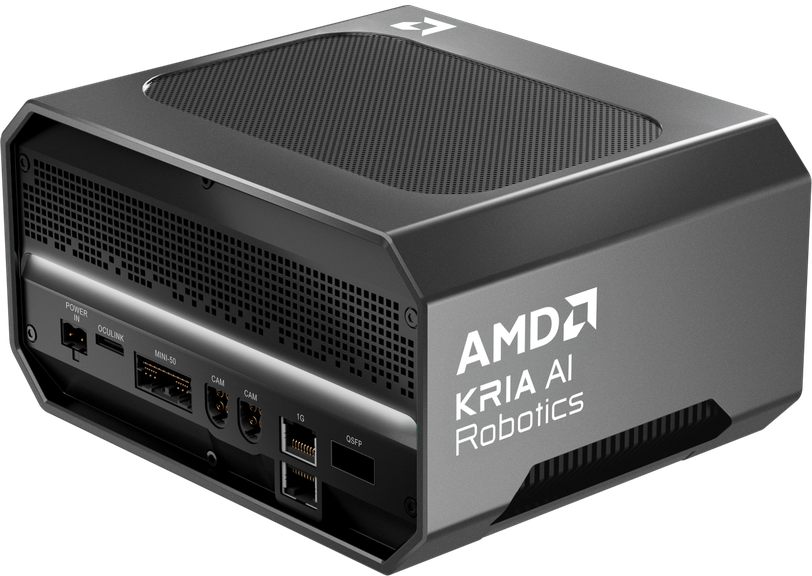
AMD announced this on the 24th at the 'Advancing AI 2026' event held in San Francisco on the 23rd (U.S. local time).
Lisa Su (Dr. CEO Lisa Su stated, “The next stage of AI is expanding to frontier models, agents, and physical AI,” adding, “We will support our customers’ AI expansion from the data center to the edge through an open platform.”
AMD projected that the Total Addressable Market (TAM) will reach approximately $2 trillion by 2030 due to the expansion of AI demand.
The AMD Helios rackscale solution, the centerpiece of this announcement, has now entered mass production.
It is a configuration that integrates 72 AMD Instinct MI455X GPUs, 18 6th generation AMD EPYC 'Venice' CPUs, AMD Pensando frontend, scale-up and scale-out networking, and AMD ROCm software.
AMD explained that it processes up to 30% more AI inference tokens per dollar compared to competing solutions.
OpenAI, Anthropic, Meta, Microsoft, Oracle, and others are pursuing adoption, and it is scheduled to be supplied through major OEMs such as Bull, HPE, Lenovo, and Supermicro.
The AMD Instinct MI400 series was also unveiled.
It was announced that the MI455X GPU provides up to 34 times higher token throughput compared to the previous generation MI355X.
The AMD Instinct MI430X, designed for high-precision computing environments, supports FP64 performance of up to 288 TFLOPS and is scheduled to be used in the construction of next-generation exascale supercomputers in the U.S. and Europe.
The AMD Instinct MI350P GPU is designed to be easily added to existing AI infrastructure, offering up to 4.2 times higher payouts per second compared to competitors.AMD stated that it provides high processing performance.
In the field of robotics, AMD introduced the new Kria AI solution.
It consists of a CREA AI System-on-Module (SOM) equipped with AMD Ryzen AI Embedded X100 series processors and an AMD CREA AI Robotics Development Platform that integrates CPU, GPU, NPU, and FPGA into one.
In terms of software, they unveiled ROCm.ai, an AI-based development environment.
AI coding agents such as Claude, Codex, and Cursor support the use of AMD platforms and ROCm at a native level, and major open source frameworks such as PyTorch, Hugging Face, vLLM, and SGLang already support MI455X.
AMD also presented a roadmap extending to 2030.
The plan is to launch the following in order: next-generation EPYC CPUs based on 'Zen 7' (2028), 'Ravenna' CPUs based on 'Zen 8' (2030), AMD Instinct MI500 series (2027), AMD Instinct MI600 series (2028), and AMD Helios 500 and 600 rackscale solutions.

Comments
Related news

AMD and Rackspace Sign Agreement to Build Phase of 30MW AMD AI Infrastructure
AMD and Rackspace Technology entered into a contract on June 17th to build initial dedicated AI computing infrastructure with a capacity of 30MW. This implements the MOU signed in May, with AMD Instinct GPUs (MI355X·MI350P) and EPYC CPUs to be deployed in Rackspace's global data centers from the end of 2026 through 2028. The two companies are jointly developing the managed enterprise AI infrastructure market with embedded governance, targeting clinical AI and large-scale inference workloads in industries such as healthcare, which prioritize data sovereignty and strict regulatory compliance.
2026.06.17by 배종인 기자
.jpg)
AMD Dominates 4 Out of 10 Supercomputers... Expanding Influence in HPC and AI Markets
AMD is expanding its influence in the global supercomputing market as its technologies are increasingly being adopted in leading supercomputers featuring world-class performance and energy efficiency.
2026.06.24by 배종인 기자
AMD Achieves Simultaneous High Performance and Miniaturization with 'Versal Premium Gen 2 MoP' Memory Integration
AMD announced its second-generation 'Versal Premium MoP (Memory on Package)' adaptive system-on-chip (SoC) on the 30th. The product employs a structure that integrates memory inside the package.
2026.07.03by 배종인 기자
ASRock Unveils Project LUMIA at Eternal Return 3rd Anniversary Festival
ASRock unveils two custom PC systems of 'Project LUMIA,' inspired by game characters from the 'Eternal Return' third anniversary festival. The RIO system features an AMD flagship configuration, and the ESTELLE system embodies a white concept, both reflecting character imagery in their hardware design. New mainboard and graphics card lineups will also be on display.
2026.07.10by 명세환 기자
AMD Launches Ryzen 7 7700X3D… Expands 3D V-Cache-Based Gaming CPU Lineup
AMD has launched the Ryzen 7 7700X3D, a new desktop processor featuring 3D V-Cache technology.
2026.07.20by 배종인 기자











