
[IFA 2026 ③] AI Computing Shifts from Data Centers to Homes…AMD and NVIDIA Present the Blueprint for the 'Personal AI' Era
 Published2026.09.15 09:31
Semiconductors Become IFA's Center Stage, Signaling Expanded Demand for Local AI, AI PCs, and Memory
Competition for AI Era Leadership Expands into Personal Devices and Smart Home Sectors
IFA 2026, held in Berlin, Germany, was no longer a traditional consumer electronics exhibition. As AI emerged as the central axis of the home appliance industry, the protagonists of this year's event were not home appliance manufacturers like Samsung Electronics, LG Electronics, and TCL, but semiconductor companies like AMD and NVIDIA. In particular, AMD's opening keynote and NVIDIA's public disclosure of its local AI ecosystem expansion strategy demonstrated that the competition for dominance in the AI era is extending beyond data centers into personal devices and smart home sectors.
The most notable keyword at this IFA was 'Personal AI.'
In its opening keynote, AMD declared that AI is not a technology confined to the cloud, but rather a new computing era is dawning where AI permeates into individuals' daily lives.
Jack Huynh, Senior Vice President of AMD's Computing and Graphics Group, took the stage with the theme 'The Era of Personal AI: The Future of Imagination,' emphasizing that AI will become as ubiquitous as electricity in everyday infrastructure.
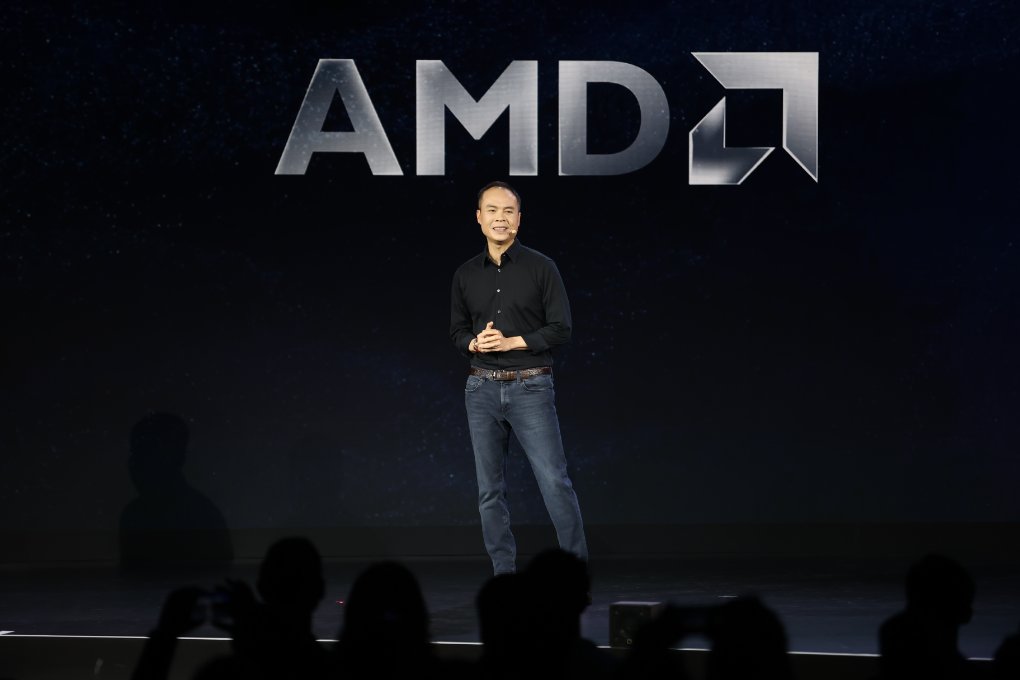
The core of the Personal AI vision presented by AMD is 'local computing.' Until now, most generative AI has been structured to run in cloud data centers.
In contrast, AMD forecasts that an on-device AI environment where users directly execute AI on their PCs and smart devices will expand. This signifies growth in the AI PC market equipped with powerful CPUs, GPUs, and NPUs.
NVIDIA has materialized this trend through actual products and services.
The company unveiled various solutions supporting local AI execution environments at IFA 2026 alongside the 'RTX Spark' platform.
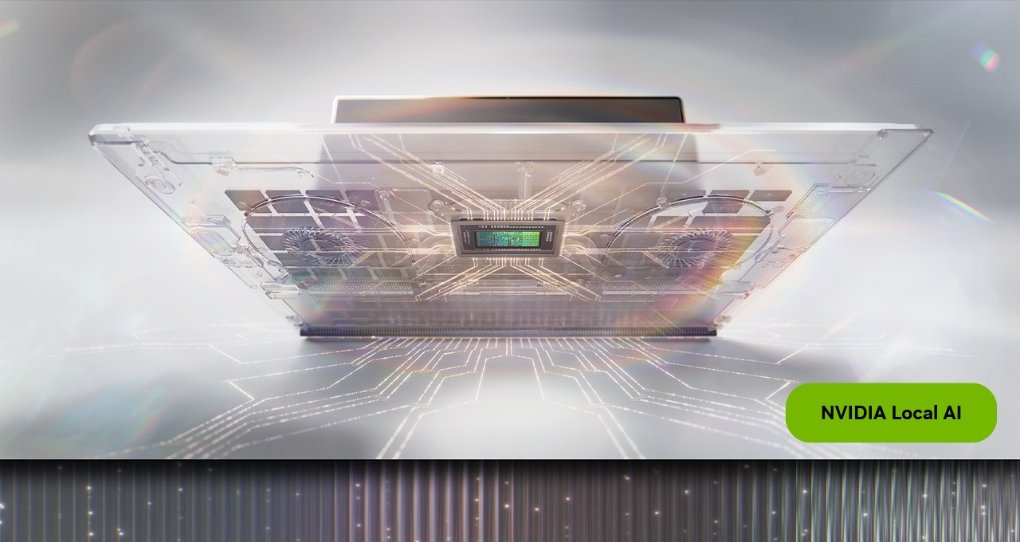
RTX Spark is an AI platform combining Blackwell GPUs with up to 1 petaflop performance, up to 128GB unified memory, and 20-core Grace CPUs, focused on running AI agents in local environments.
The most notable announcement was 'NVIDIA PAIR.' This technology is an open-source platform designed to enable multiple PCs within a home to be utilized as a single AI computing resource. NVIDIA noted that more than half of American households own two or more PCs, yet considerable computing resources remain idle. PAIR automatically recognizes PCs connected to a network and distributes AI inference tasks, enabling home resources to function as a 'miniature data center.'
This symbolizes structural change in the AI industry. Until now, AI competitiveness has concentrated on securing large-scale data centers and ultra-high-performance GPUs. However, going forward, the likelihood is growing that a considerable level of AI services can be implemented directly on personal PCs and smart devices individuals own.
The proliferation of local AI is expected to present new opportunities for the semiconductor industry. Implementing AI services directly on devices requires more memory and high-performance processors.
The agent platform NVIDIA unveiled requires a minimum of 24GB VRAM or more, while the RTX Spark platform supports up to 128GB memory configurations. This suggests that when AI PCs become widely deployed, demand for memory semiconductors and PC processors can expand simultaneously.
AI usage methods are also changing.
NVIDIA simplified the installation process for various AI applications including Perplexity Portable Computer, Hermes Agent, and OpenClaw to enable easy local AI agent utilization. The strategy is to provide an environment where general users can leverage AI agents without complex model configuration or server setup.
The distribution market is also showing signs of AI-centered reorganization.
According to research published by GFU and Oliver Wyman, the proportion of recent consumer electronics purchasing processes where AI actively participated reaches 60% on a global basis, rising to 90% in China.
This means the market is transitioning from an era where consumers directly search for products to one where AI recommends products instead.
Going forward, data structures that AI can understand and search optimization strategies are likely to become core competitive factors for enterprises, alongside performance and price.
The message IFA 2026 delivered to the market is clear.
AI's center is shifting from the cloud to personal devices, and the home appliance, PC, smart home, and semiconductor industries are converging into a single ecosystem.
The Personal AI vision presented by AMD and the local AI platform disclosed by NVIDIA symbolically demonstrate this transformation.
While past competition in the home appliance industry focused on product performance, the future competitive advantage will likely depend on how naturally AI is integrated into daily life and what computing infrastructure supports this integration.

Comments
Related news
IFA 2026 to be Held on September 4, Demonstrating Its Status as a Platform for Innovation Exchange in the Electronics Industry
The IFA Berlin (Internationale Funkausstellung Berlin), the world's largest home and consumer technology trade fair, has further solidified its position as a platform for global innovation exchange by reaffirming its close collaborative relationship with Korean technology partners in Seoul. Leif Lindner, CEO of IFA Management GmbH, the organizer of IFA, held a press conference on the 2nd at the Conrad Seoul and unveiled new directions and vision ahead of the 2026 IFA event. CEO Leif Lindner stated that the 2026 IFA event will position innovation, sustainability, and global networking as core values and plans to strengthen its role as a bridge connecting Asia and Europe.
2025.12.02by 명세환 기자

Lenovo Announces Global Partnership with David Beckham
Lenovo announced on April 1st that it has established a global partnership with David Beckham. This collaboration is understood as an extension of Lenovo's strategy to expand the application of AI-based solutions in sports venues, aligned with its activities as the official technology partner of the FIFA World Cup. Both parties plan to cooperate in various fields including performance enhancement, fan experience improvement, and operational efficiency. Based on his sports field experience and perspective as a businessman, Beckham will also take on the role of demonstrating how AI technology can bring changes to work methods and decision-making for individual users as well as enterprises. Lenovo announced that Beckham is expected to participate in future global marketing campaigns.
2026.04.01by 명세환 기자

Lenovo wages all-out AI brand war featuring Beckham… Expanding consumer reach on the FIFA World Cup stage
Lenovo unveiled a global campaign "Maximum David" featuring David Beckham. Launched ahead of the 2026 FIFA World Cup opening, the campaign focuses on connecting Lenovo's AI-based device and service portfolio with the sports, creative, and business sectors. Lenovo revealed a strategy to expand AI brand awareness by combining its FIFA official technology partnership with Beckham's global influence. Analysts note that the campaign also reflects the competitive trend in the global IT industry for transformation beyond a simple PC manufacturer into an end-to-end AI company.
2026.05.18by 명세환 기자
SanDisk Unveils Large Number of New Consumer Storage Products
SanDisk held a press briefing on the 19th to introduce new product lineups for portable SSDs, announce a rebrand of its internal SSD offerings, and unveil official FIFA World Cup 2026 licensed products.
2026.05.19by 배종인 기자

IFA 2026 Expands Programs to AI Lifestyle and Smart Home
IFA Berlin announced on June 20th the strategic direction and additional programs for 'IFA 2026', reinforcing its role as a gateway for Korean brands to enter the European market. The program will be expanded to include AI-based lifestyle, next-generation smart home, digital health, and content creation, while the visitor base will be broadened to encompass distribution, retail, gaming, and logistics. During the exhibition period, the historic ICC Berlin will be specially opened for one day, and based on the Korea-EU Digital Trade Agreement, support will be provided for Korean companies' market entry into Europe and distribution partnerships.
2026.06.20by 명세환 기자