


Trade Surplus in Materials and Components for Two Consecutive Years; Competitiveness of the Materials Industry Remains a Challenge
 Published2016.01.11 13:50
The Ministry of Trade, Industry and Energy announced that in 2015, domestic trade in materials and parts recorded a trade surplus of $105.1 billion, with exports of $264.7 billion and imports of $159.7 billion.
It was found that last year, the export share of materials and components exceeded 50% for the first time in history and the trade surplus exceeded $100 billion for two consecutive years, serving as a strong pillar of support for our economy even amidst difficult conditions such as low oil prices, the weak yen, and sluggish economic conditions in emerging markets.
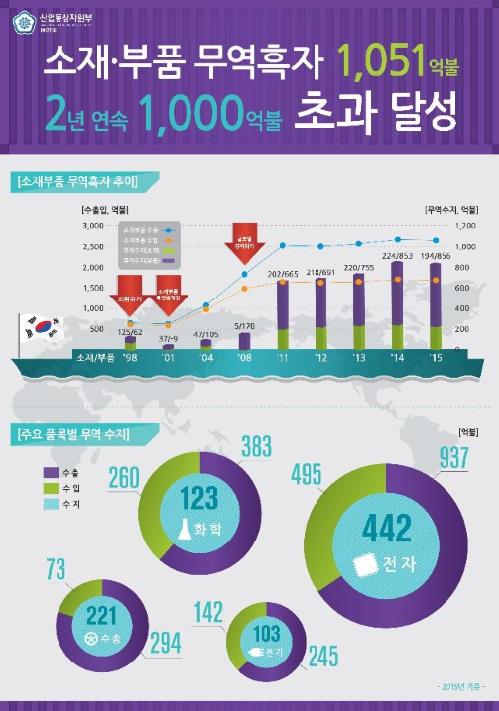 Looking closely at the details of exports and imports, exports recorded $264.7 billion, a 4.1% decrease from the previous year, accounting for 50.2% of total exports ($527.2 billion). While exports to ASEAN increased slightly, driven by a 35.2% increase in exports to Vietnam, exports to most regions, including Europe and Japan, decreased.
While components such as electronic parts (+0.5%), electrical machinery parts (+3.2%), and computer and office equipment parts (+13.0%) showed strength, most materials sectors, with the exception of non-metallic minerals (12.7%), experienced a decline in exports due to factors such as falling unit prices caused by the sharp drop in oil prices.
Imports recorded $159.7 billion, down 5.1% from the previous year, accounting for 36.6% of total imports ($436.8 billion). While imports from most regions decreased significantly, including Japan, the Middle East, and Europe, imports from Vietnam (+73.2%) increased substantially.
By region, the concentration of exports to China increased, while dependence on imports from Japan decreased. In particular, the share of trade with Vietnam showed an upward trend. Although exports to China decreased slightly ($95.3 billion to $93.5 billion), the concentration of exports of materials and components to China rose to 35.3%. Dependence on imports from Japan recorded an all-time low of 16.5%.
A noteworthy point is that Vietnam’s trade share reached a record high of 4.8% as both exports and imports increased significantly. Vietnam’s exports rose from $12.5 billion in the previous year to $17 billion, while imports increased from $1.9 billion to $3.3 billion.
An official from the Ministry of Trade, Industry and Energy stated that last year’s import and export trends for parts and materials signify that the domestic materials and parts industry has moved away from a chronic trade deficit and has stably entered an era of a $100 billion surplus, following its first-ever surplus in 1997.
In addition, he added that this indicates the growth paradigm of the domestic manufacturing industry has shifted from an assembly industry to one centered on materials and components.
However, strengthening the competitiveness of the materials industry, which lags relatively behind the parts industry, remains a future challenge for the manufacturing sector.
The Ministry of Trade, Industry and Energy plans to establish the '4th Basic Plan for the Development of Materials and Components' within this year and provide support so that the materials and components industry can become a driving force for 'Manufacturing Innovation 3.0' and 'recovery of $1 trillion in trade.'
관련뉴스
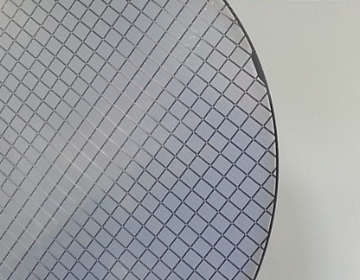
Semiconductor exports in the second half are bright, while home appliances and flat-panel displays are cloudy.
According to the first-half export and import trends announced by the Ministry of Trade, Industry and Energy (Minister Yoon Sang-jik), first-half exports declined 5.0% year-on-year, while information technology (IT) products such as semiconductors and computers showed strong performance. Breaking down first-half export growth rates (%) by product category, the IT sector saw increases in computers (9.6), semiconductors (6.1), wireless communication devices (1.5), and flat panel displays (10.8).
2015.07.03by 명세환 기자
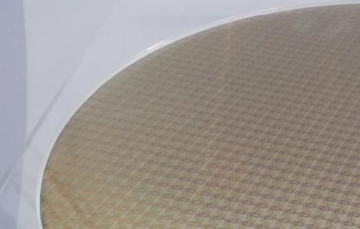
ICT exports in June increased for the second consecutive month driven by strong performance in mobile phones and semiconductors.
산업통상자원부는 세계 ICT 시장 축소와 교역 여건 악화 등 어려운 여건 속에서도 휴대폰 및 시스템반도체 등 주력품목의 수출은 증가했다고 밝혔다. ICT 수출은 소폭이지만 2개월 연속으로 증가(5월 2.0%, 6월 0.2%)했다. 품목별로는 휴대폰(22.5억 달러, 19.4%↑), 반도체(53.1억 달러, 3.0%↑), 컴퓨터 및 주변기기(5.8억 달러, 6.9%↑)는 증가했으나, 디스플레이 패널(20.6억 달러, △12.7%), 디지털 티브이(이하 ‘D-TV’/ 3.6억 달러, △36.0%)는 감소했다. 휴대폰은 국내 기업의 전략 스마트폰(갤럭시S6, G4)과 모바일프로세서(AP) 등 부분품 수출 증가로 두 달 연속 두 자릿수 성장세(19.4%↑)를 기록했다. 수출을 품목별로 살펴보면 스마트폰은 9.6억 달러로 31.9% 증가했고, 부분품은 12.7억 달러로 12.3% 증가했다.
2015.07.20by 명세환 기자
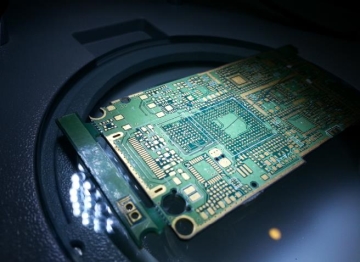
September Import/Export Trends: Strong Performance in Exports of Semiconductors, OLEDs, SSDs, etc.
산업통상자원부의 9월 수출입 동향 발표에 따르면, ICT분야의 주력품목 수출은 호조 내지는 증가한 것으로 나타났다. 10월에는 북미 블랙프라이데이(11월 넷째주), 유럽 박싱데이(12.25일 전후) 등 주요시장의 연말 성수기를 앞두고 수출규모가 증가할 전망이라고 보고서는 전했다.
2015.10.01by 신윤오 기자
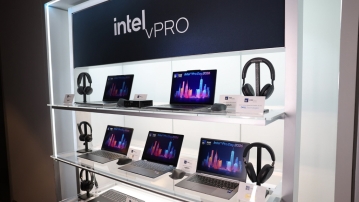
Intel Unveils Next-Generation 'Core Ultra Series 3' and vPro Platform for Enterprise PCs
인텔이 차세대 기업용 PC를 위한 ‘인텔 코어 Ultra 시리즈 3’와 최신 vPro 플랫폼을 공식 발표하며, 기업용 노트북부터 고성능 워크스테이션까지 폭넓은 수요 충족에 나섰다.
2026.03.26by 배종인 기자
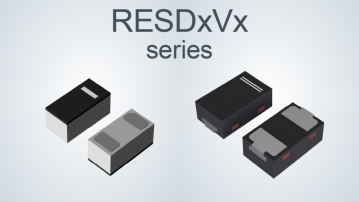
ROHM Launches ESD Protection Diode Compatible with High-Speed Interfaces of 10Gbps or Higher
반도체 전문 기업 로옴(ROHM)이 10Gbps를 넘어서는 차세대 고속 데이터 통신 환경에 대응할 수 있는 ESD(정전기 방전) 보호 다이오드 ‘RESDxVx 시리즈’를 개발하며, 고속 인터페이스에서 요구되는 신호 품질 유지와 IC 보호 성능을 동시에 끌어올렸다.
2026.03.26by 배종인 기자











