


[Review] FeRAM, Capable of Low Power and High-Speed Data Storage, 'Perfect' for IoT Devices
 Published2016.02.12 11:32
LAPIS Semiconductor (www.lapis-semi.com/kr), a member of the ROHM (www.rohm.co.kr) group, has developed a 64Kbit ferroelectric memory (hereinafter FeRAM) equipped with a serial bus, suitable for smart meters, healthcare devices, car navigation systems, etc., that require high-frequency log data acquisition and high-speed data backup in emergencies.
 FeRAM, which is attracting attention as a next-generation non-volatile memory, contributes to the low-power and high-functionality of applications due to its characteristics of high-speed data rewrite, high rewrite resistance, and low power consumption compared to generally available non-volatile memory.
Realization of lowest operating voltage and operating frequency
This FeRAM product ( MR44V064B/MR45V064B) achieves the industry's highest minimum operating voltage of 1.8V, allowing FeRAM to be used with two nickel-hydrogen batteries. With two AAA rechargeable batteries, it is possible to rewrite for about 11 years (at 64Kbit per second rewrite), further contributing to the long-term operation of applications and making it usable in portable devices and IoT fields.
In addition, it supports a maximum operating frequency of up to 40MHz (SPI BUS), enabling 64Kbit data rewrite time to be executed in just 1.64msec, thereby realizing high data reliability through ultra-high-speed backup in the event of a system failure. Two types of products with different serial BUSes (I2C BUS, SPI BUS) are available, allowing for compatibility with the customer's system specifications.
Mass production of this product began in January 2016 (sample price 500 yen/unit). Front-end production is carried out at the ROHM headquarters factory (Kyoto), while back-end production is handled by ROHM Electronics Philippines. Lapis Semiconductor plans to continue developing low-power, high-performance products and expand its product lineup with various capacities and interfaces to meet customer demands.
What is the reason for developing this?
Recently, due to the trend toward lower power consumption, low-voltage operation of the entire system is required not only in automobiles and industrial equipment but also in all applications. At the same time, as the amount of data increases due to high functionality, it has become necessary to store information in memory at high speed. Lapis Semiconductor has been developing the FeRAM series since 2011 through the fusion of ROHM's ferroelectric memory manufacturing technology and Lapis Semiconductor's memory design technology.
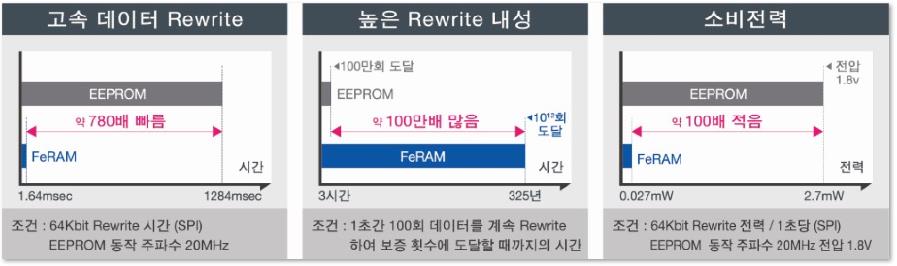
▲ Characteristics of FeRAM
What advantages does it have?
1. Enables long-term battery operation with a minimum operating voltage of 1.8V.
By utilizing ROHM’s low-power ferroelectric process technology and securing the gate potential of the memory select transistor under low voltage, the industry’s lowest operating voltage of 1.8V has been realized. As a result, memory can be used with just two nickel-hydrogen batteries. For example, since it can operate for approximately 11 years using two AAA batteries while continuously rewriting 64Kbit (about 10 sheets of manuscript paper) of data once per second, it can be utilized in IoT fields that require long-term battery operation.
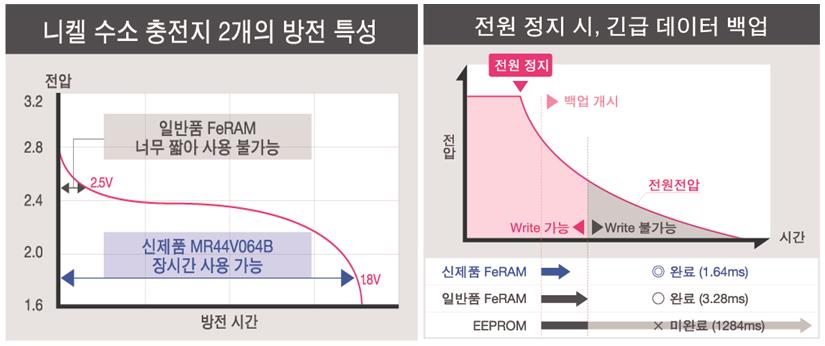
▲ Discharge characteristics of two nickel-hydrogen batteries of ROHM FeRAM and emergency data backup characteristics upon power interruption.
2. Realization of the highest level of high-speed operation
Ultra-high-speed access was achieved by reducing the selector load when selecting ferroelectric capacitors for data storage. It supports Hs-mode with an industry-leading operating frequency of 3.4 MHz via I2C. It also supports an industry-leading maximum operating frequency of 40 MHz via SPI, enhancing the high-speed data rewrite feature that is an advantage of FeRAM.
Since the 64Kbit data rewrite time is very high at just 1.64msec, data can be backed up before the power is cut off even in the event of unexpected voltage drops such as power outages, resulting in a low risk of data loss and eliminating the need to deploy components to extend the power supply in preparation for power failures. It is suitable for applications requiring high security for data preservation along with high speed.
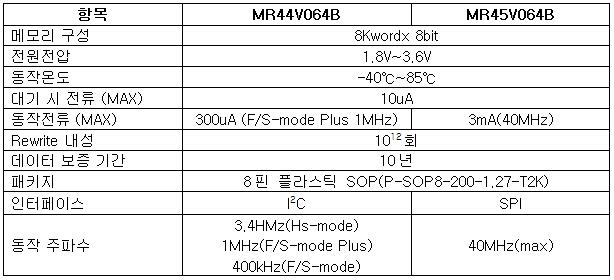
■ Product Specifications Summary
관련뉴스
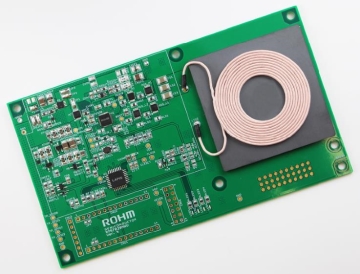
ROHM Expands Market by Completing Wireless Charging Reference Design
로옴(ROHM) 주식회사(www.rohm.co.kr)는 무선 충전 제어 IC(BD57020MWV)을 탑재한 레퍼런스 디자인으로 무선 충전의 국제 규격인 WPC Qi 규격 Medium Power의 Qi 인증을 세계 최초로 취득했다고 밝혔다.
2015.11.06by 신윤오 기자
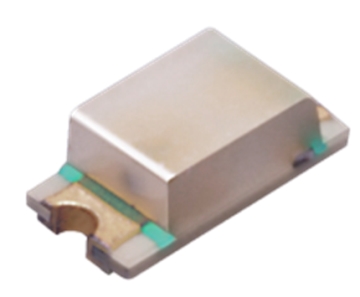
ROHM Develops 1608 Size High-Brightness Chip LED
로옴(RHOM)은 카 오디오 및 계기판 등의 자동차기기를 비롯 산업기기, 민생기기의 표시 판넬에 적합한 단일 랭크 대응 1608 사이즈의 고광도 칩 LED 「SML-D15 시리즈」 개발을 출시했다.
2015.11.20by
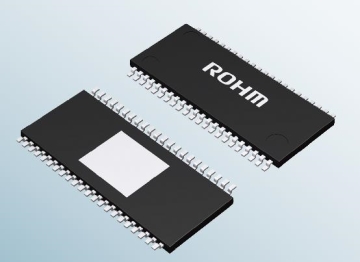
ROHM Develops System Power IC for High-Efficiency Car Audio
로옴(ROHM) 주식회사는 다기능화되고 있는 카 오디오 전원용으로, 업계 최소의 동작전력을 실현한 시스템 전원 IC(BD49101AEFS-M)을 개발했다고 밝혔다.
2015.11.27by 명세환 기자
.jpg)
SalePoint Signs Multi-Year Partnership Agreement with AWS… Promoting Identity Security that Integrates Even AI Agents
세일포인트가 AWS와 다년간의 전략적 협력 계약을 체결하고, 인간과 비인간 아이덴티티를 함께 관리하는 통합 거버넌스 체계 구축에 나선다. AI 에이전트가 업무 수행 주체로 늘어나는 환경에서 접근 권한을 일관되게 관리하고, 최소 권한 원칙과 자동화된 정책 집행을 적용하겠다는 구상이다. 양사는 AWS 환경에서 AI 에이전트를 포함한 다양한 주체의 아이덴티티를 하나의 레이어에서 관리하는 기능을 공동 확대할 계획이다. 이번 협력은 AI 도입이 확대되는 기업 환경에서 보안과 거버넌스를 함께 설계하려는 움직임으로 해석된다.
2026.03.26by 배종인 기자
.png)
Databricks Unveils Open AI Security Monitoring 'Lakewatch'
데이터브릭스가 3월 24일 개방형 에이전틱 SIEM ‘레이크워치’를 공개하며 보안 시장에 진입했다. 이 제품은 보안, IT, 비즈니스 데이터를 단일 환경에서 통합 분석해 AI 기반 위협 탐지와 조사를 지원하는 것이 핵심이다. 회사는 고비용 구조 때문에 일부 데이터를 포기해온 기존 보안관제의 한계를 줄이고, 개방형 형식과 생태계를 바탕으로 대규모 데이터 분석과 자동화를 가능하게 한다고 설명했다. 레이크워치는 현재 프라이빗 프리뷰로 제공되며, 어도비와 드롭박스 등이 초기 고객으로 언급됐다. 데이터브릭스는 앤트로픽과 협력을 확대하고 안티매터, SiftD.ai 인수도 함께 발표했다.
2026.03.26by 배종인 기자











