



China, the creator of global IT giants, is now going all-in on the electric vehicle industry.
 Published2016.02.17 16:58
In a recent report titled "Chinese EV IT Companies Are Recreating the Success Story," LG Economic Research Institute argued that "the Chinese government's active support for the EV industry incorporates the government-led growth model that elevated the IT industry to a world-class level, demonstrating the government's determination to raise the EV industry to a global standard."
In 2015, China's electric vehicle sales increased more than threefold compared to the previous year, and the annual market size surpassed 200,000 units. The researchers analyzed that the explosive growth of the electric vehicle market appears to have been significantly influenced by the Chinese government's policy support, including subsidies for Chinese companies, the establishment of infrastructure for EV operation, the creation of a market environment favorable to Chinese firms, and government-led demand expansion.
On May 24 of last year, President Xi Jinping, who visited SAIC Motor, China's largest automobile company, said, "The development of new energy vehicles (hereinafter 'electric vehicles') is an essential course for China to go from a major automobile nation to an automobile powerhouse."
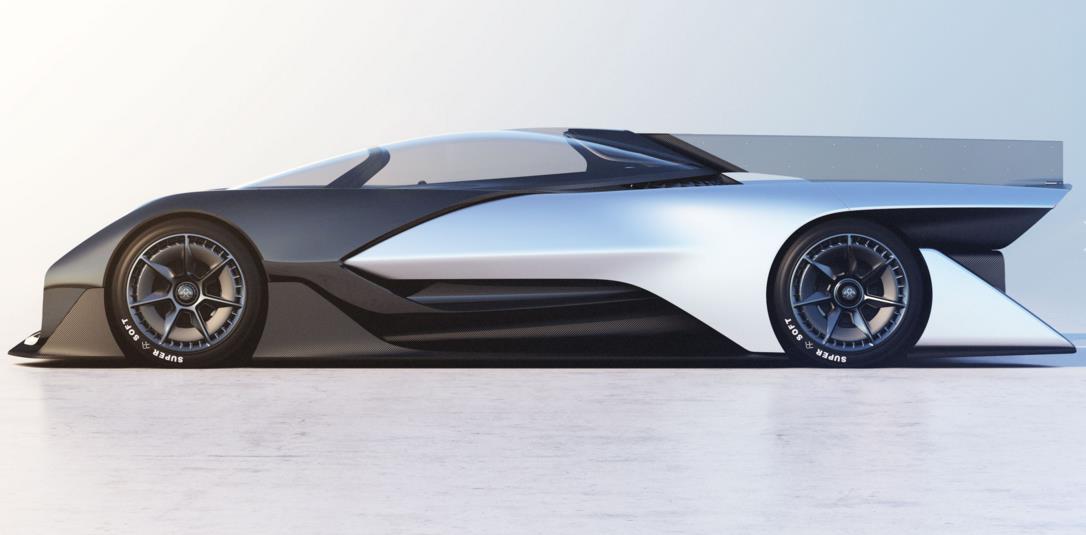
Faraday Future attracted attention by unveiling a sports car-shaped electric vehicle called the FFZERO1 at CES held in Las Vegas, USA last January.
BYD, which accumulates capabilities through technology internalization in line with the government-led electric vehicle industry growth strategy; Beijing Automotive, which actively adopts technology through cooperation with external companies; Chery, which demonstrates rapid market responsiveness with small electric vehicles of low specifications and low prices; and Zotye, which grew based in rural areas, are representative Chinese companies currently leading the Chinese electric vehicle market.
The report pointed out that, similar to the IT industry, it is highly likely that it is only a matter of time before local brands with competitiveness in the Chinese market emerge as global brands in the electric vehicle industry.
China Targeting the US EV Market?strong>
A newly launched electric vehicle attracted a lot of attention at CES held in Las Vegas, USA, this January. The sports car-shaped electric vehicle called the FFZERO1, created by Faraday Future, garnered interest from the automotive industry as it became known as a competitor to Tesla.
Faraday Future, which is benchmarking Tesla's strategy to enter the electric vehicle market, appears to be following Tesla's success formula exactly, as this vehicle development project was led by engineers from Tesla, its market entry strategy starting with a luxury sports car is similar to Tesla's, and it announced plans to build a production plant in Nevada, where Tesla's Gigafactory is located.
The report stated that while Faraday Future cannot be considered a purely Chinese brand and there may still be doubts regarding its potential for success, its future moves warrant attention given that a Chinese-involved electric vehicle has declared its entry into the global U.S. market.
Although electric vehicle sales in China have increased, there are still many challenges that need to be addressed for the market to grow stably. Consumer pain points, such as short driving range and a lack of charging facilities, remain unresolved.
However, the report predicted that despite the drawbacks of electric vehicles, demand for them in China will steadily increase. As grounds for this, the researchers cited three reasons in the report. First, the Chinese public's interest in quality of life and the environment is rising. Of the 161 cities inspected by the Chinese Ministry of Environmental Protection, 145 fell below the standards, leading to significant public dissatisfaction. There is a growing need to solve the problem of automobile exhaust gas, which accounts for one-third of PM 2.58.
Second, the government is planning to create an EV-friendly ecosystem alongside related industries with a strong commitment to fostering the electric vehicle sector. To secure a leading position in the next-generation automotive market, the Chinese government is considering factors such as upgrading the manufacturing industry and diversifying energy demand. Third, it is highly likely that the range of EV options available to Chinese consumers will diversify, and performance will also improve rapidly.
"Made in China 2025" envisions annual sales of over 1 million units for Chinese local electric vehicle brands and a global market share of over 70% by 2020, as well as Chinese EV companies entering the global Top 10. Furthermore, it aims to foster key EV components such as batteries and motors to a global level, targeting a 70% market share. By 2025, the goal is to achieve annual sales of 3 million units and a market share of 80%.
관련뉴스
What are the countermeasures for Korea's semiconductor industry, which is currently being closely pursued by China?
2015년 11월 10일, 국회 신성장산업포럼인 ‘반도체 산업 위기진단 및 대응전략’ 국회의원회관에서 진행되었다. 이날 포럼은 한국 반도체 산업의 현황을 분석하고, 미래의 지속성장 가능한 전략산업에 대한 지원방안을 모색하고자 마련됐다.
2015.11.10by
[기자 수첩] 반도체 IP특허를 통해 본 중국 반도체 굴기의 실체
최근 반도체 산업에서 가장 큰 이슈는 단연 중국이다. 중국 정부가 외산 비중이 높은 반도체를 국산화하는데 향후 약 180조원을 투입하기로 결정했기 때문이다. 중국은 2020년까지 업체 전체 매출의 연평균 성장률을 20% 이상 달성하겠다는 목표이다. 16/14나노 공정규모의 대규모 양산을 실현하고 패키징 및 테스트 기술을 국제 일류 수준으로 끌어 올리겠다는 포부이다.
2015.11.23by 신윤오 기자

A single misaligned light means 'defect'… Vehicle interior lighting now guarded by semiconductors and software
자동차 실내조명이 '보조 조명'의 자리를 벗어나고 있다. 색상과 애니메이션으로 브랜드 아이덴티티를 드러내고 운전자 취향을 담아내는 사용자 경험(UX)의 핵심 요소로 올라서면서, LED 실내 앰비언트 시장도 빠르게 커지는 중이다. 이에 관하여 '미래 자동차를 밝히는 지능형 LED 실내 조명 솔루션' 이라는 내용으로 기술 웨비나 세션을 발표하는 최영재 다보코퍼레이션 연구위원을 앞서 만나, 시장의 온도와 설계 요구의 변화를 들었다.
2026.08.28by 명세환 기자
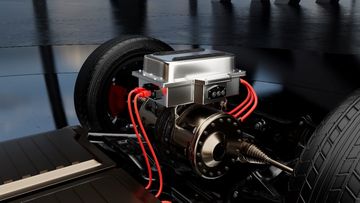
TI, HEV·EV 트랙션 인버터용 다축 코어리스 전류 센서 TMCS2100-Q1 공개
Texas Instruments가 HEV·EV 트랙션 인버터용 다축 코어리스 홀 효과 전류 센서 TMCS2100-Q1을 공개했다. 수평·수직 자기장을 동시에 측정하는 다축 센싱 기술로 기존 단일 축 센서 대비 최대 20배 높은 정확도를 달성하며, 버스바 무개조 설계로 기계 설계 유연성을 확보했다. 800V 아키텍처 확산에 따른 고정확도 요구 충족과 소형화를 동시에 구현한다.
2026.08.27by 배종인 기자











