



Fortinet Launches 'Cyber Threat Assessment Program'
 Published2016.03.08 09:32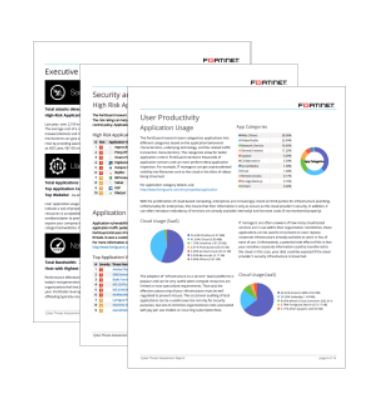
Fortinet Korea has announced the launch of a new Cyber Threat Assessment Program (CTAP).
This program has been established to provide detailed information on the volume and types of cyber threats that could pose risks to networks but remain undetected by an organization's security solutions. According to Fortinet, the program integrates risk and advisory functions into its end-to-end security platform through Fortinet's FortiGuard threat intelligence team, aiming to provide visibility into cyber risks.
The company plans to offer this program at no cost, and during the assessment process, FortiGate firewalls will be deployed on customer and prospective customer networks. The program will closely monitor application traffic traversing the network to identify malware, malicious applications, and intrusions that could grant attackers access to an organization's most critical files and database information, potentially causing severe risks to the network.
At the completion of the data collection phase, FortiAnalyzer will provide analysis results on application traffic, user productivity, network utilization, overall security risk, and related business risk, along with actionable mitigation strategy recommendations.
(Image: Fortinet website screenshot)
Fortinet's Cyber Threat Assessment Program (CTAP) helps organizations avoid reliance on legacy systems that cannot effectively respond to dynamic cyber attacks that may occur across various vectors and stages. Additionally, by providing in-depth analysis of existing or potential threats, the program helps customers assess risks to their business environment.
Numerous enterprise customers and prospective customers of Fortinet in the United States have utilized the Cyber Threat Assessment Program (CTAP) over the past four months, and the findings derived from the analysis reports are as follows.
Organizations of all sizes and across all industries are constantly exposed to hostile threats. Their networks experienced over 32.14 million attack attempts. Well-known malware such as Conficker, Nemucod, and ZeroAccess made numerous attempts to infect machines, with Conficker attempting 5,230 times, followed by Nemucod with 4,220 attempts, and ZeroAccess with 3,210 attempts.
Social media and multimedia streaming activities were found to account for 25.65% of total network traffic. Such activities expose corporate systems and critical company data to infection risks through downloads, social engineering, and malvertising. Facebook accounts for 47.27% of total social media traffic and was identified as the most-used social media site, followed by YouTube, which accounts for 42.29% of traffic due to streaming content.
Application control has become an ongoing challenge for administrators. BitTorrent and gaming activities, which comprise most peer-to-peer (P2P) traffic, create the possibility for malicious content to infiltrate networks when applications and files are downloaded through these popular sites. Organizations should take this into account when establishing application control policies on their networks.
Because of the advantage of obtaining "profitable" financial data upon successful network penetration, 44.6% of all malicious activities target banks and financial organizations. Hackers attempt high-velocity attacks against financial institutions through "land and expand" attacks, where they penetrate networks and persistently attack, as well as through sophisticated Trojans.
John Maddison, Senior Vice President of Product and Solutions at Fortinet, stated, "Today's evolved network threats are designed to evade detection by easily bypassing traditional firewalls. Our new CTAP program enables customers to rapidly detect threats, mitigate business risks, and protect their networks."
Related news
Fortinet Korea Hosts '2016 Fortinet Security Forum'
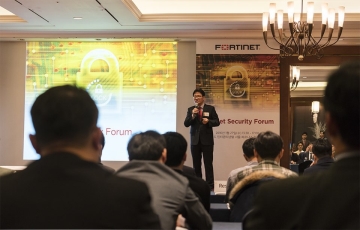
Fortinet Korea, a network security solutions company, announced on the 28th that it successfully held the '2016 Fortinet Security Forum' for customers and users at the Grand InterContinental Hotel in Samseong-dong on Wednesday, January 27, 2016.
2016.01.28by 명세환 기자
Fortinet Announces New Security Operating System Enhancing Control and Visibility
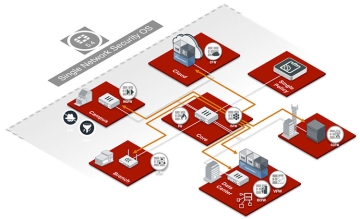
Fortinet Korea, a global leader in high-performance network security solutions, today announced the latest update version of its cybersecurity operating system, FortiOS 5.4. FortiOS 5.4 provides new features that enable segmentation of internal networks for intelligent threat defense and prevention.
2016.02.18by
Fortinet and IDG Korea Announce Survey Results on 'Domestic APT Security Awareness and Adoption Status'
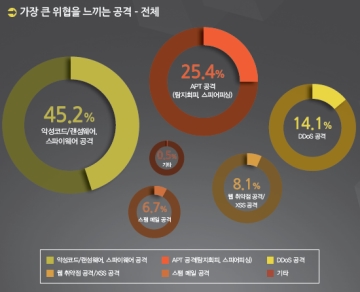
Fortinet Korea today announced the results of a survey on "Domestic APT Security Awareness and Adoption Status" conducted jointly with Korea IDG. Fortinet Korea and Korea IDG conducted this survey to understand how much security managers at domestic companies know about APT and how they are responding to it. The survey collected and analyzed responses from 405 domestic security officers and administrators through IDG TechSurvey (http://www.itworld.co.kr/techsurvey) from December 14, 2015 to January 12, 2016.
2016.03.03by 명세환 기자











