
Analog Devices and LifeQ Plan a Differentiated Bio-Information Monitoring Device
 Published2016.05.03 14:46
Analog Devices, a high-performance semiconductor company for signal processing applications, announced plans to collaborate with LifeQ to develop technology for noninvasive biometric monitoring devices that provide physiological data with high accuracy that is currently only available through expensive, invasive surgical equipment.
The two companies plan to combine Analog Devices' industry-leading technology and innovation with LifeQ's unique biomathematics capabilities to design sensors that can continuously and accurately track physiological parameters such as heart rate, sleep stages, sleep quality, blood lactate, and 24-hour calorie intake, as well as stress indicators such as salivary cortisol. As this type of data becomes more monitorable, there will be an increase in the early detection of emergencies and diseases in at-risk patients.
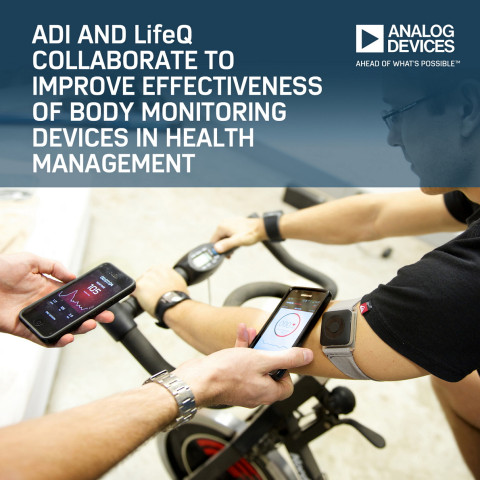
“Developing smart wearable sensors is essential to supercharging the next generation of noninvasive biometric monitoring solutions,” said James Doscher, general manager, Industrial and Business Healthcare, Analog Devices. “ADI provides the semiconductor expertise, and LifeQ provides the biomathematical knowledge base needed to develop sensors that can help biometric monitoring devices more effectively prevent, predict, and manage disease. This will have a profound impact on how doctors and patients share information, interact, and make decisions about their care. This will give patients greater access to their own vital information, empowering them to take greater ownership of their overall health and wellness.”
Comments
Related news

If a healthcare car detects a driver's heart attack and stops the vehicle safely
A recent analysis report released by Frost & Sullivan Korea, titled 'Car as A Doctor - Automotive Industry Embracing In-car Health Monitoring and Wellbeing (https://www.frost.com/q295543940)', investigates health, wellness, and wellbeing (HWW) features in automobiles and discusses future prospects for the automotive industry.
2015.12.23by 신윤오 기자
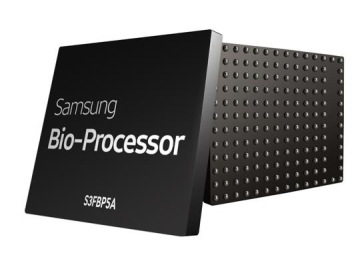
Will Samsung Electronics Preempt the Healthcare Market with Mass Production of Bio Processors?
Samsung Electronics announced that it will begin mass production of a bio processor ('S3FBP5A'), which is the industry's first semiconductor chip that integrates the functions of collecting and processing various biosignals into a single chip. This product is Samsung Electronics' first bio processor, and unlike existing multi-functional sensors, it implements a microcontroller (MCU), a digital signal processing (DSP) processor, and embedded flash memory all on a single chip.
2015.12.29by 신윤오 기자
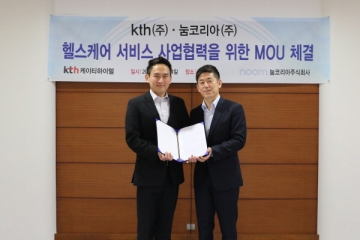
KTH Signs MOU with Mobile Healthcare Company Noom
KTH has announced that it has signed a Memorandum of Understanding (MOU) with mobile healthcare company Noom for mutual cooperation in health analysis information business, and has decided to implement 'Noom Health' in its own health management solution 'WellC'.
2016.01.14by 명세환 기자

Smart healthcare, do you have a 'medical assistant' just for you?
The wellness industry is a sector supported as part of the 19th Future Growth Engine customized investment strategy, encompassing mobile-based healthcare including wearable devices and health-related applications. The wellness investment strategy supports the development of wellness IT programs and platforms linking hospitals and companies, cultivates specialized personnel for wellness device services, and supports the acquisition of international standards for devices. Additionally, it promotes the development of testing and certification methods and service guidelines. This includes pilot projects for mobile healthcare at public health centers.
2016.04.04by 신윤오 기자

Group-IB Supports INTERPOL's 'Operation Serengeti III'…1,462 Suspects Arrested
Group-IB supported INTERPOL's 'Operation Serengeti III' with threat intelligence, successfully assisting international collaborative investigations across 21 African nations. During the operation conducted from June to August 2026, 1,462 suspects involved in transnational cyber crimes including phishing, Business Email Compromise (BEC), and ransomware were arrested, over $105 million in illicit funds were recovered, and 10,909 malicious networks were disrupted.
2026.11.02by 배종인 기자