


ADI Announces New Low-Noise 3-Axis MEMS Accelerometer
 Published2016.08.24 16:53
Analog Devices (Korea Representative Director Yang Jae-hoon) has announced a new 3-axis MEMS accelerometer.
With the newly announced MEMS accelerometer, high-resolution vibration measurement with very low noise is possible, enabling early detection of structural defects through wireless sensor networks (WSN).
The newly launched ADXL354 and ADXL355 accelerometers feature low power consumption, extending battery life and reducing battery replacement intervals while increasing product operating time. Thanks to the low noise performance and low power consumption of the ADXL354 and ADXL355 accelerometers, low-level vibration measurement applications such as Structural Health Monitoring (SHM) systems can now be used cost-effectively.

Additionally, the ADXL354 and ADXL355 accelerometers provide excellent repeatability with respect to inclination stability, maintaining superior performance even as temperature and time change. These characteristics make them suitable for orientation and navigation systems in unmanned aerial vehicles utilizing Inertial Measurement Units (IMU) and inclinometers. These new accelerometers deliver repeatable tilt measurement results under any conditions, minimizing tilt errors without additional calibration even in harsh environments.
The ADXL354 and ADXL355 accelerometers guarantee temperature stability with a null offset coefficient of 0.15mg/°C (maximum). When stability is assured, resources and costs required for calibration and inspection can be minimized, increasing device OEM-related throughput. Furthermore, the hermetically sealed package used in the product helps maintain repeatability and safety specifications long after final products are shipped from the factory.
The ADXL354 and ADXL355 accelerometers offer ±2g to ±8g full scale range (FSR) output, selectable digital filters between 1Hz and 1kHz, and low noise density performance of 25µg/√Hz at current consumption below 200µA, with reduced power consumption and BOM costs that are competitive with much more expensive alternatives.
Related news
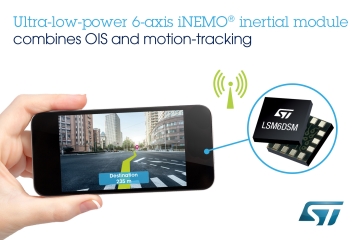
ST, 6-axis MEMS sensor module that turns smartphones into personal assistants
ST has newly launched the LSM6DSL and LSM6DSM, ultra-compact 6-axis MEMS inertial modules designed for ultra-low power consumption. These new products not only enhance the emerging role of smartphones as "always-on" personal assistants, but can also improve the user experience in digital cameras, wearables, remote controls, gaming consoles, drones, and virtual reality (VR) applications.
2016.02.24by 명세환 기자

[Company Review] Yuwoo Electronics Targets Global Market with MEMS-Based Infrared Sensors
U-Electronics (CEO Han Yong-hee), a specialist in uncooled infrared sensors, is a company specializing in infrared sensors based on MEMS technology. MEMS technology is the fundamental technology for developing and manufacturing thermal imaging sensors. U-Electronics is the only domestic company with over 15 years of experience and expertise in MEMS-based thermal imaging sensors. The company supplies this product to various fields. The major business areas are smart devices, smart building automation IoT, automotive, and industrial sectors. In other words, it targets the smart device field such as camera modules, non-contact thermometers, wearable bands and glasses, and DIY (home, car, security) applications, as well as the smart building automation IoT field including human detection, energy saving, intrusion detection, and fire prevention sensing.
2016.06.20by 신윤오 기자
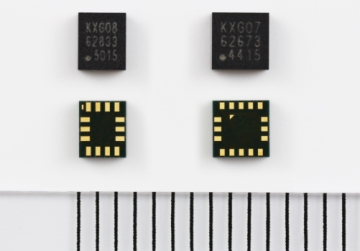
ROHM Develops 6-Axis Accelerometer and Gyrocombo Sensor with 50% Reduced Power Consumption
ROHM Group's Kionix has announced the development of the 6-axis accelerometer and gyroscope combo sensors "KXG07" and "KXG08," which are optimized for applications seeking to realize motion sensing with low power consumption, such as smartphones, wearable devices, and gaming consoles. These devices adopt Kionix's proprietary phase detection sensing method instead of the conventional amplitude detection-based sensor signal sensing method, enabling miniaturization of the large-scale amplification circuits that were previously required in conventional gyroscope sensors, and achieving low power consumption of 0.6mA, which represents a 50% reduction compared to standard products.
2016.07.20by 신윤오 기자

Intel Unveils Next-Generation 'Core Ultra Series 3' and vPro Platform for Enterprise PCs
Intel has officially unveiled the "Intel Core Ultra Series 3" for next-generation enterprise PCs and the latest vPro platform, addressing a wide range of demands from enterprise notebooks to high-performance workstations.
2026.03.26by 배종인 기자
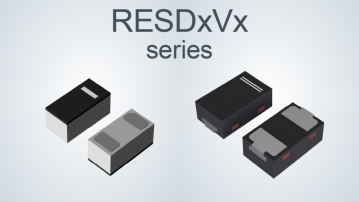
ROHM Launches ESD Protection Diode Compatible with High-Speed Interfaces of 10Gbps or Higher
Semiconductor specialist ROHM has developed the 'RESDxVx series' of ESD (electrostatic discharge) protection diodes capable of responding to next-generation high-speed data communication environments exceeding 10Gbps, simultaneously enhancing both signal quality maintenance required in high-speed interfaces and IC protection performance.
2026.03.26by 배종인 기자











