



Security difficulties due to vulnerable security infrastructure, lax networks, and slow threat detection
 Published2016.09.05 14:36
Ransomware Evolving by Releasing Various Variants to Maximize Profits
Cisco has released the 'Cisco 2016 Midyear Cybersecurity Report,' which contains recent security threat trends and solutions.
According to the report, ransomware is evolving by releasing various variants to maximize profits. Many companies cited vulnerable security infrastructure, lax networks, and slow threat detection speeds as the primary reasons for struggling with the increasing number of ransomware variants.
Ransomware is currently the most profitable type of malware. New ransomware variants are rapidly shifting their tactics to maximize the efficiency of their attacks. Recently, attackers have been shifting their focus from clients to servers. Furthermore, it is predicted that more destructive ransomware variants will continue to emerge, capable of self-replicating and spreading to take over entire networks and hold companies hostage. For example, future ransomware attacks may bypass detection by limiting CPU usage or evade command and control (C&C) measures.
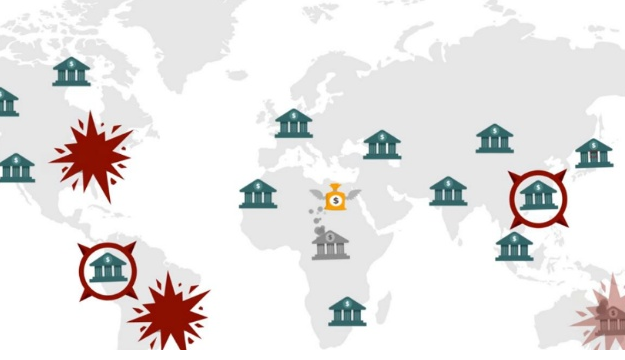
▲ Refer to the Cisco blog homepage
To minimize damage from ransomware variants, it is important to secure visibility across the network and endpoints. Cisco emphasized reducing 'Time to Detection (TTD)' as a solution to ransomware variants. Reducing TTD restricts attackers' operational space and minimizes damage from intrusions. Currently, the average time it takes for companies to identify new threats is about 200 days. For the six-month period from October 2015 to April 2016, Cisco's median TTD was 13 hours. This represents a reduction of approximately 26% compared to the 17.5 hours measured in October 2015.
Recently, targets have become increasingly broad, regardless of industry or region. Studies have shown that healthcare, charities, non-governmental organizations (NGOs), and IT companies have also experienced an increase in attacks. Conflicting cybersecurity policies across nations and the complexity of national regulations are among the geopolitical concerns. In the face of complex threats, the need for data control or access is highly likely to lead to friction in international trade.
Marty Roesch, Vice President of Cisco’s Security Business Group, stated, “Security must be a priority to seize new business opportunities arising from digital transformation. Attacks are becoming more sophisticated to evade detection, and the duration of attacks is increasing. Therefore, enterprises must strengthen their security capabilities, such as improving network visibility and replacing aging infrastructure.” He added, “Cisco’s security organization collaborates with customers to block sophisticated attacks and provides security services with superior control and visibility.”
The key contents of the 'Cisco 2016 Mid-Year Cyber Security Report' include ransomware trends, attack vectors (PDF, Java, Flash, Tor), threat protection (patching, infrastructure obsolescence, encryption, TLS, time to detection, ransomware medical attack cases), and global trends and recommendations, which can be downloaded from this page. In addition, more details about the ransomware highlighted in this report can be found on the official Cisco Korea blog.
관련뉴스
35% Illegal Software Usage Rate in Korea, High Cybersecurity Risks
The Business Software Alliance (BSA) announced that the illegal software usage rate among computer users in Korea reached 35%, despite the high correlation between unlicensed software and cyberattacks. This finding was revealed through the BSA Global Software Survey: Seizing Opportunity Through License Compliance, recently published by the Business Software Alliance. While this represents a 3 percentage point decrease compared to the same survey conducted in 2013, it still indicates that numerous domestic systems remain exposed to cyberattacks.
2016.05.25by 명세환 기자
Mobile Security Industry Growth Outlook: Will Adoption of Cloud-Based EMM Solutions Increase?
According to the "Domestic Enterprise Mobile Security Software Outlook Report 2016-2020" recently published by Korea IDC (CEO Hong Yu-suk), the domestic enterprise mobile security software market last year was estimated at approximately 14 billion won. Furthermore, this market is projected to grow at an average annual rate of 12.2% over the next five years, forming a market scale of 25 billion won by 2020. The report predicts that as smart work environments become more commonplace, enterprises will review various mobile security solutions to support company-wide mobile operations based on stronger security policies. With smart devices extending beyond PCs, smartphones, and tablets to include recently emerging wearable devices such as smartwatches, the range of smart device control has expanded, and the areas requiring management are growing accordingly. This situation calls for enterprise-level device management. Consequently, interest in the adoption and implementation of cloud-based EMM solutions is expected to increase progressively.
2016.06.14by 김수지 기자

ADI Strengthens IoT Security Capabilities Through Acquisition of Cybersecurity Solution Business
Analog Devices (Korean Representative Director Yang Jae-hoon) announced that it has acquired the Cyber Security Solutions (CSS) division of Sypris Electronics LLC. Through this acquisition, ADI will be able to provide high-performance analog solutions with enhanced security tailored to current and future market demands, thereby significantly strengthening its Internet of Things (IoT) solution capabilities. The Cyber Security Solutions division of Sypris Electronics is recognized as a leader in secure systems, software products, and technology fields. Sypris Electronics has provided information security services based on high reliability to important customers such as military and government agencies that require responses to sophisticated nation-state threats and attacks for more than 50 years.
2016.08.19by 김수지 기자
.png)
Databricks Unveils Open AI Security Monitoring 'Lakewatch'
Databricks entered the security market on March 24 by unveiling LakeWatch, an open-source agentic SIEM. The core functionality of this product is to integrate and analyze security, IT, and business data in a single environment to support AI-based threat detection and investigation. The company explained that it reduces the limitations of existing security operations centers, which have had to forgo some data due to high cost structures, and enables large-scale data analysis and automation based on open formats and ecosystems. LakeWatch is currently offered as a private preview, with Adobe and Dropbox mentioned as early customers. Databricks also announced an expanded partnership with Anthropic as well as the acquisition of Antimatter and SiftD.ai.
2026.03.26by 배종인 기자

Kaspersky Unveils Revamped 'NEXT' Combining SOC Integrated Management and AI Analytics
As enterprises increase demand for integrated management and automation in the construction and operation of Security Operations Centers (SOC), Kaspersky has disclosed updates to its B2B security product suite 'Kaspersky Next'. This update expands EPP, EDR, XDR, and SIEM integration through a single console based on OSMP, incorporates AI capabilities such as DLL hijacking detection and suspicious account takeover behavior identification, and includes integration with generative AI assistant tool KIRA. The company stated that in large-scale deployment environments, EDR Expert can reduce resource requirements by up to 30%, and XDR Expert by up to 60%.
2026.03.25by 배종인 기자











