



What is needed to enter the Chinese VR market is 'this'
 Published2016.10.17 14:25
Finding a hardware partner and prioritizing profitable content makes entering the Chinese market easier.
What is the reason behind the rapid growth of China's Virtual Reality (VR) industry? Experts attribute this to the Chinese government's support policies, the swift response of Chinese companies, and the country's socio-cultural environment. An event was held to provide insight into the present and future of China's VR industry. Clues could be found at the Korea-China VR Industry Workshop, held as part of the 'Korea VR Festival' organized by the government during the first week of October. Experts from prominent companies currently standing in the Chinese VR industry participated in the workshop, delivering vivid information about the Chinese market. Accordingly, this publication aims to explore the current state of the Chinese VR industry and the future direction of the domestic industry through a live coverage of the discussion. The following is a summary of the discussion.
Discussion participants
Moderator: Professor Yoo Chang-seok, Kyung Hee University
CEO Wu Jingwei, Storm Mirror
Jang Ri, Chief Strategy Officer, Deepoon
Huang Wei, Chief Strategy Officer, 3Glasses
Tony Chia, Vice President, Nibiru
CEO Andrew Kim, 87870
Professor Yoo Chang-seok: I will discuss two topics: the Chinese government's policies regarding the development of virtual reality technology in China, and the convergence of Chinese virtual reality with other industries. First, I will discuss the Chinese government's policies on virtual reality. Although the recent boom in virtual reality began in the United States, it is growing faster in China than in any other country. It is currently being closely watched as a future strategic industry. While the importance of the industry itself is a factor in the development of China's virtual reality sector, it appears that China's scientific, economic, and social environment has also had a significant impact. I am curious to know which of these factors you believe have had the greatest influence on the Chinese virtual reality industry. Vice President Tony, please speak first.
Tony Chia (titles omitted): They are doing well in many fields. China is quick to implement changes (in the industry). Furthermore, China has the advantage of a large consumer market. Everything (socio-economic policies, etc.) has had a collective impact. Globally, China is moving ahead. Although Korea started relatively late, it seems to be ahead in content production and government policy. While China excels in the technology sector, it has also acquired big data technology. I would like to share this know-how with Korea.

< Captured from Deepoon VR, China>
Professor Yoo Chang-seok: What role is the Chinese government playing?
Zhang Li: VR companies in China have received significant support from the government. The Chinese government is paying increasing attention to VR companies. At the recent G20 summit in Hangzhou, President Xi Jinping stated that artificial intelligence and virtual reality will lead the next generation of the Chinese economy, emphasizing the need to combine virtual reality technology with the real economy. He also stressed the importance of integrating it with other industries. In response, China established the Virtual Reality Industry Alliance last September. Over 180 companies, including research institutes and organizations, participated in the alliance. The objective is to establish standards. VR systems can only be built once all seven standards—covering various technologies, headsets, interaction, motion, and positioning—are established. The ecosystem can only develop when hardware and various platforms are combined. In this regard, I believe the government is pursuing strong VR policies. Furthermore, the private sector has also established an organization in Shanghai, bringing together mobile game companies from around the world to promote VR development. Not only the government, but also companies and institutions are coming together to build platforms. The goal is to combine technologies and share know-how.
Efforts to establish standards are underway with the active support of the Chinese government.
Professor Yoo Chang-seok: Are there no VR regulations in China?
Andrew Kim: I operate a major portal site in China, and the Chinese government is currently choosing support over regulation. They are forming alliances to encourage many companies to cooperate. While I don't know what the future holds, so far, I don't see any regulations hindering development and innovation. For now, I consider this a good opportunity, and Korean companies should also challenge this large market through exchanges with many Chinese firms.
Professor Yoo Chang-seok: Currently, VR presents physiological issues such as dizziness and safety concerns. How is China addressing these issues?
Tony Chia: In our case, we have a strong interest in technology. We are spending a significant amount of time, especially on mobile. Our partners are making great efforts to address motion sickness and discomfort. As Director Zhang Li mentioned, the government is trying to prevent motion sickness through standardized technology. In addition to motion sickness, there are also issues with eye discomfort and visual impairment. We aim to resolve these through technological efforts and the development of numerous products. Another aspect seems to be related to the content sector as well. Since people are not yet very accustomed to VR, they may experience visual discomfort. In Korea as well, this issue will need to be resolved by integrating the physical sensations and visual perceptions experienced by users on a device-by-device basis.
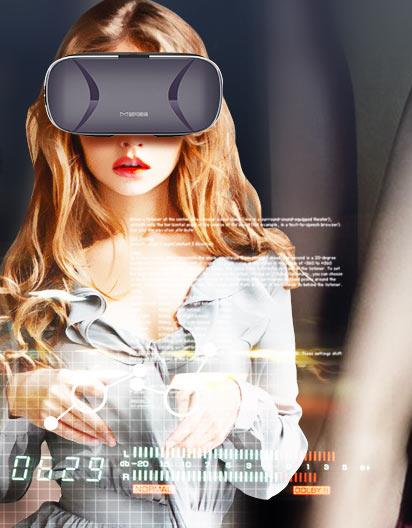
China Storm Mirror VR
Professor Yoo Chang-seok: Then, let's discuss the convergence of virtual reality with other industries. What do you think are the strengths of the Chinese virtual reality industry?
Andrew Kim: The strength of the Chinese industry lies in 'execution power' rather than technology. An IT boom is underway, and an environment has been established where one can confidently take on challenges. Above all, China's advantage lies in having a massive market and capital. The most essential elements for the VR industry are a large market and the capital to support it, and China is the market that possesses both. The fact that many startups are currently jumping into the virtual reality industry is a significant competitive advantage.
Applications in various industries, such as VR home tours
Professor Yoo Chang-seok: Please introduce an example of a new approach being explored through convergence.
Huang Wei: We launched the first very hot HMD in 2014. This year, it is being released as a mass-produced product. Over the past five years, we have launched more than 200 solutions in fields such as travel, sports, and real estate. There were particularly many products in the real estate sector, and they developed previously unimaginable convergence fields, such as VR home tours. They are also conducting projects that connect brainwaves with devices, specifically measuring brainwaves using HMD sensors. By integrating brainwaves and VR, one U.S. company is even treating senile dementia. For instance, if an elderly patient hospitalized in a hospital refuses to eat, they measure their brainwaves to identify the specific circumstances that led to the refusal. By creating a comfortable environment using VR, they help stimulate the patient's appetite. VR has the potential for all kinds of applications and can be integrated into fields closer to the consumer sector. Having brought about revolutionary changes, VR can converge with various industries.
Professor Yoo Chang-seok: Are there any other examples of convergence with other industries?
Andrew Kim: We are approaching this from a B2C perspective. We are currently very interested in integrating VR with traditional industries. In fact, we are working on a project with a Korean interior design firm, and in the future, we would like to collaborate with companies in various industries such as real estate, mining, and healthcare.
Professor Yoo Chang-seok: It seems there will be difficulties in the process of convergence. How should they be overcome?
Andrew Kim: When considering the VR convergence industry, focusing solely on the VR aspect can cause you to miss the big picture. While VR is an exciting and new industry, traditional industries must thrive for it to succeed. Success comes from working with groups that possess infrastructure and expertise. You shouldn't view it only from a technical perspective. You must consider how VR can support traditional industries. In other words, you need to think about how to increase value by integrating VR into your existing businesses. I think approaching it from that perspective is the correct approach.
China's VR driving simulation market could become a killer app
Professor Yoo Chang-seok: What about convergence in terms of hardware?
Tony Chia: When industry and VR combine, industry experts must first consider what VR can offer us. Therefore, it should be Industry + VR, not VR + Industry.
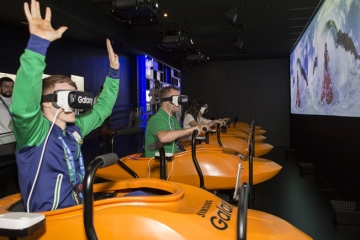
Since the majority of people currently work on PCs, HMDs can still provide a good user experience. What we are looking forward to in China is a "killer app." We hope to develop industry-based applications. This leads us to consider what kind of enjoyment VR can offer beyond just movies. In fact, this industry must be relevant to individuals and align with the country's specific circumstances. We need to find the right point for VR to work. Only then can VR become a positive factor for the industry. In China, 20 to 30 million people take driver's license exams, and simulation is required to obtain a license. Since driving simulations are needed, it seems possible to apply VR to the Chinese driver's license test. If VR is introduced to the licensing exam, we could capture a 20 billion yuan market. This market can be considered a killer app. The VR market has completely overturned conventional thinking.
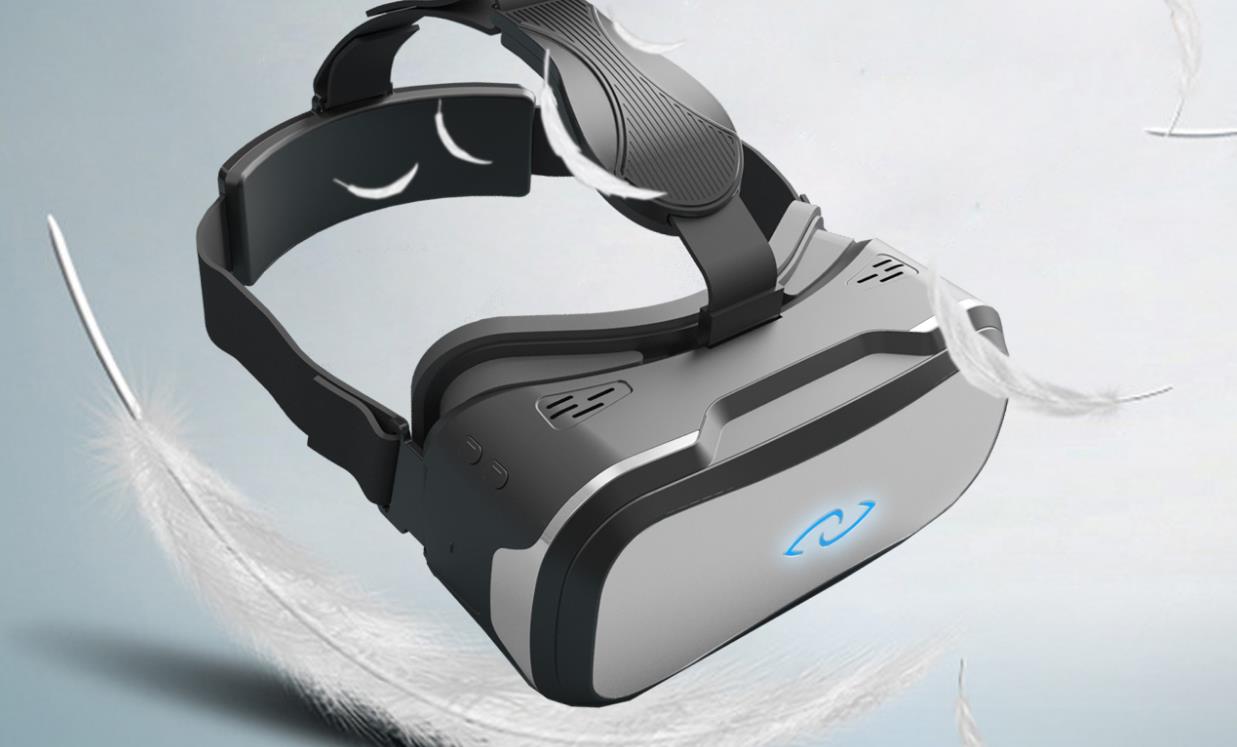
China 3Glasses VR
Other questions
Q. In VR, there is a challenge in logically structuring interactions. How does China address this?
(Duplicate answer by discussant) In the future, interacting with the outside world will be the appeal of VR. Interaction with the outside world will be possible through lasers and cameras. This can also be achieved with dual cameras. Once VR gains "eyes" through cameras, it can also be combined with artificial intelligence in the future. The key is the camera.
Q. Besides game content, what kind of video content is promising in the VR industry?
(Duplicate answer by discussant) According to 2015 statistics, 90% of content came from games. However, in the 2016 survey, 30% was game content, 30% was storytelling, 30% was entertainment, and 10% was other. While game videos are currently the main mainstream in the market, the potential of other fields is growing increasingly larger.
The average cumulative usage time of all-in-one devices that do not require a mobile phone has exceeded 100 minutes. Of this, 20 minutes is spent on games, and the rest is on watching movies. More people are watching 3D movies. Video is also the dominant format in mobile VR. If this phenomenon represents the VR 1.0 era, the VR 2.0 era will be about interaction, the VR 3.0 era will include AR, and the VR 4.0 era will include MR as well. However, since we are currently in the 1.0 era with low immersion, PC VR is a better fit for theme parks, whereas mobile VR can be applied to various fields other than theme parks.
Q. Chinese companies are signing many MOUs with Korean companies, but there seems to be no further progress. What should Korean companies do and how should they do it to enter the Chinese market?
(Duplicate answer by panelist) In fact. Cooperation between Chinese and Korean companies seems to be progressing quickly in terms of hardware. However, the pace in the content sector feels a bit slow. It seems the speed is slow because they are adjusting demand based on user feedback.
What preparations should Korean companies make to enter the Chinese market? I would like to offer just two pieces of advice. First, since progress in the hardware sector is rapid, we are already collaborating with Korean companies. The important thing is that if you are a content company, you must find a relevant Chinese VR hardware partner, whether it is for mobile VR or PC-based systems.
Another point is whether the content is profitable. Most content does not generate revenue. The key point is whether or not it becomes profitable in the short term. You need to know what kind of content is profitable in China. For example, Korea possesses innate game development capabilities, and it must leverage this advantage. A balance must be found between hardware and content.
관련뉴스
[Reporter's Notebook] VR Industry, Is There Any Good Content?
This was several years ago during the height of 3D TV competition. A major device manufacturer came forward with plans to create an ecosystem in the 3D TV field on its own, and even blocked its partner companies from collaborating with competing firms. Naturally, inter-company exchanges became closed-off, and technological development and content production failed to materialize properly, leaving 3D TV facing fundamental limitations. The lessons learned from 3D TV can be summarized into several points. First, ecosystem building is necessary for a specific market and technology to develop. Second, ecosystem building cannot be achieved through unilateral leadership by any single party. Third, a shortage of content ultimately brings about limitations in market expansion.
2016.07.04by 신윤오 기자
Why did Intel bring a virtual reality (VR) headset to the developer forum?
Intel has unveiled Project Alloy, a project that realizes future Merged Reality. Intel CEO Brian Krzanich introduced an all-in-one virtual reality (VR) solution at the opening keynote speech of the 2016 Intel Developer Forum (IDF) held in San Francisco, USA on Tuesday the 16th (local time). The Alloy platform is able to provide a variety of new immersive experiences thanks to Intel RealSense technology, a 3D depth sensing technology optimized for VR use. The key features are as follows.
2016.08.18by 신윤오 기자
[A Close Look at ICT R&D] ⑦ Foster New Media Industries such as VR/AR
Broadcasting and smart media services refer to a series of processes and forms in which content is produced targeting multiple users, delivered through wired and wireless networks, and consumed by users through various reception devices. This includes broadcasting and smart media-related services, content, media infrastructure, consumer terminals, mobile broadcasting, broadcasting-telecommunications convergence, immersive broadcasting, signage and other platforms, as well as public welfare and disaster safety technologies. Accordingly, the market size is substantial. The broadcasting and smart media industry is projected to grow at a compound annual growth rate of 11.5%, from 23.86 billion dollars in 2016 to 43.92 billion dollars in 2022. Specifically, services and content are expected to grow at an annual average rate of 2.2%, from 3.22 billion dollars to 3.67 billion dollars, the infrastructure and consumer (terminal) sector is projected to expand at a compound annual rate of 20.1%, from 7.53 billion dollars to 22.63 billion dollars, and the platform sector is anticipated to grow at an annual average rate of 6.4%, from 12.04 billion dollars to 17.51 billion dollars.
2016.09.09by 김수지 기자
The Problem with AI is Not Performance, but Trust
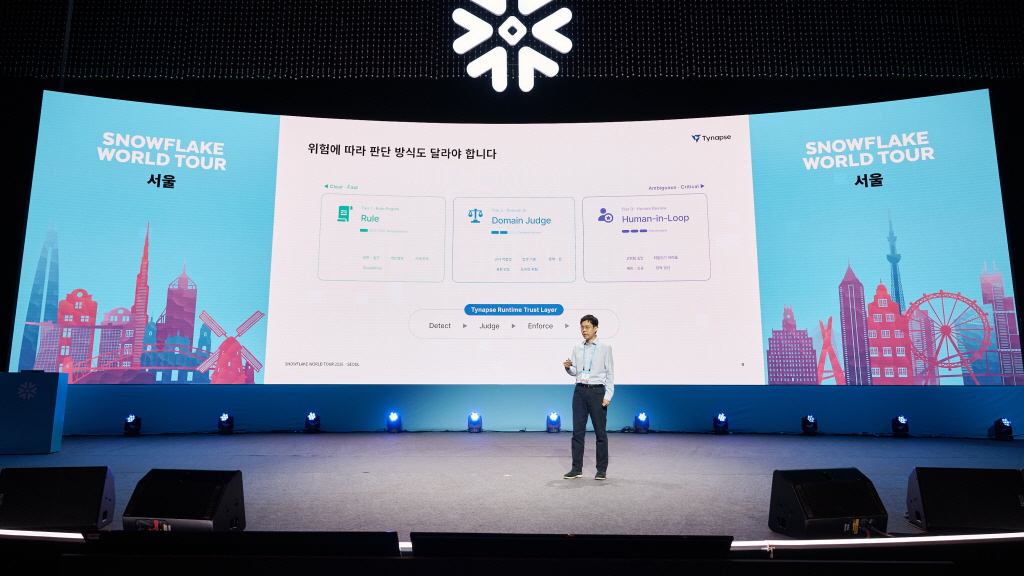
CEO Kang Min-seung emphasized at Snowflake's World Tour Seoul that generative AI has entered a phase where "trust" rather than accuracy becomes the key competitive advantage. As AI is applied to various tasks including consultation, risk management, and operational automation, incorrect data, erroneous responses, and bias are creating actual business risks. He pointed out that enterprises must build a trust layer above AI. To achieve this, accurate data management, semantic structuring, governance, and prompt security are essential. He explained that AI is not merely an automation tool but a technology that reorganizes the entire organization's workflows and decision-making systems. Snowflake provides a platform that supports this trust-based AI operation, emphasizing that enterprises should build "trustworthy AI" rather than "intelligent AI."
2026.08.28by 배종인 기자
The Decisive Factor for AI Agents in Finance: "Trustworthy Data Infrastructure"
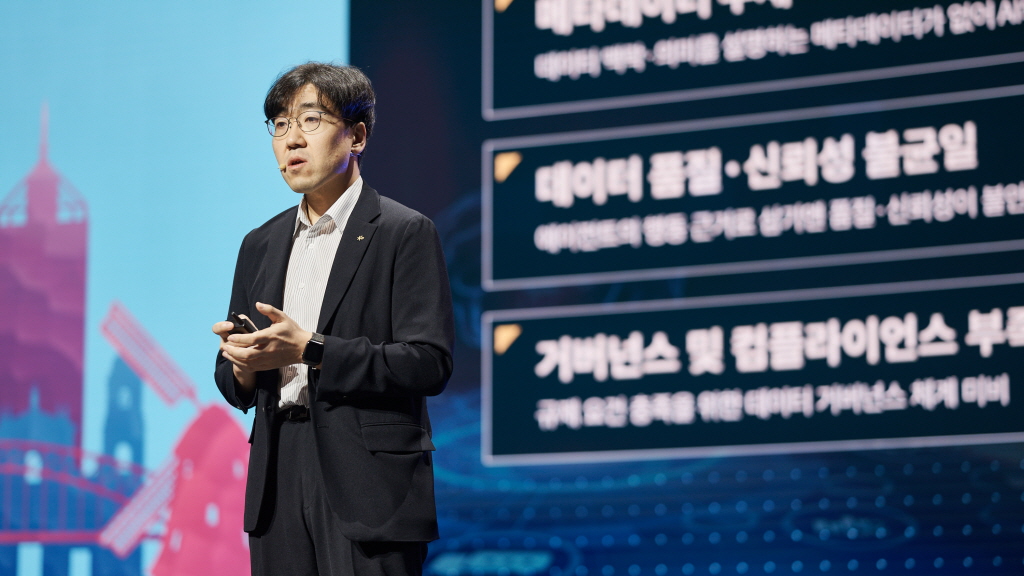
The key to spreading AI agents in the financial sector is establishing a trustworthy data system. KB Kookmin Bank is operating over 100 AI agents by 2025 and is promoting expansion to 300. AI is automating repetitive tasks across various areas such as consultation, risk management, wealth management, and relationship management. However, if data quality, governance, and semantic structuring are insufficient, errors and risks increase. KB is building an AI-Ready organization through a multi-model strategy of GPT, Gemini, and Claude, as well as a Snowflake-based data system. The bank emphasized that AI has entered a phase where it restructures not just simple automation but the entire work process and decision-making system.
2026.08.28by 배종인 기자











