



CCIX Consortium Adjusts CCIX Specification to Address Data Center Connectivity Needs
 Published2016.10.21 11:10
Addition of diverse new members ranging from silicon suppliers to ecosystem partners
The CCIX (Cache Coherent Interconnect for Accelerators) consortium announced that its membership has tripled due to the addition of new members and disclosed the CCIX specifications to its members.
Founding members AMD, ARM, Huawei, IBM, Mellanox Technologies, Qualcomm Technologies, and Xilinx announced that they welcome various ecosystem partners ranging from silicon suppliers to design, verification, software, and systems.
The new members are Amphenol Corp., Arteris Inc., Avery Design Systems, Atos, Cadence Design Systems, Inc., Cavium, Inc., IDT (Integrated Device Technology, Inc.), Keysight Technologies, Inc., Micron Technology, Inc., NetSpeed Systems, Red Hat Inc., Synopsys, Inc., Teledyne LeCroy, Texas Instruments, and TSMC.
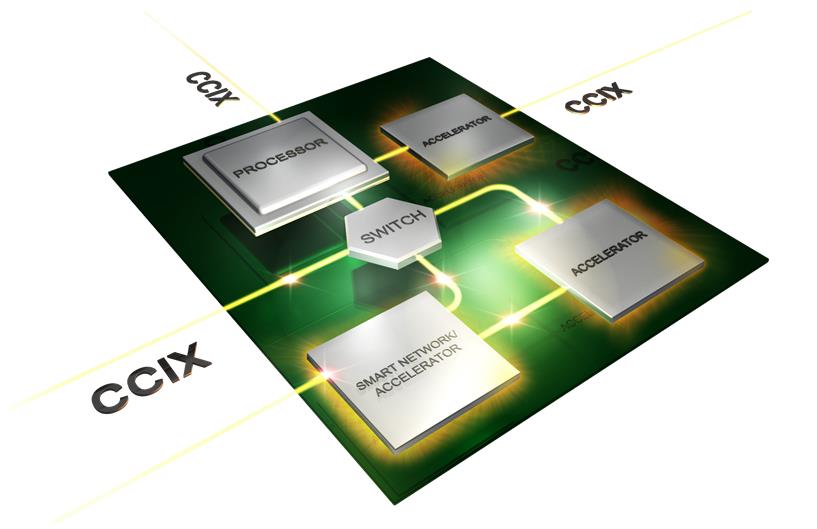
CCIX is a processor based on multiple instruction set architectures that acceleratesIt enables extending cache coherency through iterators, interconnects, and I/O.
High-performance accelerators are core components of processor systems, and system designers can use CCIX technology to freely select appropriately combined heterogeneous components from various vendors to satisfy unique system requirements.
Through close collaboration, member companies adjusted the CCIX specification to address the need for data center connectivity. By leveraging and reinforcing the current general ecosystem, they enabled higher bandwidth, lower latency, and complete consistency.
Furthermore, the CCIX Consortium plans to increase the speed of the PCI Express architecture to over 25 Gbps to use it as the first transport layer, and anticipates that additional transport layers will be added. Moving the CCIX coherence protocol to the PCI Express standard simplifies CCIX implementation on processors and accelerators. Additionally, since existing hardware and software infrastructure can be utilized, it is easy to deploy CCIX technology on servers as well.
Consortium members can immediately utilize the CCIX specification, and products based on CCIX technology are scheduled to be introduced in 2017. The CCIX Consortium includes various industry leaders who are collaborating to develop a single interconnect technology specification. This specification enables processors using various instruction set architectures (ISAs) to consistently share data as accelerators and enables efficient heterogeneous computing, thereby significantly improving the efficiency of servers running data center tasks and embedded applications such as 5G wireless and mobile edge computing.
관련뉴스

MHL 컨소시엄, superMHL 기술 선보여
MHL컨소시엄(MHL Consortium)이 CES 2016 전시회에서 최신 디스플레이 기술인 superMHL™를 선보인다. 관람객들은 superMHL 기술을 바탕으로 한 완벽한 8K 홈엔터테인먼트 시스템을 경험해볼 수 있다. MHL의 최신 규격은 고급 컬러 및 HDR(High Dynamic Range)를 지원하기 때문에 더 많은 픽셀로 된 영상을 보여주는 것은 물론, 색상이 더욱 깊어지고 밝아져 실제 이미지에 가까운 영상을 보여줄 수 있는 것이 장점이다. 음질 또한 객체 오디오 지원을 통해 대폭 향상했음을 MHL 컨소시엄이 전했다.
2016.01.06by 명세환 기자
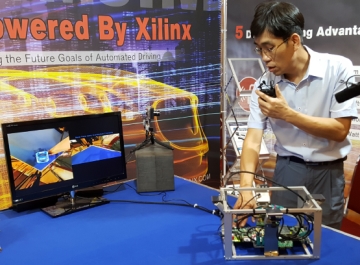
[Automotive Innovation Day] Xilinx Provides Automotive-Compatible FPGAs and All-Programmable SoCs
Xilinx, which participated in the Automotive Innovation Day (2016 Automotive Innovation Day) held on the 14th and hosted by Automotive Electronics, showcased application solutions necessary for realizing next-generation automotive electronic systems such as infotainment, driver information systems, and ADAS (Advanced Driver Assistance Systems). Xilinx supplies the broadest range of FPGA and All Programmable SoC product lines to the market that fully comply with automotive quality requirements. Xilinx launched the XA (Xilinx Automotive) program in 2004, based on various logic sizes and packages as well as extended temperature grades.
2016.07.19by 신윤오 기자
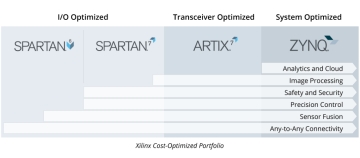
Xilinx Expands Portfolio for Embedded Vision and IIoT
자일링스는 임베디드 비전 및 산업용 사물인터넷(IIoT)을 비롯한 넓은 범위의 애플리케이션을 위해 비용 최적화된 실리콘 포트폴리오를 확장한다고 밝혔다. 현재 임베디드 비전 및 IIoT 애플리케이션은 다양한 센서들에서 데이터를 수집하고 종합 분석을 통해 실행 가능한 통찰(actionable insight)을 얻을 수 있다. 공장 현장에서의 멀티 센서 카메라의 기능을 확대하거나 센서 융합에 기반한 혁신적인 유도 체계(guidance system )를 내장한 스마트 드론을 개발하는 등 디자이너는 포트폴리오의 자일링스® FPGA 및 SoC를 시스템 전체 또는 일부에 활용할 수 있다.
2016.09.29by 김수지 기자

Intel Unveils Next-Generation 'Core Ultra Series 3' and vPro Platform for Enterprise PCs
Intel has officially unveiled the "Intel Core Ultra Series 3" for next-generation enterprise PCs and the latest vPro platform, addressing a wide range of demands from enterprise notebooks to high-performance workstations.
2026.03.26by 배종인 기자

ROHM Launches ESD Protection Diode Compatible with High-Speed Interfaces of 10Gbps or Higher
반도체 전문 기업 로옴(ROHM)이 10Gbps를 넘어서는 차세대 고속 데이터 통신 환경에 대응할 수 있는 ESD(정전기 방전) 보호 다이오드 ‘RESDxVx 시리즈’를 개발하며, 고속 인터페이스에서 요구되는 신호 품질 유지와 IC 보호 성능을 동시에 끌어올렸다.
2026.03.26by 배종인 기자











