


Maxim Announces Reference Design for Measuring Heart Rate and Blood Oxygen Saturation
 Published2016.12.06 18:39
Maxim Integrated Korea (CEO Choi Heon-jeong) announced the "MAXREFDES117#" reference design, an ultra-small optical heart rate module (HRM). This reference design enables manufacturers and developers to quickly develop heart rate and blood oxygen saturation monitoring applications.
Maxim's MAXREFDES117# reference design includes a red/infrared (RED) LED, a photodiode, a power subsystem, and a logic level translator. Measuring just 13mm x 13mm, this low-power, compact board can accurately measure heart rate and blood oxygen saturation by placing it on a finger or earlobe. The module supports eight "tap pads" for quick connection to development platforms or wearable devices.
As an industry leader, shipping more than 200 million biosensing applications worldwide, Maxim provides a simple platform for developers.
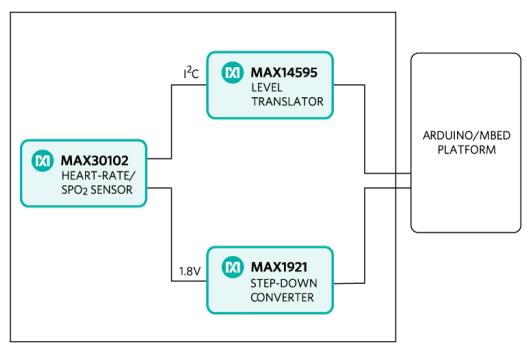
The MAXREFDES117# reference design includes three Maxim chips: an oxygen saturation and heart rate sensor (MAX30102), an efficient, low-power step-down converter (MAX1921), and an accurate level translator (MAX14595). The module operates from 2V to 5.5V and consumes less than 5.5mW of current with embedded firmware.
The MAXREFDES117# module is compatible with Arduino and ARM mbed platforms, making it easy to install. It includes open-source heart rate and blood oxygen saturation algorithms, bill of materials (BOM), schematics, layouts, and Gerber files, enabling faster development and time to market, and is also available for use in both product development and final design stages.
“Maxim provides the basic open-source heart rate and blood oxygen saturation algorithms as part of the firmware,” said David Andeen, director of reference designs at Maxim Integrated. “Manufacturers and developers can use this reference design as a starting point or incorporate it into their finished products or projects.”
관련뉴스
Maxim Announces Ultra-Small Reference Design for Wearables
맥심 인터그레이티드 코리아(대표 최헌정)가 웨어러블용 초소형 ‘h센서 플랫폼(hSensor Platform)’을 발표했다. 헬스케어, 웰빙, 피트니스 애플리케이션 설계자들은 맥심 인터그레이티드의 초소형 h센서 플랫폼으로 차세대 솔루션을 빠르고 쉽게 검증할 수 있다. 센서가 있는 보드를 개발하는 일은 복잡하다. 설계자는 먼저 컨셉 검증을 위한 커스텀 하드웨어와 펌웨어를 개발한 후 현장 테스트를 시작하기 전 시제품을 제작한다. 시제품 제작 시 센서와 기존 솔루션을 평가하는 데 많은 시간이 걸린다. 맥심 h센서 플랫폼은 모든 하드웨어 구성요소를 회로기판(PCB)에 통합하고 ‘ARM 엠베드(mbed)’ 하드웨어 개발 키트(HDK)로 하드웨어 성능을 바로 확인해 시제품 개발 기간을 3~6개월 앞당겨 준다.
2016.11.07by 명세환 기자
Maxim Simplifies Medical Wearable Design with Ultra-Low Power, High Performance MCUs
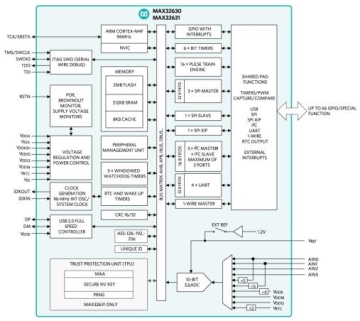
Maxim Integrated Korea (CEO Choi Heon-jeong) has announced the ARM Cortex-M4F microcontrollers (MCU) 'MAX32630' and 'MAX32631', which simplify the design of high-performance medical and fitness wearable devices. As the wellness and medical wearable application market grows rapidly, the requirements for electronic components inside wearable devices have become increasingly complex and diverse. Internal electronic components must provide high-level functionality, processing power, and optimal integration with peripherals in a small form factor. In addition to high precision and low noise, power consumption must be extremely low across various operating modes to ensure long battery life with a single charge. The Maxim MAX32630 and MAX32631 MCUs address these challenges.
2016.11.16by 김수지 기자
맥심, IIoT와 커넥티드 기기용 턴키 보안 솔루션 발표
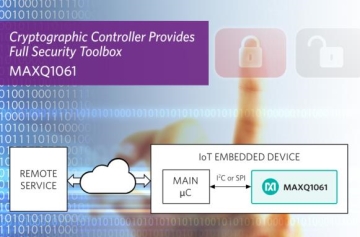
맥심 인터그레이티드 코리아(대표 최헌정)가 커넥티드 기기의 턴키 보안을 구현하는 딥커버(DeepCover) 암호화 컨트롤러 ‘MAXQ1061’을 발표했다. MAXQ1061을 이용해 기업은 산업용 사물인터넷(IoT)과 커넥티드 임베디드 시스템 설계 시 신뢰도를 높이고 제품을 보다 빨리 시장에 출시할 수 있다.
2016.12.01by 김수지 기자

Intel Unveils Next-Generation 'Core Ultra Series 3' and vPro Platform for Enterprise PCs
Intel has officially unveiled the "Intel Core Ultra Series 3" for next-generation enterprise PCs and the latest vPro platform, addressing a wide range of demands from enterprise notebooks to high-performance workstations.
2026.03.26by 배종인 기자

ROHM Launches ESD Protection Diode Compatible with High-Speed Interfaces of 10Gbps or Higher
반도체 전문 기업 로옴(ROHM)이 10Gbps를 넘어서는 차세대 고속 데이터 통신 환경에 대응할 수 있는 ESD(정전기 방전) 보호 다이오드 ‘RESDxVx 시리즈’를 개발하며, 고속 인터페이스에서 요구되는 신호 품질 유지와 IC 보호 성능을 동시에 끌어올렸다.
2026.03.26by 배종인 기자











