



Japanese Manufacturing, IoT as Central Task of the Fourth Industrial Revolution
 Published2017.01.02 19:02
Active strategy linking new technologies such as artificial intelligence, robotics, and VR/AR
"Japan's IoT strategy is being pursued comprehensively while sharing similarities with Germany's smart factory strategy and the United States' emphasis on manufacturing servicization. It appears that IoT is being positioned as a central task of the fourth industrial revolution."
Lee Ji-pyeong, a researcher at LG Economic Research Institute, stated this in a recent report titled 'IoT Strategy of Japanese Manufacturing,' noting that Japanese companies' IoT strategy centers on raising productivity, enhancing added value, and pioneering new businesses utilizing IoT.
Even FANUC, the world's leading factory robot company, is actively preparing for the IoT era by revising its existing closed-door strategy and forming alliances and collaborations with other companies in core IT technologies.
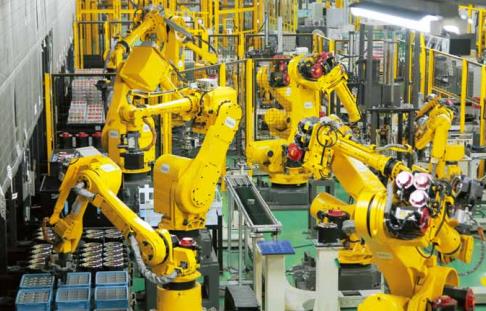
▲FANUC homepage corporate introduction.
According to the report, examining IoT utilization cases by Japanese companies shows a focus on finding improvements in existing factory automation to achieve higher productivity. The expectation is that IoT promotes the sharing of operational experience and know-how between machine-to-machine (M2M) and machine-to-person (M2P) connections, and there is a growing trend of using IoT to construct virtual design systems to enhance efficiency.
In the case of automotive parts company Denso, upon introducing IoT in factories, sensors collect worker movements, functions, and equipment information, enabling rapid sharing of work improvement know-how. In the case of Ricoh, which manufactures copiers, the Virtual prototype system has streamlined the previous method of building two physical prototypes down to one, improving speed and efficiency.
Enhancing Added Value, Pioneering New Business Using IoT
The second focus point of Japanese companies' IoT strategy is enhancing added value. Based on improved efficiency in production and development through IoT, cases are emerging where companies respond more quickly to customer needs or proactively address customer needs while enhancing added value. The report indicates that companies are anticipating customer behavior through IoT before customers purchase their products and ultimately pursuing evolution toward made-to-order production systems.
The third focus point of Japanese companies is pioneering new business through IoT utilization. To realize smartization of factories and products, each company requires new equipment, software, and solutions such as sensors, AI, 3D printers, drones, and wearable devices, and companies are responding to this expanding demand. The analysis suggests that when various goods across multiple industries become connected in virtual space and platforms connecting customers and companies and inter-company linkages are created, various new services can emerge.
In particular, the report notes that Japanese companies are becoming increasingly active in linking strategies with new technologies such as artificial intelligence, robotics, and VR/AR in implementing the above IoT strategies. In the AI field, US-based IT companies that dominate the cloud computing market globally have an advantage, so Japanese companies are placing emphasis on Edge Computing-based AI strategies differentiated from these competitors. The report noted that Japan's strategic characteristic is to focus on improving real-time processing performance by sharing information transmission and AI judgment between Edge (terminals), Fog (base stations, etc.), and cloud (data centers).
Furthermore, Japan, which has strengths in robotics technology,
is focusing on strengthening robotics technology in the IoT era
to reinforce leadership in new manufacturing.
Robot companies such as FANUC and IT companies such as Hitachi and NEC are forming alliances to create open platforms, compensating for weaknesses in deep learning AI of US-based IT companies. These companies are focusing on the dissemination of robot technology solutions strengthened by Edge Computing.
To support IoT adoption across the entire value chain of enterprises—including product development, production, logistics, and sales—it is necessary to advance the framework connecting virtual and actual spaces. The report explains that Japanese companies are focusing on enhancing factory efficiency utilizing VR (Virtual Reality) and AR (Augmented Reality) as core technologies. VR/AR technology is also being applied in factory construction and improvements to product production lines. At the factory construction stage, companies have begun using it to correct deficiencies in virtual production lines and to train key workers in advance in virtual production lines, thereby improving the construction work itself.
To respond to the IoT era, Japanese companies are also emphasizing innovation in business models. Yamanaka Kogiken, though a B2B company, has begun embedding sensors in individual bolts to help resolve quality issues that may arise in customers' manufacturing processes. Panasonic is exploring business models to supply higher value-added solutions by connecting the on-site use of its hardware by consumers and companies with its own cloud computing network, and has begun providing security solutions as a priority.
IoT Expected to Help Resolve Labor Shortage Issues
Japan's IoT strategy appears to be effective in resolving the labor shortage problem, which has emerged as a serious issue in Japan. If the IoT strategy being pursued through linked efforts by Japanese manufacturing and service industries increasingly proves effective, there is potential for positive effects on the revival of Japanese industry and recovery of economic growth potential, the analysis indicates.
The institute concluded in the report by stating, "From the perspective of our industry, where leading manufacturing appears to be declining past its peak, it is important to strengthen the economic system capable of driving innovation." It added, "While continuously monitoring trends and cases in Germany, the United States, and Japan, it is necessary to selectively strengthen the foundational technologies supporting IoT trends, develop practical measures to enhance productivity and added value, and explore opportunities for business model innovation including services."
Related news

How to build a smart factory? 'Ask' the Industrial Internet of Things
As the government decided to establish 10,000 smart factories by 2020 as part of "Manufacturing Innovation 3.0," interest in Industrial IoT has been sharply increasing. While the Internet of Things (IoT), which has recently attracted significant attention, is primarily discussed in the context of consumer products such as homes and automobiles, Industrial IoT (IIoT), which will serve as the core foundation of smart factories, is expected to outpace the consumer IoT market in terms of market size and deployment timeline.
2016.02.15by 신윤오 기자

Smart factories become even smarter as ‘industrial Ethernet’ spreads rapidly
As smart factories have become a major issue following manufacturing innovation, interest in industrial network technologies has been growing. Regarding industrial network technology, industrial Ethernet is currently expanding rapidly in wired communication, while in the wireless communication field, technology based on 802.11 is mainly being utilized for monitoring purposes rather than control applications. First, in industrial wired communication, industrial Ethernet technology that takes into account the strengths of both existing Fieldbus and general Ethernet is spreading. Fieldbus is an industrial communication technology widely used because of its advantages in wiring convenience and small data processing capability, and above all, it is a proven technology in terms of cost competitiveness. However, it has drawbacks including insufficient communication media and compatibility, inability to respond to increasing application requirements, speed limitations (12~16Mbps), and weak implementation of redundancy functions.
2016.06.21by 신윤오 기자
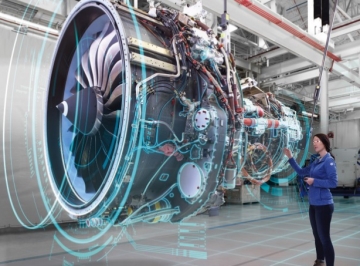
Korean-style Smart Factories to Drastically Transform Small and Medium-sized Manufacturing SMEs
The concept of Korean-style smart factories has been established as a form that integrates digitalization with IoT and CPS (cyber-physical systems)-based automation, and the outline of eight smart manufacturing technologies has also emerged. The public-private joint smart factory promotion team (headed by Park Jin-woo) has defined Korean-style smart factories as factories that integrate the entire process including planning, design, production, and distribution/sales—focused on innovation in small and medium-sized manufacturing—through ICT to produce customer-customized products with minimum cost and time. The core technologies of smart factories, which can be implemented in various forms depending on the degree of IT technology utilization and capabilities, are ▲smart application systems ▲scientific product and process technology design and development ▲intelligent control automation ▲IoT digital measurement and display ▲IoT-based smart construction method development, and others. The foundational technologies comprise ICT-based solutions including security, cloud services, and platforms.
2016.08.02by 신윤오 기자

Ecolab and K-water Discuss Innovation Collaboration in Advanced Industry Water Management
Ecolab and the Korea Water Resources Corporation jointly discussed cooperation directions for maximizing water use efficiency in advanced industries such as semiconductors and data centers and establishing sustainable water circulation. The two companies agreed to gradually develop a long-term cooperation model that combines water resource infrastructure and water management technology to promote water efficiency optimization, water reuse, and carbon reduction.
2026.08.28by 명세환 기자
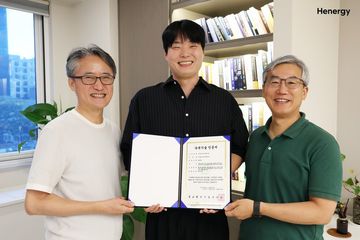
H.Energy Obtains Green Technology Certification…SolarOnCare Operating at 99.82% Uptime
H.Energy has obtained green technology certification from the Small and Medium Business Administration for solar power generation forecasting and I-V curve anomaly diagnosis technology. The AI-based asset management platform SolarOnCare is deployed across more than 3,000 power plants nationwide, achieving a system uptime of 99.82% and a 3.7% improvement in power generation performance. Through real-time data analysis, it protects power generation revenue by detecting and managing minor losses such as module degradation and partial shading early on.
2026.08.25by 명세환 기자











