


This year's video surveillance market continues to grow together with IoT trends
 Published2017.01.17 10:17
Need for Storage System Construction to Support Video Data Analysis
Quantum announced its 2017 video surveillance market outlook on the 17th.
Quantum forecasts that the 2017 video surveillance market will continue to grow with not only security but also increases in distribution and traffic management applications, along with IoT trends. HIS projects that video surveillance-related data in 2017 will generate approximately 6,000PB of data capacity, and that by 2019, 3.3 trillion hours of surveillance video will be captured daily. Video data will see increased long-term retention due to growing demand for various advanced analytics including evidence adoption in law enforcement and analysis of retail customer purchase trends.
In Quantum's 2017 video surveillance market outlook, it identified the following: ▲storage systems must be constructed to support video data analysis ▲efficient data management methods must be in place to accommodate the increase in high-performance, high-definition video surveillance cameras ▲expanded application of biometric authentication applications to strengthen security ▲infrastructure must be constructed to enable integrated management of IoT and video surveillance data ▲video surveillance-as-a-service, and others.
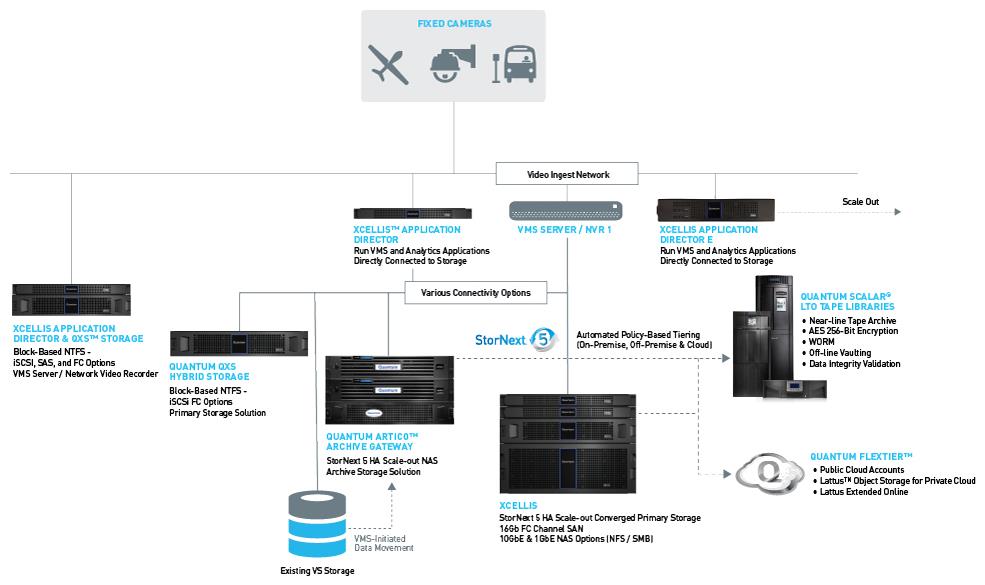
Quantum stated that video-based data is expected to be widely used in enterprises to support business decision-making and therefore must be safely retained in storage for extended periods. Additionally, with the rapid increase in HD cameras, storage management solutions capable of effectively managing high-capacity data inflow are expected to gain attention.
Expanded Application of Biometric Authentication Applications to Strengthen Security
Furthermore, biometric authentication is expected to be used as a cybersecurity measure by public and private organizations such as medical and transportation organizations, and it announced plans to expand application of such technologies. With increased data generation from IoT devices, the challenge has arisen to construct infrastructure for storing, protecting, and analyzing IoT sensor files, requiring integrated management and analysis of data. As cameras become smarter and various types of sensors are integrated, self-analysis trends are becoming more pronounced, and the convergence of multiple analytical functions is becoming the foundation for "surveillance-as-a-service," it explained.
Comments
Related news
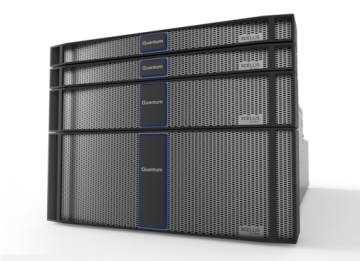
Quantum Announces StorNext Tiered Storage Platform for the Video Surveillance Market
Quantum (Branch Manager Lee Gang-wook) introduced 'StorNext Tiered Storage Platform,' its video surveillance storage solution that can meet surging customer demands in the video surveillance market, including the increase in high-resolution cameras, compliance with legal regulations, explosive growth in data volume, and the expansion of data utilization fields. Quantum's StorNext Tiered Storage Platform enables real-time search and access to data reaching up to hundreds of PB (petabytes, 1.024TB), regardless of whether the video surveillance data resides on disk, tape, or cloud storage.
2016.09.07by 신윤오 기자

Patent applications for improving LCD color reproducibility using quantum dots are actively being filed.
LCD showed relatively lower color reproduction compared to OLED, but patent applications aimed at improving LCD's color reproduction using quantum dots have been increasingly active recently. According to the Korean Intellectual Property Office (Commissioner Choi Dong-gyu), domestic patent applications (based on filing date) applying quantum dots to LCD are being analyzed as steadily increasing. Quantum dot-related patent applications (based on filing date) totaled 268 cases over the past 10 years (2006-2015), with filing volumes surging in 2014 (63 cases) and 2015 (84 cases), accounting for 54.8% (147 cases) of the total filings over the past 10 years.
2016.09.26by 홍보라 기자
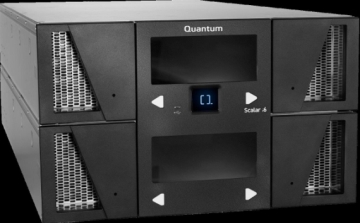
Quantum Announces Cost-Effective Tape Backup and Archiving Storage
Quantum (Branch Manager Lee Kang-wook) announced the launch of the 'Scalar® storage platform,' a tape backup and archiving storage solution optimized for storing and managing increasing unstructured data. In addition, Quantum announced the 'Scalar i6' and 'Scalar i3' tape libraries tailored to enterprise scale based on the Scalar storage platform, as well as the 'StorNext AEL6,' an archive appliance optimized for video media workflows.
2016.10.14by 홍보라 기자

[Technical Contribution] Mouser: "AI Agents Help Accelerate and Standardize Industrial Field Maintenance Operations"
Abhishek Jadhav from Mouser Electronics discusses how to leverage agentic AI for predictive maintenance in industrial automation.
2026.10.23by 편집부
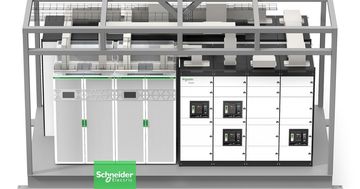
Schneider Electric Unveils Modular Power Solution for AI Data Centers
Schneider Electric has launched prefabricated power modules and power skids for AI data centers, jointly developed with NVIDIA. Based on the GB300 NVL72 reference design, the solution applies standardized design and factory pre-fabrication methods to build power infrastructure in as little as 6 months. Galaxy VXL UPS technology is integrated, with capacity options ranging from 2MW to 2.5MW.
2026.10.23by 배종인 기자











