



The 7 Future Technologies Selected by Seoul National University (Part 2): Which Technologies Will Change the Future?
 Published2017.01.31 13:35
The top 10 technologies that have driven the nation's growth were announced , and lectures by prominent professors were held.
To commemorate the 70th anniversary of the university's founding, the School of Electrical and Information Engineering and the School of Computer Science at Seoul National University selected 10 technologies that have driven Korea in the fields of electricity , electronics , and computers, as well as 7 technologies that will lead the future. The selection was made through a voting process that began in February 2016 , in which candidate technology names were suggested by professors , alumni , and students .
The top 10 technologies that have driven Korea's growth were selected as follows: home appliance technology, digital TV technology, memory semiconductor technology, smartphone technology, mobile communication technology, internet technology, automation technology ( control , power , motor, etc. ) , internet technology (World Wide Web , etc. ) , computer game technology, flat panel display technology, and portal and SNS technology .
On the 17th and 18th , lectures were held at Seoul National University on the seven technologies that will lead the future: Internet of Things (IoT) , personalized healthcare technology, virtual reality / augmented reality (VR/AR) , autonomous vehicles, artificial intelligence (AI) , big data, and robotics .
5. Artificial Intelligence Evolves with Deep Learning
Professor Jang Byung-tak of the Department of Computer Engineering, who researches artificial intelligence, machine learning, and cognitive robots, gave a presentation on “The Present and Future of Artificial Intelligence.”
Artificial Intelligence (AI) began with the goal of creating a 'thinking machine.' AI, which shares a history with computers, faced a dark age in the 1990s. This was because there was no core technology capable of implementing technologies exactly as humans conceived them.
However, the situation has changed over the past 20 years with the development of machine learning technology, as machines have programmed themselves based on data. As a result, Watson, created by IBM, won a TV quiz show in 2011, and Google DeepMind's AlphaGo surprised the world by defeating Go player Lee Sedol in 2016.
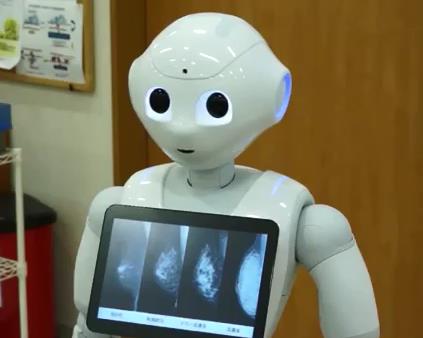
▲ SoftBank's Pepper, (Source: SoftBank website)
Following autonomous vehicles, AI technology is being introduced into voice-based personal assistant robots and chatbots. Starting with Apple's Siri in 2011, Google's Now and Microsoft's Cortana are currently competing. Amazon launched Echo, a speaker-shaped device. In 2016, Google began selling Google Home, a smart speaker, and Google Assistant, a voice conversation chatbot. In Korea, SKT also released 'Nugu,' a voice-based artificial intelligence speaker.
In the future, robots capable of face-to-face conversation by recognizing their conversation partners and surroundings through vision are also expected to emerge. Research on humanoid robots is also continuing. An example is SoftBank's 'Pepper,' which moves its head and eyes, performs arm and hand movements, and moves on wheels.
"Current AI possesses cognitive capabilities. It is at the level where it finds a method once a goal is set," said Professor Jang Byung-tak. "Along with technological advancements, it is time to consider whether machines with philosophical free will can emerge."
After the lecture, questions were raised about which human jobs would disappear and what tasks humans and AI excel at. In response, Professor Jang replied, "Humans are still better for now. However, over time, AI will replace many jobs. It cannot yet replace 3D jobs or highly skilled personnel that require extensive knowledge."
6. Big Data, the technology that will be used most tangibly across all sectors of society
Professor Kang Yu of the Department of Computer Engineering, who researches big data and data mining, gave a presentation on the topic of 'The Present and Future of Big Data'.
Big data refers to massive amounts of data that exceed the processing capabilities of existing tools, as well as the technology to extract useful value from that data. With the expansion of the World Wide Web and social media services, the amount of data generated by individuals has increased, and as the volume of data automatically generated by machines, such as IoT devices and autonomous vehicles, has grown, big data processing technology has become crucial.
In current and future societies, big data provides insights for analyzing patterns, making predictions, and simulating, as well as the responsiveness to rapidly detect signs of risk. It also plays a role in creating new value by fusing completely different elements.
In fact, big data is being utilized in various fields such as public administration, commerce, culture, arts, and healthcare because it enables the understanding of current situations and the prediction of the future. For example, Walmart stores and analyzes consumers' purchase history to determine which products are bought and which products are purchased together, utilizing this information for marketing purposes.
Big data-related companies are broadly divided into three categories: those that provide tools for management and storage, those that provide tools for analyzing data patterns, and those that provide domain problems and application technologies.
Online shopping malls are where big data is being used most tangibly in our daily lives. Sophisticated recommendations reflecting individual preferences are made based on activity information or purchase history, leading to product purchases. Additionally, features that recommend customized products to individual customers are being utilized. Traditional advertising methods are limited in their range of products because they target the general public. However, personalized advertising can be optimized for individuals even if it is not mainstream.
Big data is also being used in delivery. A representative example is a patent filed by Amazon in 2012. By predicting when, where, and how much would be ordered, they shortened delivery times by placing shipments at logistics centers.
In response, Professor Kang Yu emphasized, "I believe that big data technology will be used across all sectors of society in the future. From a technical perspective, it will be utilized significantly in two ways. Currently, data is analyzed on a weekly or monthly basis, but in the future, analysis and prediction will be possible in real-time." He added, "By merging data to make integrated judgments, it will become possible to help make more accurate decisions than existing methods that rely on intuition."
7. Do robots really have to walk on two legs like humans?
Finally, Professor Lee Jae-hee of the Department of Computer Engineering, who researches computer graphics and bipedalism, continued the lecture by starting with the question, "Should robots walk on two legs?"
The Fukushima nuclear power plant accident highlighted the need for robots capable of performing tasks in dangerous areas in place of humans. This implies that robots must replace humans in environments where people live, rather than in environments where robots are typically suited. It was emphasized that it is crucial to develop robots suitable for human living environments, as in some cases, people may ride on or wear robots.
All the major ideas for current robot technology emerged in the 1980s and early 1990s. If you compare the gait of Honda's robot Asimo, there is no significant difference despite the 10-year gap. The same applies to the gait of other robots around the world. This is because the basic idea behind walking is the same. Although efforts to overcome this are ongoing, making robots walk like humans has not yet been completely solved.
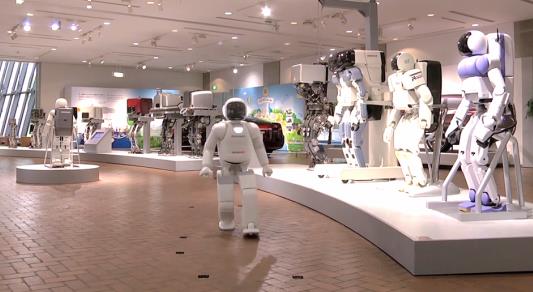
▲ Honda's Asimo, (Source: Honda website)
However, starting with the use of motion capture in 2007, clues regarding gait were found. This method applies data obtained from human walking to robots, requiring a very long time and research to perform a single movement. Computer simulations are used to predict the gait of bipedal robots. This involves the analysis and prediction processes of computer simulations. Next, once a controller is created that commands complex movements impossible for existing robots, various simulations can be generated by varying the conditions.
To solve this difficult problem, Professor Lee Jae-hee stated, "We established a single center of gravity and assumed that the object touches the ground from there. Realistically simulating a gait is a complex issue. Even a slight complexity in the model complicates the problem of balancing," adding, "So, I changed my approach to the problem. I simplified it."
In addition, he concluded the lecture by stating, "Based on these technologies, cooking robots, laundry-folding robots, navigation robots, shopping robots, and dishwashing robots are emerging. Robots will appear that utilize sight, hearing, touch, and balance to delicately perceive their surroundings, remember the past, learn through experience, and develop their own thinking. Then, it is time for us to consider how we should accept robots."
관련뉴스
Seoul National University's Top 7 Future Technologies (Part 1): Which Technologies Will Change the Future?
서울대 공대 전기정보공학부와 컴퓨터공학부에서 개교 70주년을 기념하며 전기, 전자, 컴퓨터 분야에서 우리나라를 견인해온 10대 기술과 앞으로 미래를 이끌 7대 기술을 선정했다. 이는 서울대 전기정보공학부와 컴퓨터공학부에서 2016년 2월부터 교수, 동문, 학생들로부터 후보 기술명 제안을 받고 투표를 하는 과정을 거쳐 선정됐다.
2017.01.23by 김지혜 기자
ST Microelectronics and NUS Establish Joint Research Center 'HELIX' for Edge AI
ST Microelectronics and the National University of Singapore have established the 'HELIX' joint research center aimed at implementing embedded AI in edge environments. Over a four-year period, the center will conduct research across the entire technology stack from algorithms to silicon, focusing on memory-centric architecture leveraging ST's 18nm FD-SOI technology and embedded PCM. The core objective is to implement intelligence directly in physical devices such as robots and drones while minimizing energy consumption.
2026.08.28by 배종인 기자
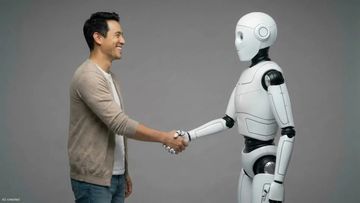
ams, 디지털 포토닉스로 휴머노이드 로봇 감각·소통 기능 지원
ams OSRAM이 디지털 포토닉스 기술을 활용해 휴머노이드 로봇의 감각·소통 기능을 강화하는 솔루션을 공개했다. dToF 센서, 광학식 힘 센서, 구조광 이미터 등으로 주변 환경 인식과 정밀 조작을 구현하며, EVIYOS·ALIYOS 플랫폼으로 LED 기반 비언어 소통을 지원한다. 시장조사에 따르면 휴머노이드 로봇 시장은 2025년 6억 달러에서 2035년 510억 달러로 성장할 전망이며, 로봇의 감각 능력 향상이 핵심 성장 동인으로 작용할 것으로 예상된다.
2026.08.27by 배종인 기자
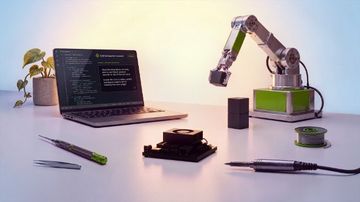
엔비디아, 젯슨 오린 나노 2 공개…78TOPS·2배 추론 성능
엔비디아가 젯슨 오린 나노 2를 공개했다. 78TOPS AI 컴퓨팅 성능과 이전 모델 대비 2배 추론 성능을 제공하면서 전력 소비는 40% 감소시켰다. 2027년 상반기 출시 예정이며, 코그넥스·두산밥캣·매틱·윙 등 주요 로봇·드론 제조사들이 초기 도입을 검토 중이다.
2026.08.26by 배종인 기자
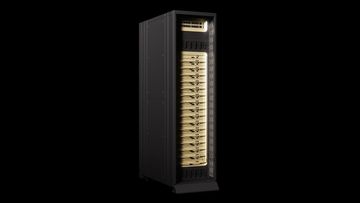
엔비디아, 그록 3 LPX 양산 개시…초당 3,400토큰 추론 성능 달성
NVIDIA가 AI 추론 가속기 그록 3 LPX의 양산을 시작했다. 베라 루빈 NVL72 플랫폼 기반의 이 제품은 초당 3,400개 출력 토큰을 달성해 에이전틱 AI 시장의 성능 기준을 높였다. 기존 솔루션 대비 4배 빠른 응답 속도로 에이전트 작업을 수 분 내에 처리할 수 있다. AI 클라우드 기업 네비우스와 그록이 초기 도입을 계획 중이다.
2026.08.25by 배종인 기자











