


Launch of advanced automotive ICs supporting the most stringent automotive environmental conditions
 Published2011.10.26 13:48
High-performance new “CAN chip,” supporting new “partial networks” for improved fuel efficiency and emissions
Korea, October 26, 2011 – STMicroelectronics ( www.st.com ), a world-leading integrated semiconductor company and a leader in automotive ICs and energy saving, has completed the world's first automotive IC that significantly improves fuel efficiency and CO2 emissions and supports advanced networking technology.
The new chip will help automakers respond to changing new vehicle regulations in major global markets, aiming to save fuel and reduce CO2 emissions. In Europe, Euro 6 regulations will replace Euro 5 in 2014, and the average CO2 emission limit will be lowered to 95 g/km by 2020. The Chinese 4 standard, similar to Euro 4, came into effect in China in 2011, and Beijing plans to adopt Chinese 5. In the United States, CAFÉ (Corporate Average Fuel Economy) requirements for passenger cars will increase from 30.4 mpg to 37.8 mpg by 2016 and are projected to reach 50.6 mpg by 2025.
To continuously provide customers with exciting new products while meeting these increasingly stringent regulations, automotive manufacturers are pursuing various methods to improve fuel efficiency. One such method is to reduce the energy consumed by systems such as door electronics and climate control. ST’s new IC achieves this by utilizing partial networking (PN) to enable modules to be individually switched off when not in use. This is a new feature of the latest CAN standard, ISO 11898-6, which can reduce the average CO2 emissions of a vehicle by more than 2 g/km.
The new chip, L99PM72PXP, extends ST's existing automotive CAN/LIN transceivers and is the market's first IC to support partial networking. This is the result of close collaboration between ST and a renowned German automotive manufacturer, which will be the first customer to use this device in its vehicles. ST is a member of a consortium involving leading automotive semiconductor companies and German automotive manufacturers to accelerate the adoption of ISO 11898-6.
Marco Monti, General Manager of ST’s Automotive Electronics business unit, said, “Authorities around the world are establishing stricter environmental performance targets for new vehicles, and automakers must maximize vehicle efficiency to comply with them.” He added, “By integrating new partial networking capabilities, we can gain about 2 g/km CO2 in drives that meet the new standards.”
The L99PM72PXP is scheduled for mass production in the third quarter of 2012 and is housed in a PowerSSO-36 package. The price per unit is $2.30 based on a supply volume of 1,000 units. Separate pricing conditions are available for bulk orders.
Additional technical information
The L99PM72PXP is a new addition to ST's power management system IC family. By integrating both the High-Speed CAN (HS-CAN) and LIN physical layers, it provides all the necessary functions to build a complete Electronic Control Unit (ECU) for automotive body applications. The functionality of this product has been optimized for use in climate control modules and door control modules, as well as seat modules, trunk and trailer modules, sunroof and rear-view modules.
Unlike standard CAN transceivers or system-basis chips currently available on the market, the L99PM72PXP can monitor the CAN bus on its own without activating the module's main processor. It activates the module only when it detects a precisely assigned wake-up signal. By allowing the rest of the CAN network to be deactivated in this way, the L99PM72PXP enables a reduction in overall electrical energy consumption.
Advanced fail-safe features are a unique addition to the L99PM72PXP that enhance the sustainability and reliability of vehicle ECUs. Built-in functions, such as monitoring for the microcontroller, supply voltage, and temperature, block the causes of failure. In addition, cost-effective peripheral functions, such as upper and lower gate drivers, OP amps, and voltage regulators, reduce the number of external components and lower overall system costs.

관련뉴스

Intel Unveils Next-Generation 'Core Ultra Series 3' and vPro Platform for Enterprise PCs
Intel has officially unveiled the "Intel Core Ultra Series 3" for next-generation enterprise PCs and the latest vPro platform, addressing a wide range of demands from enterprise notebooks to high-performance workstations.
2026.03.26by 배종인 기자
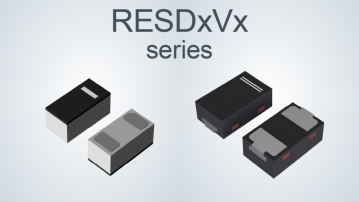
ROHM Launches ESD Protection Diode Compatible with High-Speed Interfaces of 10Gbps or Higher
반도체 전문 기업 로옴(ROHM)이 10Gbps를 넘어서는 차세대 고속 데이터 통신 환경에 대응할 수 있는 ESD(정전기 방전) 보호 다이오드 ‘RESDxVx 시리즈’를 개발하며, 고속 인터페이스에서 요구되는 신호 품질 유지와 IC 보호 성능을 동시에 끌어올렸다.
2026.03.26by 배종인 기자
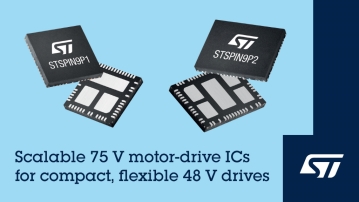
ST Launches 75V Drive IC Targeting 48V Industrial Motor Driving
ST Microelectronics has unveiled the 'STSPIN9P' series of 75V motor drive ICs tailored for 48V-class industrial drive system design. The new product family is characterized by half-bridge and full-bridge configurations that enable design scalability according to motor type and output conditions. Power supply circuits, protection functions, and current sensing circuits are integrated on-chip to simplify system configuration, and the devices are designed to support applications up to 500W maximum. The company plans to provide reference designs and demo boards to support development and evaluation in industrial automation, robotics, pumps, fans, lighting, and textile machinery.
2026.03.26by 배종인 기자

Nordic supports security updates for the entire lifecycle of IoT devices at a single fixed cost
Nordic Semiconductor, a global leader in low-power wireless connectivity solutions, has unveiled a single fixed-cost licensing model that delivers FOTA (Firmware Over-the-Air) and device management capabilities throughout the device lifecycle via nRF Cloud, and introduced a new firmware update solution to prepare for the enforcement of the European Union's Cyber Resilience Act (CRA).
2026.03.26by 배종인 기자
Practical Training in Low-Noise, Low-Power Circuit Design All in One Place… Training Fee Support
The "2026 Advanced Engineer Practical Masterclass" to strengthen competencies in high-sensitivity analog circuit and sensor-based system design will be held on April 16 at the e4ds Conference Center in Gasan-dong, Seoul. This program will be conducted as an offline paid hands-on training session, not online, and is targeted at engineers seeking on-site intensive learning. Texas Instruments will provide educational support for this training, allowing participation at 150,000 won, a 100,000 won discount from the original price of 250,000 won.
2026.03.26by 배종인 기자











