



[Interview] Embedded Machine Vision: How to Design Easily
 Published2017.03.24 16:30
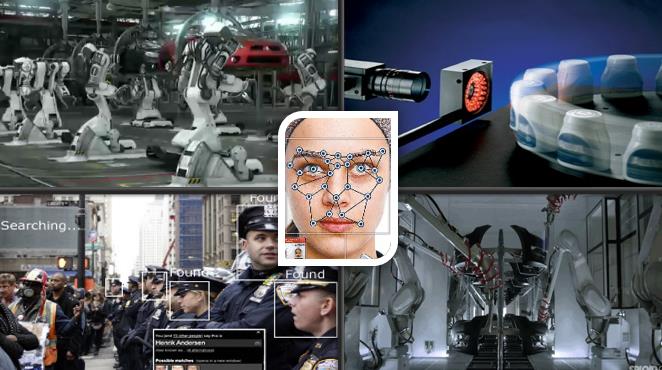
In the automobile manufacturing process, robots perform assembly tasks. They verify that parts are correct and determine which process to send them to. This is possible because these robots are all camera-based. The same applies to defect inspection on semiconductor wafers. Machines demonstrate faster speeds and lower error rates than human visual inspection. This is also why previous vision systems were primarily used in manufacturing processes.
Machine vision, which combines machine learning with vision systems, is expanding this market. As a subsystem of embedded vision systems in which visual processing hardware and software are integrated into a single unit, it is used in various fields such as automotive, electronics, semiconductors, panels, food, transportation, surveillance, security, pharmaceuticals, and military. Although there are differences in technological development depending on the field of application, it is generally developing rapidly and its scope is expanding.

Currently emerging medical image processing devices, Advanced Driver Assistance Systems (ADAS), autonomous vehicles, security image processing systems, drones, and ProAV systems are included in embedded vision systems.
Xilinx recently announced technology that expands vision-based machine learning applications. Jung Woong, a manager at Xilinx, stated, “The scope of various vision-based systems is expanding. The market for utilizing machine vision will broaden from industry to daily life, including autonomous drones that detect and avoid obstacles, augmented reality, autonomous vehicles, automated surveillance, and automated medical diagnosis.”
Because Xilinx's embedded vision solutions are based on Programmable Logic Devices (FPGAs), they enable large-scale parallel processing, which has the advantage of allowing the recognition and analysis of high-resolution, high-frame-rate images.
Of course, the platform can be reused. Xilinx’s ZYNQ product family, which basically implements ARM cores and programmable logic on a single chip, allows for the creation of products optimized for performance or resources to support various applications. The number of IO pins and processors can be adjusted according to the logic size, so the design used in other devices can be used as is.
In addition, sensor fusion is possible by adding sensors of the same or different types. Since IP is provided by partners belonging to the Xilinx Alliance program, it supports various interface standards used in the industry, making system implementation easy.
In addition, it provides performance per watt with lower power requirements to achieve the same performance as an implementation method for embedded vision systems. This is one of the key reasons for using FPGAs from a machine learning perspective. The security and safety provided by Zynq devices are a major advantage, as machine vision systems require a high level of security.
"As vision-related applications expand rapidly, processor solutions that simply process vision have limitations. To create products integrated with machine vision, we must establish an application building framework," said General Manager Jeong. Introducing reVISION, he expressed his desire to share accurate information about embedded vision, adding, "We have established a system capable of comprehensively supporting everything from device hardware to the software-level stack."
Accordingly, the Embedded Vision Series seminar will be held online starting March 28. The first topic examines trends in the embedded vision market, technical factors in machine vision, and challenges faced by developers, and introduces Xilinx's solutions and devices. Further details can be found via the eeWebinar.
관련뉴스
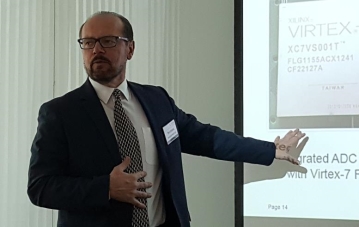
Xilinx’s strength in design flexibility continues in the 5G wireless market
5G 무선통신 시장에 대처하는 자일링스의 행보는 그간의 FPGA 분야에서 보여줬던 설계 유연성에 비춰보면 당연한 수순처럼 보인다. 자일링스는 16나노 올 프로그래머블 MPSoC에 RF급 아날로그 기술을 융합한 RFSoC를 발표하면서 이를 다시 한번 증명했다. 기존과는 확연히 다른 높은 샘플레이트에 멀티모드를 제공할 필요성이 생긴 5G 시장에서 확장성과 유연성은 필수 요소가 되었기 때문이다.
2017.02.23by 신윤오 기자

자일링스, 반응형 및 재구성 가능한 인텔리전트 시스템 선보여
자일링스는 오는 3월 14-16일, 독일 뉘른베르크에서 열리는 ‘임베디드 월드 2017’에서 반응형 및 재구성가능한 비전 기반의 인텔리전트 시스템을 선보일 예정이다. 자일링스는 컨퍼런스 발표와 데모를 통해 자일링스의 툴과 라이브러리, 기법이 어떻게 비전 기반의 인텔리전트 시스템을 머신 러닝, 컴퓨터 비전, 센서 퓨전, 커넥티비티에 제공하는지 보여줄 예정이다.
2017.03.10by 김지혜 기자

Xilinx Expands Machine Learning Applications from Edge to Cloud
자일링스가 Xilinx reVISION 스택을 이용해 광범위한 비전 기반 머신 러닝 애플리케이션으로 확대한다고 발표했다. Xilinx reVISION 스택은 작년 11월에 출시한 머신 러닝 추론을 포함해 다양한 컴퓨팅 가속 애플리케이션을 타깃으로 한 재구성가능한 가속 스택을 보완하고 비전을 기반으로 범위를 확장할 계획이다.
2017.03.14by 김지혜 기자
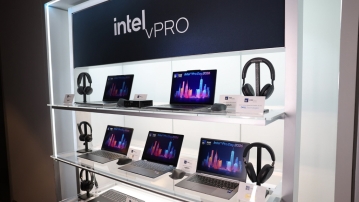
Intel Unveils Next-Generation 'Core Ultra Series 3' and vPro Platform for Enterprise PCs
인텔이 차세대 기업용 PC를 위한 ‘인텔 코어 Ultra 시리즈 3’와 최신 vPro 플랫폼을 공식 발표하며, 기업용 노트북부터 고성능 워크스테이션까지 폭넓은 수요 충족에 나섰다.
2026.03.26by 배종인 기자
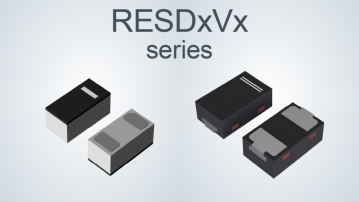
ROHM Launches ESD Protection Diode Compatible with High-Speed Interfaces of 10Gbps or Higher
반도체 전문 기업 로옴(ROHM)이 10Gbps를 넘어서는 차세대 고속 데이터 통신 환경에 대응할 수 있는 ESD(정전기 방전) 보호 다이오드 ‘RESDxVx 시리즈’를 개발하며, 고속 인터페이스에서 요구되는 신호 품질 유지와 IC 보호 성능을 동시에 끌어올렸다.
2026.03.26by 배종인 기자











