

.png)

[Reporter's Notebook] Big Data, Will It Become Dependent on Global Platforms?
 Published2017.03.27 16:40
There is a saying that big data is a "lottery draw." If you draw well, you hit the jackpot; otherwise, you miss the mark.
Looking at the U.S. data industry, there are many examples of "jackpot" successes. Yodel, a platform company, is one such example. This company scrapes homepages of data companies and provides them tailored to desired clients, and was subsequently sold to another company. Remarkably, for approximately 700 billion won. This demonstrates how lucrative the data platform business can be.
This is because the United States has the Data Marketing Association (DMA), which regulates and manages disputes. It implements a post-accountability system that establishes guidelines and manages data usage, including personal information, data collection, consumer notification, and responsible marketing. Although concerns about potential harm to individuals emerged in the United States, two years after the trial run of voluntary data regulation, conclusions indicated no major issues arose, and the system has been well maintained since then.
Building on such institutional foundations, the U.S. big data industry continues to thrive. Because data management and processing are well-executed, programming becomes easier. A prime example is Airbnb, which within eight years of entering the market surpassed the number of rooms of the global hotel chain Hilton. Airbnb did not build rooms but rather "connected" them. This was possible precisely because existing data was well connected. There are also companies that perform data processing and refinement, tasks difficult for individual companies to undertake. CrowdFlower generates revenue by building artificial intelligence necessary for business.
Of course, domestically there are platform companies such as Cozaza, an accommodation platform, and Ankus, an IoT data platform. Ankus, also called an open-source community, implements machine learning by aggregating sensor data held internally, other owned data, and publicly disclosed public data from the private sector. Such results are provided to companies seeking to develop secondary works. Small and medium-sized enterprises can reduce process steps through analyzed data and achieve cost savings by reducing total required costs. Additionally, they lower total production costs through data reuse.
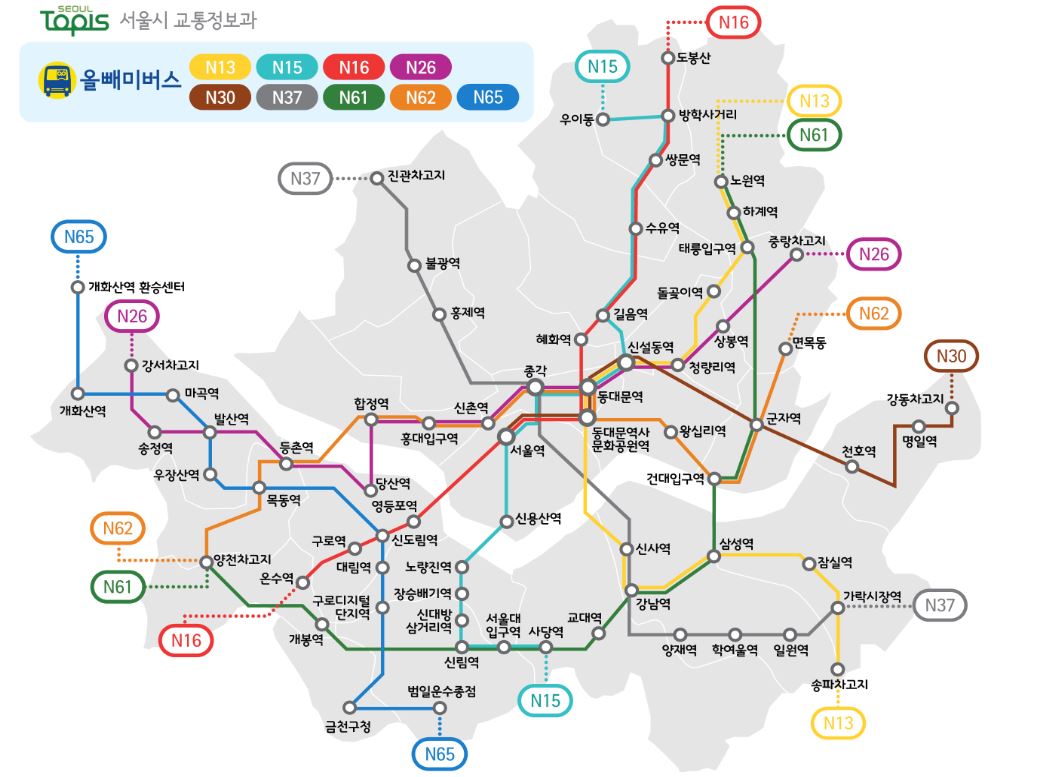
The government also recognizes the importance of big data. Data analysis underpins efforts to prevent disease outbreaks and operate late-night bus services. By understanding data about where epidemics originate and how they spread, and calculating citizen travel times, late-night buses have been deployed accordingly. Additionally, public institutions are also disclosing information.
"While public institutions are disclosing information, they fail to satisfy users' needs, and private institutions holding data cannot disclose it due to various constraints"
However, South Korea's big data industry still has a long way to go. Rather than deliberating what data to "draw," often there is simply no data to "draw" from in the first place. There is a lack of usable data, and even when data exists, there are restrictions on how freely it can be used.
This is why Lee Jae-jin, director of the Distribution Business Division at the Korea Data Agency, stated at a policy discussion forum on promoting big data industry activation that "while public institutions are disclosing information, they fail to satisfy users' needs, and private institutions holding data cannot disclose it due to various constraints." This is because data must undergo processing before it becomes the necessary information.
This difference stems from a clear contrast with overseas practices. Overseas data businesses involve taking freely disclosed data and integrating or processing it into necessary formats for use, whereas domestically the typical approach involves taking information distributed by data holders and using it, often without connecting to processing stages.
According to research by a Singapore research institute, South Korea's data regulations are at higher levels than those of Singapore, the United States, the EU, and OECD averages. Regulations designed to prevent personal information protection issues and disputes between companies restrict not only data distribution but also storage, collection, and processing. Referencing discussion articles from the "Digital Transformation Forum" covered by this publication in January, reasons cited for the lack of activation of domestic platform companies include vertical corporate culture and reluctance toward personal information utilization, which lag behind the accelerating pace of digitalization.
AT Kearney partner Shim Tae-ho, who participated in the discussion forum, pointed out that "there is no IT-based platform and no original technology. Since we must adopt and utilize data but lack compelling business offerings, there is a risk of becoming dependent on global platforms." While one hesitates to repeatedly mention the need for regulatory improvements, substantial government investment, and specialized workforce, tracing the root causes of the problem inevitably leads to this same conclusion. One can only hope that the advice offered at this discussion forum held in the National Assembly does not become a hollow echo.
Related news
[ICT R&D In-depth Look] ⑩Rapidly Expanding Big Data, Core SW Technology Competitiveness Remaining Stagnant
SW-computing technology that provides large-scale, high-performance, real-time, and intelligent functions as a platform, commonly required for explosive growth in computing devices and data and hyperconnected smart services, is attracting attention. SW-computing technology includes four core areas: big data, cloud computing, computing systems, and artificial intelligence technology. Performance improvements of systems through SW technology innovation are being attempted, and with changes in the ICT paradigm, future SW computing technology is also developing in forms of convergence and intelligence.
2016.10.04by 홍보라 기자
Big Data Investment Increases, But Signs of Slowing Growth Appear
According to a recent survey released by Gartner Inc., while the scale of big data investments continues to increase, signs of contraction are also emerging. Gartner reported that 48% of surveyed companies (a 3% increase compared to the previous year) increased their big data sector investments in 2016. However, the percentage of companies that responded they plan to invest within the next two years fell to 25%, down 6% compared to 2015.
2016.10.07by 홍보라 기자

[Discussion Broadcast] "Small and Medium Enterprises Are the Driving Force of the Fourth Industrial Revolution Transformation; Must Possess Digital Capabilities and Leadership Capabilities"
The business environment has begun to change with the development of new digital technologies such as social networks, mobile, big data, and AI. Now, a company's capabilities are often measured by its ability to utilize digital technology. Loa Consulting defines Digital Transformation as "the collective term for the phenomenon of transitioning from traditional business methods of existing manufacturing enterprises to ecosystem-centered platform business models capable of acquiring new value," and it has been presented as a solution to the Fourth Industrial Revolution era. The Korea Information Industry Association held its 2017 IT Policy Forum on the 24th at the COEX Conference Room under the theme "Fourth Industrial Revolution, Digital Transformation is the Answer." We are broadcasting a live discussion held under the theme "Capabilities of Domestic Companies and National Policy Direction in the Era of Digital Transformation."
2017.01.31by 김지혜 기자
.jpg)
SalePoint Signs Multi-Year Partnership Agreement with AWS… Promoting Identity Security that Integrates Even AI Agents
Sailpoint has entered into a multi-year strategic partnership agreement with AWS and is moving forward with establishing an integrated governance system that manages both human and non-human identities together. The plan is to consistently manage access permissions in an environment where AI agents are increasing as work execution entities, while applying the principle of least privilege and automated policy enforcement. The two companies plan to jointly expand capabilities to manage the identities of various entities, including AI agents, within a single layer in the AWS environment. This collaboration is interpreted as a move to design security and governance together in corporate environments where AI adoption is expanding.
2026.03.26by 배종인 기자
.png)
Databricks Unveils Open AI Security Monitoring 'Lakewatch'
Databricks entered the security market on March 24 by unveiling LakeWatch, an open-source agentic SIEM. The core functionality of this product is to integrate and analyze security, IT, and business data in a single environment to support AI-based threat detection and investigation. The company explained that it reduces the limitations of existing security operations centers, which have had to forgo some data due to high cost structures, and enables large-scale data analysis and automation based on open formats and ecosystems. LakeWatch is currently offered as a private preview, with Adobe and Dropbox mentioned as early customers. Databricks also announced an expanded partnership with Anthropic as well as the acquisition of Antimatter and SiftD.ai.
2026.03.26by 배종인 기자











