



2017 Seoul Motor Show, Seminar on "Fourth Industrial Revolution and the Future of the Automotive Industry" Held
 Published2017.04.07 10:18
Approximately 300 attendees from the automotive, electronics, IT industries and the general public participated
At the 2017 Seoul Motor Show, a seminar was held where automotive and IT experts gathered to examine the future of the automotive industry.
The seminar on "Fourth Industrial Revolution and the Future of the Automotive Industry," jointly hosted by the Seoul Motor Show Organizing Committee and the Korea Electronics and Information & Communications Industry Promotion Association, was held with attendance from the automotive industry, electronic IT industry, and the general public.
Lee Bo-sung, Director of Hyundai Motor Group Global Management Institute, said, "In the face of the fourth industrial revolution, the automotive industry is undergoing disruptive innovation in all sectors," adding, "While in the past we focused on producing automobiles and selling them, in the future we will receive customer orders at smart factories to produce autonomous electric vehicles, and expand the essence of the business to become a mobility solutions provider through car-sharing businesses and other ventures."
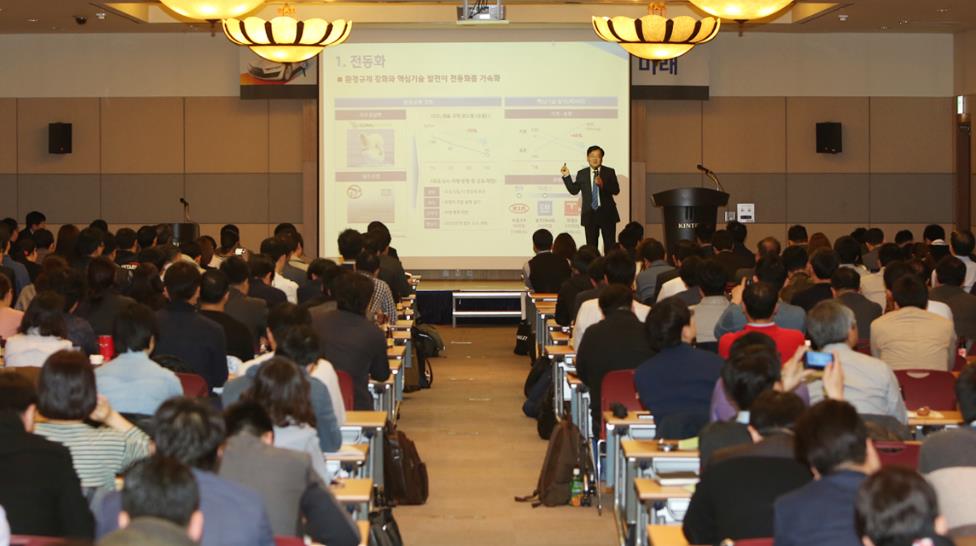
Kim Beom-jun, Senior Research Fellow at LG Economic Research Institute, then stated, "The most important element in the fourth industrial revolution is convergence between different industries, and eco-friendly vehicles and autonomous vehicles, which are core technological elements of the future automotive industry, will develop through convergence with electronics and chemical technologies." He further predicted that "through these changes, the existing vertical industrial structure between complete vehicle manufacturers and parts suppliers will transform into a horizontal cooperative relationship."
Ha Ho-seon, Chief Executive Officer of Korea Car Sharing, said, "Future automobiles will be connected with various devices to establish an ecosystem for the automotive mobility era as an organic entity," and explained that "as autonomous vehicles led by IT companies such as Google and Apple and complete vehicle manufacturers become activated, automobiles will evolve from current hardware-oriented means of transportation into software-oriented moving high-performance artificial intelligence, robots, and computers."
Kang Hyung-jin, Executive Managing Director of Mando Central Research Institute, introduced aggressive semiconductor-related mergers and acquisitions for market preemption of autonomous vehicles and connected cars both domestically and internationally, along with development status of connected cars based on next-generation 5G mobile communication technology and expansion of OEM-led strategic partnerships. He further emphasized that in response to the rapidly changing technological environment, there is a need to establish a strategic cooperation ecosystem among domestic complete vehicle manufacturers, parts suppliers, semiconductor companies, and ICT companies.
Lee Jong-hwa, Professor at Ajou University, explained, "The automotive industry is facing 'hyper-connectivity and hyper-intelligence,' where eco-friendly vehicles lead to the generalization of smart cars including autonomous vehicles and connected cars." He also stated that for sustained growth and development of Korea's automotive industry, based on mechanical engineering and passing through the third industrial revolution era of digital transformation, it is necessary to develop human resource strategies and workforce development plans suited to the new paradigm.
Related news
Drawing the Future, Enjoying the Present: Seoul Motor Show Opens
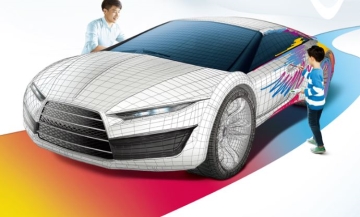
The 2017 Seoul Motor Show will open under the theme "Design the Future, Enjoy the Moment" from March 31 to April 9 for a total of ten days at KINTEX in Ilsan, Goyang, Gyeonggi Province. Viewing hours are from 10:00 AM to 7:00 PM, with general admission starting at 11:30 AM on opening day, March 31. The opening ceremony, held from 10:00 AM on March 31, will be attended by key figures including Minister Ju Hyung-hwan of the Ministry of Trade, Industry and Energy, Vice Minister Choi Jeong-ho of the Ministry of Land, Infrastructure and Transport, Yun Jang-hyun, Mayor of Gwangju Metropolitan City, Mark Knapper, Deputy Chief of Mission of the U.S. Embassy to Korea, Michael Reiter, Ambassador of the European Union Delegation to Korea, as well as representatives of participating companies, academia, and research institutions.
2017.03.30by 김지혜 기자
Check out motorcycles and electric bicycles at the Seoul Motor Show.
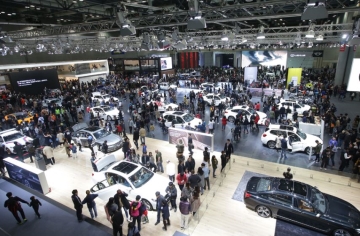
The '2017 Seoul Motor Show' running through the 9th at KINTEX in Ilsan, Gyeonggi Province will showcase not only completed vehicles but also motorcycles, three-wheeled vehicles, electric bicycles, and electric wheels. The exhibition will feature motorcycle companies such as 'Honda Motorcycle', 'BMW Motorrad', 'Indian Motorcycle', and 'Riwako', as well as electric bicycle companies including 'Samcheonri Bicycle' and 'Apollo Korea'. Parts supplier 'Mando' will also present electric bicycles.
2017.04.03by 김지혜 기자
Seoul Motor Show Hosts International Conference on the Future of Automobiles
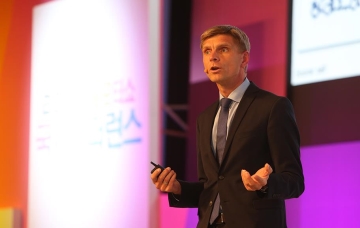
The International Conference of '2017 Seoul Motor Show' held under the theme of 'Innovation and Passion Opening the Future of Automobiles' was held on the 4th in the afternoon at KINTEX in Gyeonggi Province, with approximately 1,400 attendees from industry, academia, research institutes, and students. This international conference was planned as a storytelling-format lecture series featuring domestic and international automotive experts, designed to establish the identity of the Seoul Motor Show.
2017.04.05by 김지혜 기자
A single misaligned light means 'defect'… Vehicle interior lighting now guarded by semiconductors and software
Automotive interior lighting is moving beyond its role as 'auxiliary lighting.' As it becomes a core element of user experience (UX) that expresses brand identity through color and animation while reflecting driver preferences, the LED interior ambient lighting market is growing rapidly. In connection with this, we met in advance with Choi Young-jae, Research Director at Dabo Corporation, who will present a technical webinar session on "Intelligent LED Interior Lighting Solutions Illuminating Future Vehicles," to hear about market trends and changes in design requirements.
2026.08.28by 명세환 기자
TI Unveils Multi-Axis Coreless Current Sensor TMCS2100-Q1 for HEV/EV Traction Inverters
Texas Instruments has unveiled the TMCS2100-Q1, a multi-axis coreless Hall-effect current sensor for HEV and EV traction inverters. By simultaneously measuring horizontal and vertical magnetic fields through multi-axis sensing technology, it achieves up to 20 times higher accuracy compared to conventional single-axis sensors, while the busbar-unmodified design provides mechanical design flexibility. It simultaneously meets the high-accuracy requirements and miniaturization driven by the expansion of 800V architectures.
2026.08.27by 배종인 기자











