


Mouser supplies Maxim Nanopowers step-up boost converter
 Published2017.04.19 11:23
Extends battery life in wearable devices, IoT devices, and more
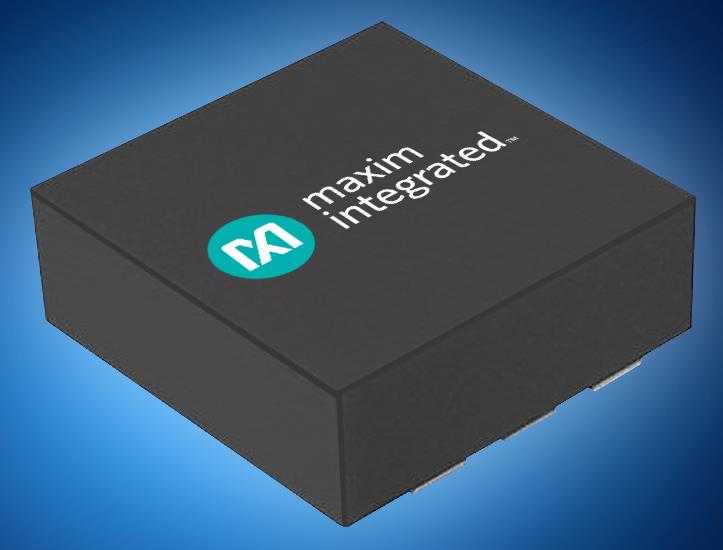
Mouser Electronics has announced that it supplies the MAX17222 nanopower DC-DC step-up (boost) converter from Maxim Integrated.
The MAX17222 features high efficiency, minimized heat dissipation, and ultra-low standby current characteristics. With these features, it can extend battery life in connected devices such as highly integrated wearable devices, health management devices, and IoT (Internet of Things) devices.
The MAX17222 nanopower DC-DC boost converter from Maxim, which Mouser Electronics will supply, operates at input voltages of 0.4~5.5V, output voltage of 1.8~5.0V, and standby current at a minimum of 300nA, which is an extremely low level.
In True Shutdown™ mode, current consumption is only 0.5nA, preventing battery depletion and extending battery life. No external disconnect switch is required. With maximum input current limited to 500mA, flexible design can be achieved when selecting inductor types. The post-startup ETP (Enable Transient Protection) feature controls the output relative to input voltage to a minimum level of 400mV depending on load current.
The Maxim MAX17222 evaluation kit, which Mouser Electronics maintains in stock, includes two independent circuits that allow evaluation of both MAX17222 and MAX17225 converters. Each circuit provides output voltage of 1.8~5V with configurable resistors (100mV per conversion step). The circuit also delivers up to 100mA, 225mA, or 425mA per circuit output depending on the input-output voltage ratio.
Mouser Electronics continuously maintains its website Mouser.com through regular updates and has implemented detailed search methods to enable customers to quickly search inventory. Additionally, Mouser.com provides datasheets, manufacturer reference designs, application notes, technical design information, and engineering tools.
Comments
Related news
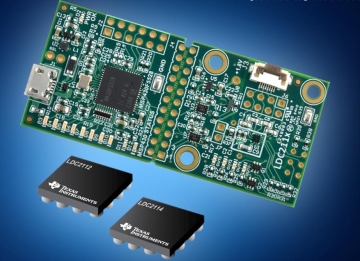
Mouser to Supply Evaluation Modules for TI's Inductive Touch Sensing Solutions
Mouser Electronics, Inc. has announced that it has begun supplying the LDC2114 evaluation module (EVM) for Texas Instruments' (TI) LDC2112 and LDC2114 inductive touch sensing solutions. The newly added LDC2114EVM to TI's sensing solutions portfolio features inductive sensing capability that detects and measures the presence of conductors for implementing inductive touch buttons.
2017.01.19by 김지혜 기자
Finding products difficult? Now try searching by image.
Mouser Electronics announced that it offers a groundbreaking feature on its industry-leading website (Mouser.com) that allows customers to search for and select desired products by image. Mouser is continuously working to improve its website so that customers can search for and utilize products more easily. Through this, Mouser customers can access product information not only through datasheets, latest products, and parameter-based product searches, but also by viewing images and clicking just a few times to find the desired products. The Image tab on Mouser.com is the latest gateway to access Mouser's extensive product library, which includes hundreds of thousands of images.
2017.03.02by 신윤오 기자

Mouser Named Global Service Distributor of the Year for Four Consecutive Years
Mouser Electronics, a new product introduction (NPI) distributor, has announced that it has been selected as a global excellent service distributor by TE, a connectivity and sensor company, for four consecutive years. Mouser Electronics provides advanced technology that enables design engineers and buyers to implement innovation. Additionally, it maintains a diverse inventory of advanced semiconductors and electronic components required for the latest design projects.
2017.04.13by 김자영 기자

OpenAI Holds Developer Event 'DevDay Exchange' in Seoul
OpenAI held the 'DevDay Exchange' event in Seoul on the 22nd, with over 600 domestic developers in attendance. Korea currently ranks 3rd globally in weekly active users of dots and 5th in ChatGPT Pro usage, with discussions focused on agent-based work automation and enterprise AI transformation strategies. AWS and LG CNS shared phased implementation cases ranging from AI model adoption to integration with existing systems and establishment of security and governance frameworks.
2026.10.23by 배종인 기자
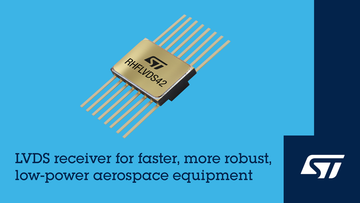
ST Launches RHFLVDS42 QML-V Certified Quad LVDS Receiver for Aerospace
STMicroelectronics has launched the RHFLVDS42, a QML-V certified quad LVDS receiver for aerospace applications. The device supports maximum 600Mbps data transmission, demonstrates radiation and ESD tolerance, and meets 300krad(Si) TID requirements, while satisfying EAR99 regulations for immediate deployment across global supply chains. It is manufactured using a validated 130nm CMOS process in France and is available in Flat-16 package and bare die form.
2026.10.23by 배종인 기자











