


What is 'Connected Car Commerce' where communications, finance, and energy companies meet
 Published2017.04.24 09:54
When energy and automotive companies, telecommunications and financial institutions come together, what business becomes possible?
These companies are focusing on the connected car commerce market. They foresee automobiles evolving beyond computers to become 'smart cards.'
Beginning with Bluetooth-based infotainment technology in the Peugeot 3008 launching in the second half of this year, the plan is to subsequently expand into voice recognition and deep learning based on 5G or LTE. This is the business result created by members of the Car Commerce Alliance—GS Caltex, LG U+, Shinhan Card, and software company OWIN.
◇ Energy: GS Caltex Retail Planning Division Executive Director Jo Kwang-ok
"Customers pursue convenience, and electric vehicles and connected cars raise many questions about the future refueling market"
Various changes are occurring in the refueling market with autonomous vehicles, car sharing, and electric vehicles. Automotive consumption habits are changing. Customers will seek convenience, so we predict that and make proposals to them. For example, when a vehicle has in-vehicle IoT that recognizes fuel levels and searches for gas stations, we propose options that reflect not just price but also preferred supplementary services. Rather than simply providing fuel, we will be able to identify customer preferences and provide linked services, creating synergy effects.
◇ Finance: Shinhan Card Partnership Business BU Head Hwang Won-seob
"Automobiles will ultimately become cards, and they must be safe and convenient."
We view automobiles as ultimately becoming financial spaces. Financial companies, just as smartphones have evolved, will help create customized consumption and payment spaces according to customer preferences. Safely and conveniently. As connected cars are discussed, we sought preemptive response measures, and our choice was the Connected Car Alliance.
◇ Telecommunications: LG U+ BS Division E-BIZ Executive Director Son Jong-woo
"Network strength is our opportunity"
We took note of the connected car market and sought partners. U.S.-based GM operates with LTE and WiFi-type rate plans. Of the 6 million connected cars sold last year, most have adopted commerce systems. Currently, the alliance provides internet payment services. Customers can make payments regardless of which telecommunications provider they use. Since Home IoT is currently in the commercialization stage, we are planning to connect Home IoT and connected cars when 5G services are deployed.
◇ Car Commerce Software: OWIN CEO Shin Sung-chul
"Connected car commerce will drive market change through transformation of experience"
At CES, multiple companies including Ford, Visa Card, and Concardis Card outlined blueprints for the car commerce market. Even Visa Card, which drew the most concrete picture, announced that commercialization would require at least three more years. Drive-thru type stores generate 35-40% higher sales than traditional stores. Customers seek convenience, so this is a market worth noting. We are expanding the drive-thru format that previously was limited to existing coffee shops and fast food restaurants. Stores with limited parking space can also participate. We plan to expand the car commerce market to include supermarkets, gas stations, parking lots, vehicle maintenance history, valet services, and highway toll passes. Changes in experience will drive market changes.
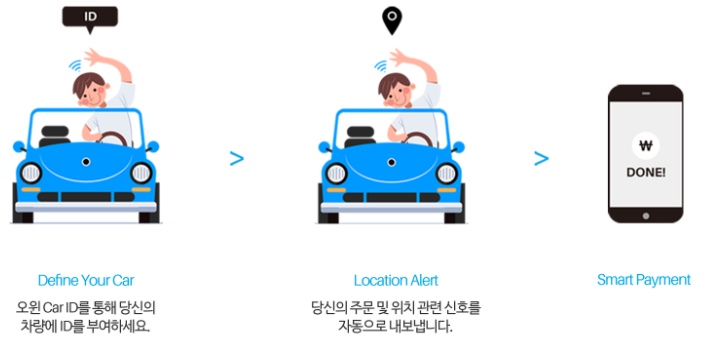
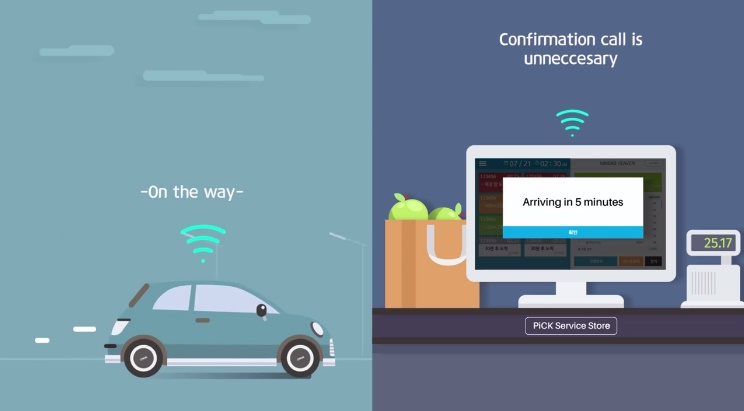

Upon ordering, the estimated arrival time is provided reflecting traffic conditions, and the in-vehicle terminal uses Bluetooth functionality to notify the store from 150 meters away. Verification procedures such as QR code confirmation, as mentioned at CES or outlined by Ford, are omitted. The biggest advantage they mention is that understanding customer consumption patterns enables providing tailored services.
Issues that may arise after implementation, such as when stores are crowded or order volumes are high, are challenges to be addressed gradually.
Related news
What is the most commonly installed IoT semiconductor in Hyundai connected cars?
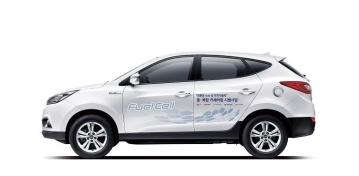
Texas Instruments (TI) Korea announced that TI's automotive IoT solution has been installed in Ioniq electric vehicles participating in the 'eco-friendly car car-sharing service pilot project' conducted by J-Cabe and involving Hyundai Motor Group. The system installed in the vehicle is a Wireless Gateway ECU system that connects mobile phones and automobiles, embodying the concept of a 'connected car.' By utilizing driver-customized data stored in a mobile phone app prior to boarding the vehicle, specific systems inside the automobile can be pre-operated, thereby enhancing driver convenience. Designed as a technology that takes into account car-sharing where drivers constantly change, users can configure vehicle interior systems such as seats, heated/ventilated seats, outside mirrors, and windows according to pre-saved settings before boarding.
2017.03.15by 김자영 기자
Owin and Hanbok Motors to Equip Connected Car Commerce
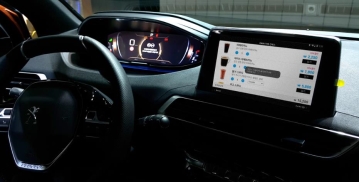
Owin and Hanbok Motors announced that they will introduce the world's first connected car commerce platform through the 'Peugeot NEW 3008' at the 2017 Seoul Motor Show. 'Connected car commerce' is a future-type service that assigns a digital ID linked to payment methods to vehicles and installs apps in the vehicle infotainment system, allowing drivers to order and pay for products inside the vehicle.
2017.04.04by 김지혜 기자
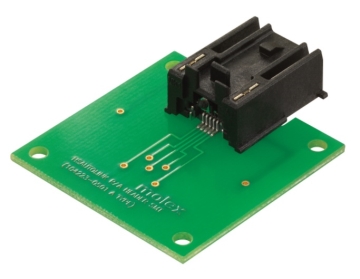
Molex Korea Launches SMT Header for HSAutoLink System Supporting Connected Cars
Molex Korea has introduced a surface-mount version of a right-angle SMT header for the next-generation HS AutoLink interconnect system. This system provides high-speed technology to meet rising data bandwidth requirements for vehicle-to-vehicle communication, infotainment, and telematics in the connected vehicle field. The right-angle SMT header, which satisfies the industry standard USCAR-30, complies with all USB 2.0, LVDS (Low Voltage Differential Signaling), 1394, and BroadR-Reach automotive Ethernet electrical and EMI shielding requirements for automotive and commercial vehicle applications. The right-angle SMT header design optimizes available reverse PCB space. The lateral ribbed structure of the housing stabilizes the PCB during the one-step process, and the high-temperature durable plastic housing protects all internal components during lead-free reflow soldering. Additionally, flexible packaging options including rigid trays, tape, and reel support fully automated assembly. Laurent Stickeir, Global Product Manager at Molex, stated, "The SMT right-angle header for the HS AutoLink interconnect system released this time offers multiple mounting options to help customers optimize their manufacturing processes," and added, "The integrated design structure of this product ensures a high-integrity, durable connector interface."
2017.04.21by 김자영 기자
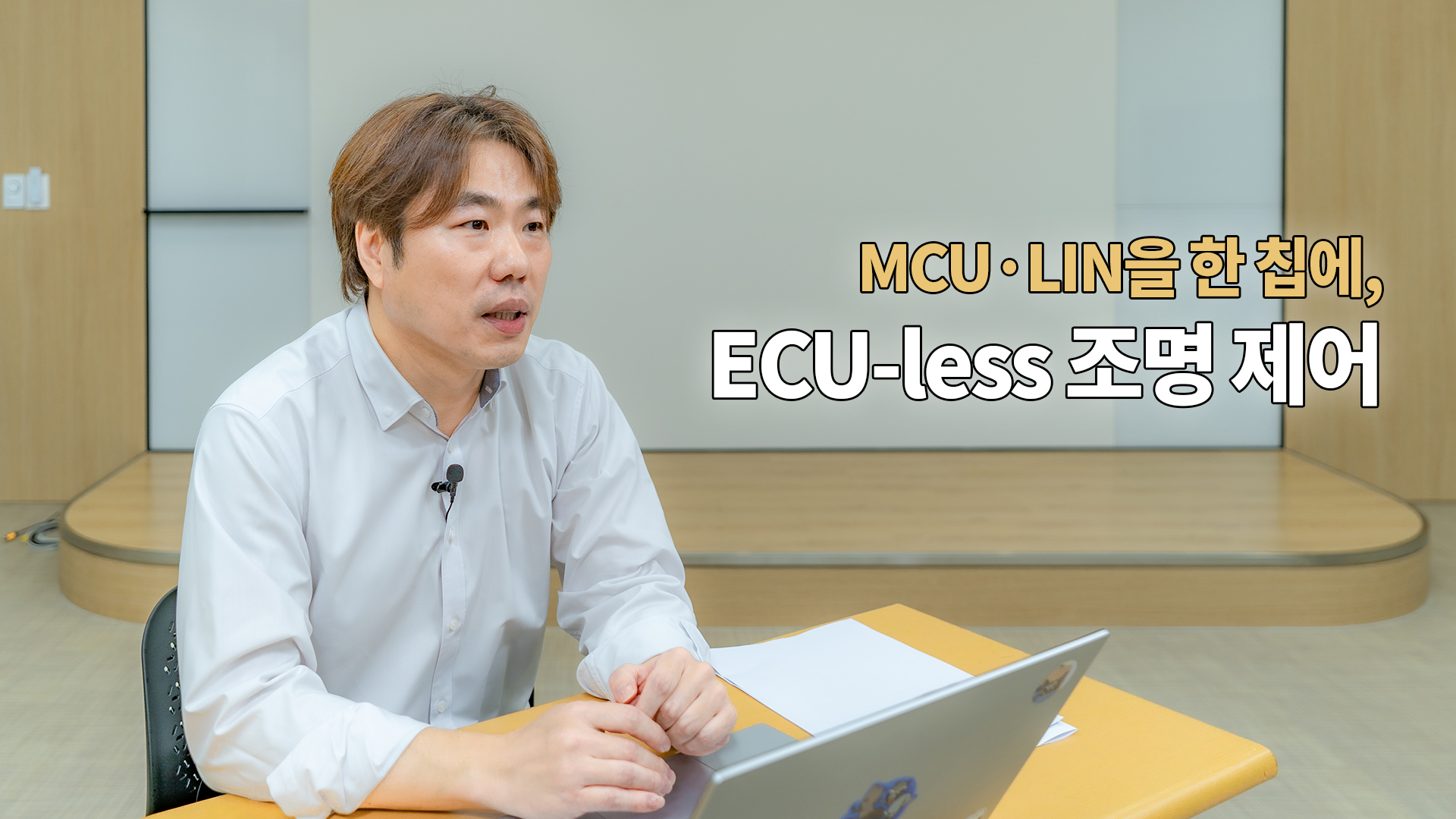
A single misaligned light means 'defect'… Vehicle interior lighting now guarded by semiconductors and software
Automotive interior lighting is moving beyond its role as 'auxiliary lighting.' As it becomes a core element of user experience (UX) that expresses brand identity through color and animation while reflecting driver preferences, the LED interior ambient lighting market is growing rapidly. In connection with this, we met in advance with Choi Young-jae, Research Director at Dabo Corporation, who will present a technical webinar session on "Intelligent LED Interior Lighting Solutions Illuminating Future Vehicles," to hear about market trends and changes in design requirements.
2026.08.28by 명세환 기자
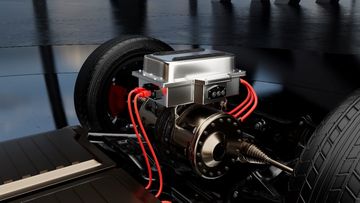
TI Unveils Multi-Axis Coreless Current Sensor TMCS2100-Q1 for HEV/EV Traction Inverters
Texas Instruments has unveiled the TMCS2100-Q1, a multi-axis coreless Hall-effect current sensor for HEV and EV traction inverters. By simultaneously measuring horizontal and vertical magnetic fields through multi-axis sensing technology, it achieves up to 20 times higher accuracy compared to conventional single-axis sensors, while the busbar-unmodified design provides mechanical design flexibility. It simultaneously meets the high-accuracy requirements and miniaturization driven by the expansion of 800V architectures.
2026.08.27by 배종인 기자











