


Fitbit can distinguish sleep stages with a band-style tracker
 Published2017.06.08 15:08
Fitbit stated that clinical trials have proven that it is possible to accurately distinguish between light sleep, deep sleep, and REM sleep stages through band-type activity trackers equipped with movement and heart rate measurement functions, such as the Fitbit Alta HR, Blaze, and Charge 2.
Polysomnography experts analyzed over 4 billion data points collected through Fitbit and found that the band-type activity tracker measures an adult's sleep stages with significant accuracy, allowing users to save on future costs such as visiting a sleep laboratory (for treatment, etc.).
Dr. Henegan, who participated in the study, said, “With Fitbit’s technology making it possible to measure sleep stages—which were previously only possible in sleep laboratories—through wristband trackers, the way we check information about our sleep habits has completely changed.” He added, “If sleep quality can be measured so easily, individuals can gain an accurate understanding of their own sleep, while society can raise awareness of public health and gain new insights into previously unknown information about sleep and various health conditions.”
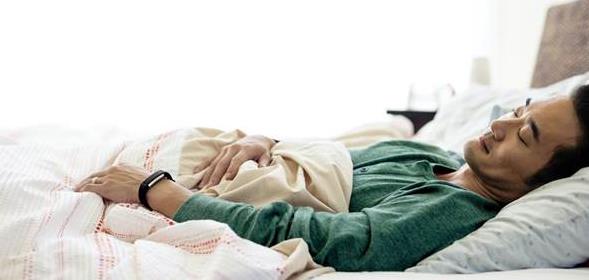
In April of this year, Fitbit introduced a new sleep feature to allow users to check their sleep habits more accurately. The sleep stage feature currently available on Alta HR, Blaze, and Charge 2 measures light sleep, deep sleep, and REM sleep duration using heart rate changes, as well as measuring the time spent awake each night, allowing for detailed monitoring of sleep quality.
In addition, Fitbit recently conducted an investigation and analysis of millions of anonymized Fitbit night sleep stage data points, proving the theory that sleep scientists have long argued that more than 7 hours of sleep is best for health. Leading sleep researchers have claimed that there is a correlation between less than 7 hours of sleep and a lack of REM sleep, and that a lack of REM sleep can affect short-term memory, cell regeneration, and the regulation of psychological state.
Dr. Michael T. Smith, Jr., a sleep expert on the Fitbit advisory board and professor of neuropsychiatric nursing at Johns Hopkins School of Medicine, said, “The results of this study support the general recommendation that most adults should consistently sleep 7 to 9 hours and demonstrate why getting good sleep is important for overall well-being. When sleeping less than 7 hours, the body may lack both deep sleep and REM sleep, and these two sleep stages are crucial for maintaining overall health.”
관련뉴스
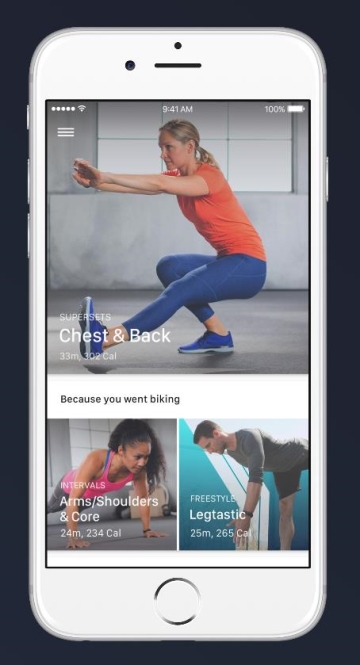
Fitbit Unveils 'Fitstar,' a Customized Personal Training App
Fitbit unveiled a new version of its personal training app 'Fitstar' at CES 2017. The new Fitstar Personal Trainer app not only recommends personalized workouts based on users' Fitstar and Fitbit activity, but also features evolved capabilities including trainer options, an exercise library, customizable music settings, and a new display, according to the company.
2017.01.09by 김지혜 기자
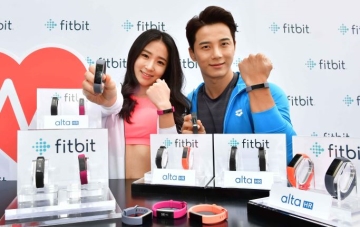
Fitbit's Alta HR, with enhanced health management features, now available in Korea.
핏비트(Fitbit)가 5월 초 신제품 핏비트 알타 HR의 국내 공식 판매를 시작한다. 알타 HR은 기존 알타에 24시간 실시간 누적 심박수를 모니터링하는 기술인 퓨어펄스를 더하고, 새로운 ‘수면 단계 기능’을 적용한 제품이라고 업체 측은 밝혔다. 또한 한층 더 강화된 건강관리 기능을 제공한다. 이번에 새롭게 추가된 ‘수면 단계 기능'은 퓨어펄스를 이용해 수면 시간을 자동으로 측정, 수면의 질을 세밀하게 분석하고 숙면을 위한 맞춤형 팁을 제공함으로써 건강한 라이프스타일의 완성을 돕는다.
2017.04.25by 신윤오 기자
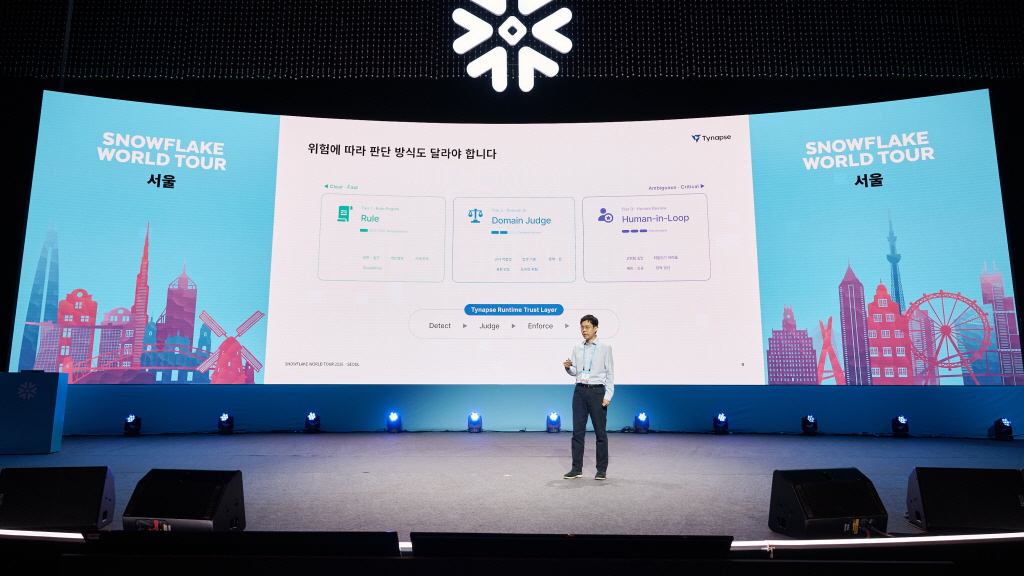
The Problem with AI is Not Performance, but Trust
CEO Kang Min-seung emphasized at Snowflake's World Tour Seoul that generative AI has entered a phase where "trust" rather than accuracy becomes the key competitive advantage. As AI is applied to various tasks including consultation, risk management, and operational automation, incorrect data, erroneous responses, and bias are creating actual business risks. He pointed out that enterprises must build a trust layer above AI. To achieve this, accurate data management, semantic structuring, governance, and prompt security are essential. He explained that AI is not merely an automation tool but a technology that reorganizes the entire organization's workflows and decision-making systems. Snowflake provides a platform that supports this trust-based AI operation, emphasizing that enterprises should build "trustworthy AI" rather than "intelligent AI."
2026.08.28by 배종인 기자
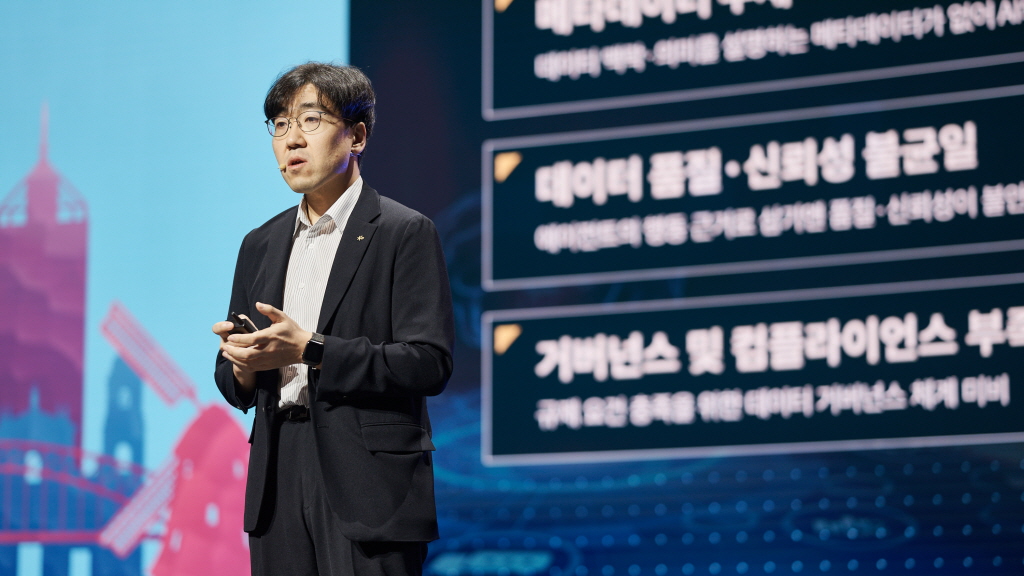
The Decisive Factor for AI Agents in Finance: "Trustworthy Data Infrastructure"
The key to spreading AI agents in the financial sector is establishing a trustworthy data system. KB Kookmin Bank is operating over 100 AI agents by 2025 and is promoting expansion to 300. AI is automating repetitive tasks across various areas such as consultation, risk management, wealth management, and relationship management. However, if data quality, governance, and semantic structuring are insufficient, errors and risks increase. KB is building an AI-Ready organization through a multi-model strategy of GPT, Gemini, and Claude, as well as a Snowflake-based data system. The bank emphasized that AI has entered a phase where it restructures not just simple automation but the entire work process and decision-making system.
2026.08.28by 배종인 기자
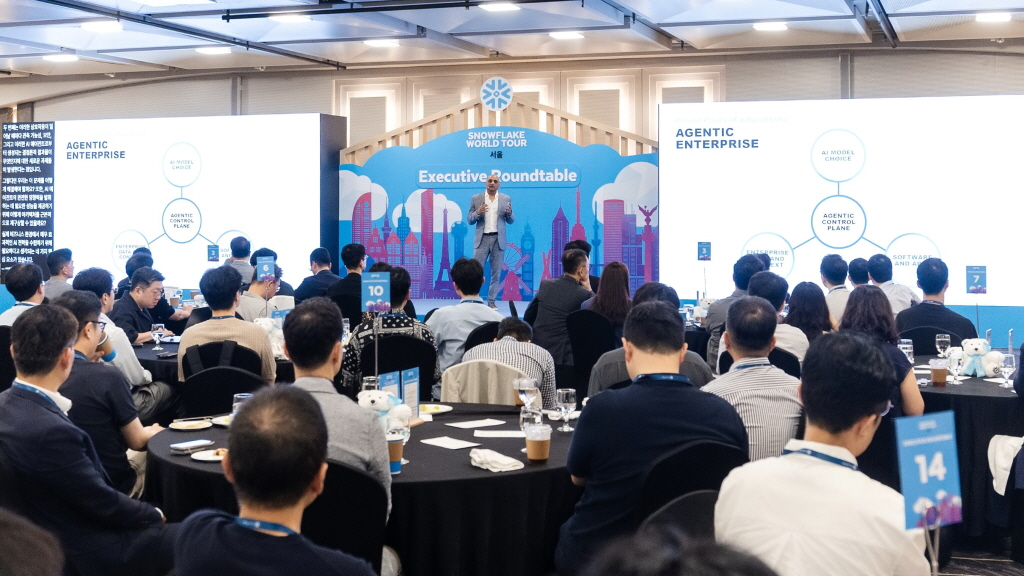
Snowflake Presents Data Platform Roadmap for Agentic AI Era
Snowflake emphasized at the Seoul roundtable that the key to enterprise AI proliferation lies in "Agentic AI" and the integration of data and workflows. Bala Kasivisvanathan stated that AI is evolving beyond simple analytics to become the driver of task automation and operational optimization, and that organizations must strengthen their data quality, processes, and governance as prerequisites for this. CJ OliveNetworks introduced that it is currently expanding AI applications in logistics and operational automation. Snowflake stressed that companies need a strategic shift to connect AI adoption to tangible business impact.
2026.08.28by 배종인 기자











