

.png)

OnSemi Maintains Data Even Under Automotive Stress Environments to Achieve 'Grade 0'
 Published2017.06.22 16:40
Grade 0 Realized with Enhanced Performance Including Write Cycles and Data Retention Period Compared to Grade 1 Version
In the automotive industry, safety is paramount, and safety standards become increasingly stringent over time. Features such as Electronic Stability Control (ESC) and Tire Pressure Monitoring Systems, which were once optional add-ons or limited to premium vehicles, have now become mandatory in nearly all vehicles.
For automotive ICs, there is a growing trend in demands for reliability and robustness. The automotive environment is one of the most challenging for ICs, as it is not only noisy but also subject to a wide range of temperatures. Even in applications with less temperature variation, such as steering, OEM companies demand high-reliability and high-durability components certified by AEC.
Non-volatile storage media such as EEPROM offers two key advantages. It operates properly even under stress environments and retains data even when the system is powered down. While other ICs experience stress only during operation, EEPROMs for data retention are constantly in use. Due to these characteristics, they are ideal for applications where robustness and reliability are critical, such as engine control, transmission electronics, steering, braking, and airbag systems.

Previously, the standard automotive grade for EEPROM was required to comply with AECQ-100 Grade 1, which specified a temperature range from -40°C to +125°C. With expanding electrical usage in vehicles and increasingly stringent safety standards, OnSemi has introduced an EEPROM product family compliant with AECQ-1000 Grade 0, which covers a temperature range from -40°C to +150°C. These products are serial EEPROMs with densities ranging from 1kb to 64kb, available in SOIC and TSSOP 8-pin packages. These devices communicate via the SPI protocol, a high-speed protocol that is the standard for both previous and current microcontrollers.
These devices demonstrate overall performance improvements compared to Grade 1 versions. Durability is enhanced with a higher temperature range, 4 million write cycles (compared to just 1 million in previous products), and a 200-year data retention period (compared to just 100 years previously). The minimum supply voltage is 1.7V at temperatures up to +125°C and 2.5V across the full voltage range.
Error Code Correction is implemented in hardware for each 8-bit word.
When a user writes byte data, the device automatically stores a code that represents this data as 3 redundant bits. If a single bit in the byte data becomes corrupted, the device detects this when the data is read again by checking against the extra redundant bits. It then automatically corrects the error before conveying it to the user. This process is transparent to the user, just like reading and writing memory in a standard serial EEPROM.
Related news

On Semiconductor Showcases Various Technologies at IoT World 2017
On Semiconductor will demonstrate technologies related to Internet of Things (IoT) implementation at the IoT World 2017 exhibition being held in California. This is the result of On Semiconductor's ongoing efforts to support solutions in connectivity, system development, and diverse sensing fields, which are becoming increasingly important as the Internet of Things market evolves. Exhibition visitors will be able to directly demonstrate the new RGB-IR CMOS image sensor products (AR0237, AR0238). By mounting a mechanical IR-blocking filter on the imaging assembly, this product reduces costs and can capture both daytime color and nighttime near-infrared (nIR) image data from the same sensor without refocusing or additional maintenance. Adopting a color filter array (CFA) arrangement where a 4x4 kernel replaces some red and blue pixels with nIR-sensitive pixels and rearranges the spatial density of the remaining pixels, these devices with wide dynamic range can handle challenging lighting conditions. Supporting 2.1 megapixel resolution and 60 frames per second (fps) video operation, these products are well-suited for home security and automated surveillance devices where ambient light levels vary significantly over time.
2017.05.15by 김자영 기자
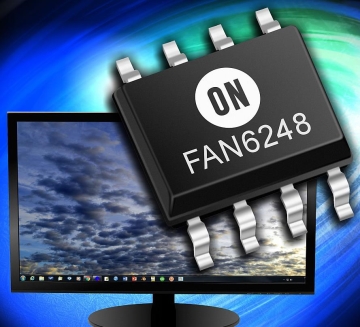
ON Semiconductor Unveils Latest Synchronous Rectifier Controller
On Semiconductor has introduced its latest synchronous rectifier (SR) controller optimized for LLC resonant converter topology. The new FAN6248 delivers high efficiency with minimal additional components while simplifying thermal management and improving overall system reliability. In addition, it simplifies the design of LLC power supplies. The FAN6248 is an ideal solution for modern high-performance power supply units (PSUs) that require high reliability and efficiency in compact spaces. Typical applications include servers and desktop computers, gaming, large-screen LCD TVs and OLED TVs, networking, telecommunications, and LED lighting. The device integrates an advanced hybrid SR control method that senses instantaneous drain voltage along with previous switching cycle information. Through a dedicated 100V rated sensing input, it accurately monitors drain and source voltages across two SR MOSFETs while accommodating asymmetric or poor coupling in the secondary winding.
2017.05.16by 김지혜 기자
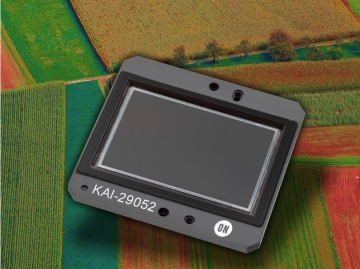
On Semiconductor Improves Imaging Performance for High-Resolution Industrial Applications
On Semiconductor has enhanced performance for industrial imaging applications requiring high-quality image capture and maximum image uniformity. The newly released 29-megapixel KAI-29052 image sensor delivers up to 2x greater imaging sensitivity compared to the existing KAI-29050 across the 500 nanometer (nm) to 1050 nm wavelength range. This enhanced performance is particularly useful for applications operating at near-infrared (NIR) wavelengths such as 850 nm. The improved pixel design isolates charge from one photodiode to another, allowing for enhanced sensitivity without reducing image sharpness.
2017.06.08by 김자영 기자

A single misaligned light means 'defect'… Vehicle interior lighting now guarded by semiconductors and software
Automotive interior lighting is moving beyond its role as 'auxiliary lighting.' As it becomes a core element of user experience (UX) that expresses brand identity through color and animation while reflecting driver preferences, the LED interior ambient lighting market is growing rapidly. In connection with this, we met in advance with Choi Young-jae, Research Director at Dabo Corporation, who will present a technical webinar session on "Intelligent LED Interior Lighting Solutions Illuminating Future Vehicles," to hear about market trends and changes in design requirements.
2026.08.28by 명세환 기자
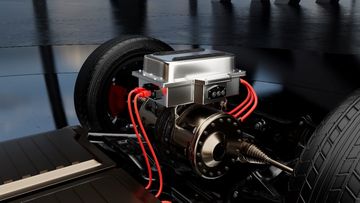
TI Unveils Multi-Axis Coreless Current Sensor TMCS2100-Q1 for HEV/EV Traction Inverters
Texas Instruments has unveiled the TMCS2100-Q1, a multi-axis coreless Hall-effect current sensor for HEV and EV traction inverters. By simultaneously measuring horizontal and vertical magnetic fields through multi-axis sensing technology, it achieves up to 20 times higher accuracy compared to conventional single-axis sensors, while the busbar-unmodified design provides mechanical design flexibility. It simultaneously meets the high-accuracy requirements and miniaturization driven by the expansion of 800V architectures.
2026.08.27by 배종인 기자











