



In the IoT Era, What Are Two Things Cloud Can Miss?
 Published2017.06.26 11:52
CDN Without Server Downtime Emerges as a Remedy in the Network Security Era
CDN (Contents Delivery Network), which prevents cloud server downtime and manages cloud efficiently at cost-effective rates, is emerging as an essential element in the era of network security.
This phenomenon has garnered increased attention recently as seven commercial banks were attacked with DDoS strikes accompanied by threatening emails. This is because, as attacks target not only servers but also network equipment and available network bandwidth, the cloud environment is also being pointed out as a blind spot in security.
DDoS attacks have become more diverse, with data breach attempts such as SQL injection and XSS occurring, making hacking defense increasingly difficult. At the KT Cloud Frontier held on the 20th, numerous CDN-related companies participated and discussions took place regarding the current cloud environment and security.
Ahn Jun-soo, Executive Director of Akamai, presented on the topic "Innovation Led by IoT, Is Cloud Enough?" To prevent cloud attacks, large capacity reserves are necessary since immediate scaling is difficult. However, securing cloud capacity entails significant costs. For this reason, CDN has been widely used for large-file downloads such as online games, music downloads, and software updates.
Akamai introduced a customer case in which a gaming company applied a cloud-based security solution to handle multiple DDoS attack traffic exceeding 100-300Gbps without building additional infrastructure.
Key features include ▲minimizing origin load to protect core infrastructure, ▲reducing origin traffic costs and supporting service continuity through distribution/bypass technology even when the origin experiences failure, and ▲rapidly creating origin servers/storage on CDN and managing them in an integrated manner.
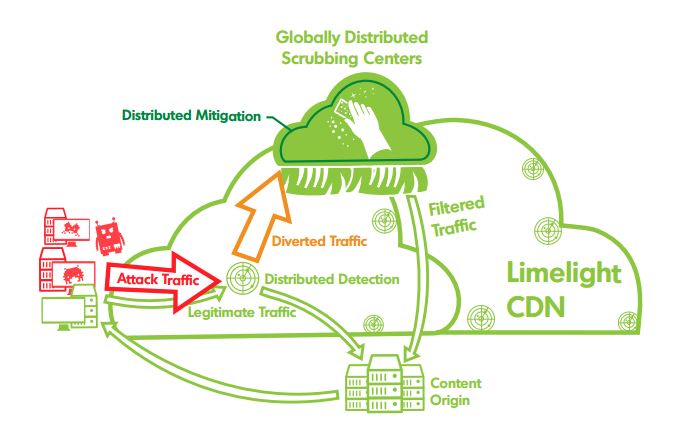
Lee Jung-hun, Division Chief of Sollbox, stated, "Using a distributed platform to analyze whether traffic is an attack or legitimate, we detect and defend against attacks before they reach the origin server. Since servers with issues are transferred to neighboring servers for operation, theoretically there is no server downtime."
Additionally, by caching popular content on each server, storage can be used up to several petabytes without interrupting service. Investment costs can be reduced compared to cloud. When cloud and CDN work as complements rather than alternatives, flexible and efficient large-capacity storage can be secured.
Besides, CDN security types include various forms such as providing volatile URLs (1time URL).
Related news

Akamai introduces more convenient web security solution
Akamai Korea unveiled the 'Web Application Protector (WAP)' on the 16th and added new features to its existing 'Kona Site Defender (KSD)' solution. WAP minimizes efforts required to defend against DDoS and web application attacks, while KSD has strengthened security against attacks targeting Application Programming Interfaces (APIs).
2017.02.16by 서아람 기자
Are you worried about IoT usage and security?
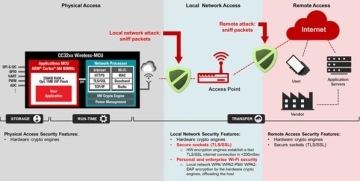
As the Internet of Things (IoT) has become activated, most devices in our surroundings are now connected to the internet. Any and all devices connected to the internet can be subject to local or remote attacks. Attackers can compromise connected devices to steal corporate intellectual property stored in systems, gain access to user data, or maliciously manipulate systems to cause harm to users. Security threats in IoT are a critical issue. We hold several misconceptions about how to address them. As evidenced by the massive distributed denial of service (DDoS) attack that occurred at the end of last year, which experts have called the largest in history, even seemingly innocuous products such as home digital video recorders (DVRs) can be maliciously compromised and used as "botnets" to disrupt the operations of third-party entities. Last year's attack impacted services such as Twitter and PayPal, but similar attacks could be directed at large-scale smart infrastructure technologies such as power grid systems. According to a 2016 survey conducted by Kaspersky Lab, some enterprises and organizations have spent over 1.6 million dollars to address a single DDoS attack.
2017.05.02by 김지혜 기자
Limelight Networks Announces Next-Generation CDN Service Platform
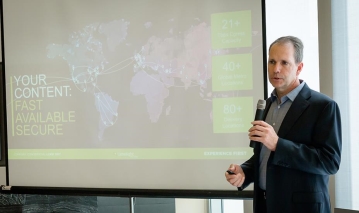
Limelight Networks has announced the "Limelight Orchestrate Platform," a next-generation CDN platform that delivers new capabilities to address the growing global online traffic and content delivery challenges worldwide. Robert A. Lento, Chairman of Limelight Networks, stated during his first press briefing in Korea: "By utilizing Limelight Networks' CDN services, you can use space and power more intelligently. Additionally, as a result of continuously adding locations, Limelight currently maintains approximately 80 physical sites globally."
2017.05.15by 김지혜 기자
.jpg)
SalePoint Signs Multi-Year Partnership Agreement with AWS… Promoting Identity Security that Integrates Even AI Agents
Sailpoint has entered into a multi-year strategic partnership agreement with AWS and is moving forward with establishing an integrated governance system that manages both human and non-human identities together. The plan is to consistently manage access permissions in an environment where AI agents are increasing as work execution entities, while applying the principle of least privilege and automated policy enforcement. The two companies plan to jointly expand capabilities to manage the identities of various entities, including AI agents, within a single layer in the AWS environment. This collaboration is interpreted as a move to design security and governance together in corporate environments where AI adoption is expanding.
2026.03.26by 배종인 기자
.png)
Databricks Unveils Open AI Security Monitoring 'Lakewatch'
Databricks entered the security market on March 24 by unveiling LakeWatch, an open-source agentic SIEM. The core functionality of this product is to integrate and analyze security, IT, and business data in a single environment to support AI-based threat detection and investigation. The company explained that it reduces the limitations of existing security operations centers, which have had to forgo some data due to high cost structures, and enables large-scale data analysis and automation based on open formats and ecosystems. LakeWatch is currently offered as a private preview, with Adobe and Dropbox mentioned as early customers. Databricks also announced an expanded partnership with Anthropic as well as the acquisition of Antimatter and SiftD.ai.
2026.03.26by 배종인 기자











