



Smart factory is not an option but a necessity in the Fourth Industrial Revolution era
 Published2017.07.04 18:55
Need for Technological Innovation Integrating Manufacturing and Data
"The keyword of the Fourth Industrial Revolution is manufacturing."
At the keynote address of the Korean manufacturing smart factory roadmap conference, Professor Park Hee-jae from Seoul National University stated, "Manufacturing consists of two aspects: the product that needs to be made and the process of making the product. Making these two aspects smart is the direction that manufacturing must take in response to the Fourth Industrial Revolution."
The event was held on the 4th at Geomungo Hall at The K Hotel Yangjae, hosted by the Korea Management Certification Institute, with presentations centered on the core hardware and software strategies of smart factory. Smart factory is gaining attention as an essential condition not for choice but for survival in the Fourth Industrial Revolution era.
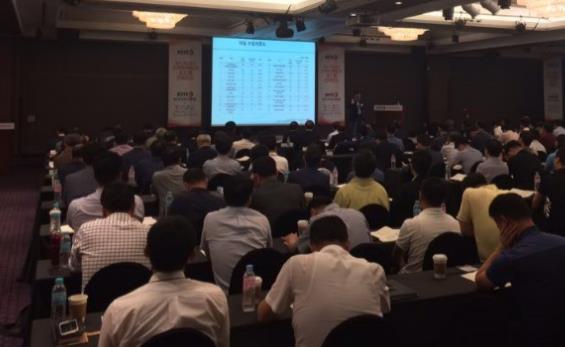
Regarding the method of manufacturing technology innovation, Professor Park stated, "Products and manufacturing processes must be integrated with IT and made intelligent. Once production equipment is connected through IoT, it can operate autonomously." He further emphasized, "While simple automation tasks will be replaced by manpower, products and manufacturing processes will be leveled up through data from professionals with specialized techniques and experience," highlighting the necessity of scientific thinking training and on-site linked education.
Subsequently, POSCO's Executive Vice President Oh Ki-jang remarked, "Fifty percent of our country is manufacturing. We must possess competitiveness," and stated, "The driving force of the Fourth Industry is how data is utilized. The manufacturing sector must also shift its thinking frame from hardware to software," mentioning that the secondary industry of manufacturing must be transformed into a new industry through data convergence.
The smart factory hardware strategy section included presentations on △Siemens' digital solutions and IoT systems, △smart factory application cases in the manufacturing robot sector, △smart factory engineering models, and △digital transformation application cases in manufacturing. The software strategy section was followed by topic presentations on △automotive industry and ICT technology convergence, △software platforms for traditional manufacturing, △domestic smart factory current level and success strategies, and △MDS Technology smart factory system construction cases.
Related news
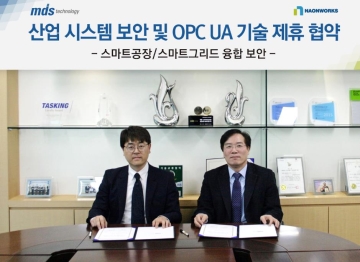
MDS Joins Hands with Naonworks to Strengthen Smart Factory Security
MDS Technology announced that it has signed a Memorandum of Understanding (MOU) with Naonworks, an industrial control system security specialist, for "smart factory security business and OPC UA (Open Platform Communication Unified Architecture) technology cooperation." With the execution of this MOU, MDS Technology plans to provide security solutions for smart factory protection, including external network linkage for factories or in-network linkage security solutions for industrial control protocol conversion and monitoring within factories.
2017.03.16by 김지혜 기자
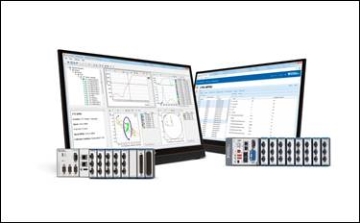
NI Unveils Integrated Smart Factory Solution at 'Automation World 2017'
National Instruments announced that it will participate in the automation industry exhibition 'Automation World 2017,' being held at COEX for four days from March 29 to 31, and will showcase integrated solutions and demonstrations for factory automation.
2017.03.22by 김자영 기자
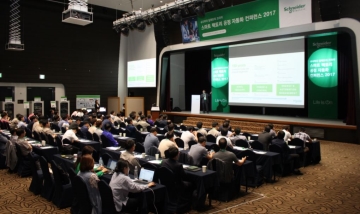
Schneider Hosts Smart Factory Process Automation Conference
Schneider Electric Korea announced that it successfully held the Smart Factory Process Automation Conference 2017 at MVL Hotel in Yeosu, Jeollanam-do on the 8th. The conference was held to officially announce the opening of Schneider Electric's Yeosu branch by inviting industry officials from the oil and gas, and petrochemical sectors in Yeosu, and to showcase Schneider's process automation solutions. The conference was well-attended with over 100 employees from major domestic and international companies including LG Chem, GS Caltex, Lotte Chemical, and POSCO ICT. The conference was attended by more than 20 employees of Schneider Electric Systems Korea, which oversees Schneider Electric's process automation business, including Executive Vice President Jeon Seok-bae. Starting with Executive Vice President Jeon Seok-bae's keynote speech, a total of six seminar sessions were conducted, with each session introducing Schneider Electric's next-generation process automation solutions. In addition, demonstrations of approximately 10 types of products were conducted, including the Foxboro Evo process automation system, Triconex, and Modicon PLC. Furthermore, customized process automation solution consulting tailored to business needs was provided to customers pursuing process efficiency and safety, which received great response. The Foxboro Evo process automation system showcased at the conference is characterized by excellent fault tolerance and highly available control functions. Through the non-stop component product line, it collects business-valuable data and shares it with field operators, and supports insightful decision-making based on the collected data.
2017.06.12by 김자영 기자
Nvidia invests $5 billion in Intel
NVIDIA and Intel, leaders in global AI computing technology, are now forging ahead in providing cutting-edge solutions through NVLink-based architecture integration. NVIDIA and Intel have officially announced a strategic partnership and stated that they will jointly develop customized data center and personal computing products to accelerate diverse applications and workloads ranging from hyperscale to enterprise and consumer markets, thereby laying the foundation for the next generation computing era.
2025.09.22by 배종인 기자
.jpg)
Applied Materials Launches Environmental Protection Campaign to Mark World Cleanup Day
Applied Materials Korea (CEO Park Kwang-seon) is carrying out environmental cleanup activities with employees and their families around the Dongtan Sinricheon area on the occasion of World Cleanup Day, evolving into a company that engages with the local community beyond technological innovation.
2025.09.22by 명세환 기자











