


Pescaro Gains Recognition for Automotive Security Technology Through Startup Investment
 Published2017.07.11 11:10
Technical Capabilities Recognized by Global Accelerators
Germany's automotive association ADAC announced the results of testing 24 automobiles produced and sold by 19 global automakers, finding that most vehicles were vulnerable to hacking. The method involves manipulating and amplifying radio frequencies within the vehicle to hack the engine or door lock, tricking sensors into thinking the car owner is nearby.
As increasingly more electronic equipment is being introduced into automobiles, exposure to external hacking risks is growing, and interest in automotive security is rising.
Pescaro is a domestic automotive security startup established by automotive security module developers from Hyundai Motor and security experts from white hacker backgrounds.
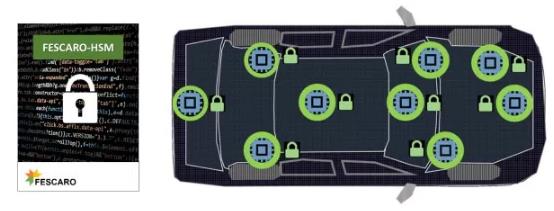
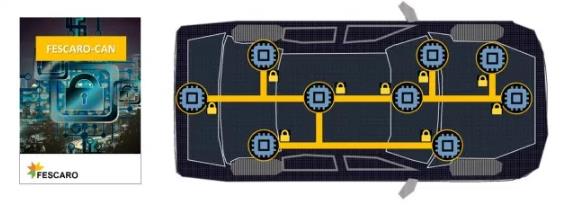
In autonomous vehicles, security can be defined across three domains: vehicle-to-vehicle communication, vehicle-to-infrastructure communication, and in-vehicle network domains. Pescaro has focused on in-vehicle security, which is both urgent and globally competitive.
The first product to be launched is FESCARO HSM, technology that safely protects ECUs from external attacks. It has been platformized to be applicable to various ECU environments. Since security functions are implemented in software, it can be deployed immediately in commercial vehicles without hardware modifications.
The second is FESCARO CAN, technology that protects communication channels between ECUs, with a prototype released last April. It detects and blocks abnormal packet inflow in the CAN communication bus in real-time. It is embedded software that can be applied directly to all ECUs.
Having gained recognition for its technical capabilities, the company received investment from SparkLabs, a global startup accelerator. In the second half of this year, models with HSM-based ECU Tuning Protection technology are scheduled to be launched in mass production with global automakers.
Hong Seok-min, CEO of Pescaro, stated: "The characteristic of all our solutions is that they are implemented based on semiconductors. Although we have released them in software due to current production capacity limitations, our goal is to implement them at the semiconductor level through partnerships with capable partners."
Related news
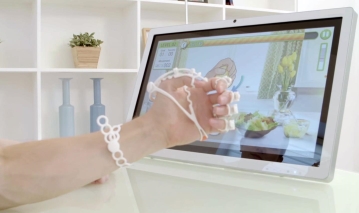
Neofect now offers personalized rehabilitation at home.
When talking about healthcare wearable devices, many people use smartwatches or smartbands to check health information and assist with exercise. In the wearable device market, which is increasingly expanding into the medical field, there is a company that manufactures devices to support rehabilitation training. Neofect (www.neofect.com), established in 2010, has been producing rehabilitation hardware devices and rehabilitation game software. After launching a home care rehabilitation service, the company won an innovation award at CES for the first time this year. The Rapael Smart Rehabilitation Solution assists in the rehabilitation of patients with neurological and musculoskeletal disorders. It consists of a smart glove called Rapael and rehabilitation training games. The biggest advantage is that rehabilitation can be performed anytime and anywhere, not just in hospitals. Continuous training is possible through lightweight, compact equipment and cloud connectivity.
2017.06.26by 김지혜 기자

Sundol drones, leave the pesticide spraying to us.
As drone technology advances, agriculture has become the most widely utilized field. According to the Association for Unmanned Vehicle Systems International (AUVSI), forecasts indicate that agricultural drones will account for 80% of the future commercial drone market. By equipping drones with cameras, it is possible to acquire crop growth information in real-time, conduct surveys to analyze soil conditions, and scan the ground surface to adjust altitude and apply precise quantities of pesticides. Sundol Drone is an agricultural drone used for spraying pesticides and fertilizers. Featuring a fully automatic system, it performs automatic flight, directional changes, spraying, and return operations automatically. Should the spraying be interrupted due to pesticide depletion mid-operation, it automatically detects this and returns home. After replenishing the pesticide, the detection system guides the drone back to the interrupted location without manual adjustment, preventing duplicate spraying.
2017.07.04by 김지혜 기자

A single misaligned light means 'defect'… Vehicle interior lighting now guarded by semiconductors and software
Automotive interior lighting is moving beyond its role as 'auxiliary lighting.' As it becomes a core element of user experience (UX) that expresses brand identity through color and animation while reflecting driver preferences, the LED interior ambient lighting market is growing rapidly. In connection with this, we met in advance with Choi Young-jae, Research Director at Dabo Corporation, who will present a technical webinar session on "Intelligent LED Interior Lighting Solutions Illuminating Future Vehicles," to hear about market trends and changes in design requirements.
2026.08.28by 명세환 기자
TI Unveils Multi-Axis Coreless Current Sensor TMCS2100-Q1 for HEV/EV Traction Inverters
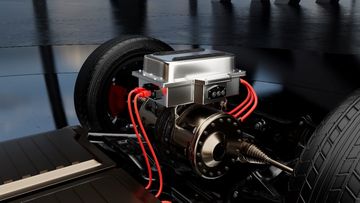
Texas Instruments has unveiled the TMCS2100-Q1, a multi-axis coreless Hall-effect current sensor for HEV and EV traction inverters. By simultaneously measuring horizontal and vertical magnetic fields through multi-axis sensing technology, it achieves up to 20 times higher accuracy compared to conventional single-axis sensors, while the busbar-unmodified design provides mechanical design flexibility. It simultaneously meets the high-accuracy requirements and miniaturization driven by the expansion of 800V architectures.
2026.08.27by 배종인 기자

Vector Korea Launches New Version of 'CANoe' with AI Agent and MCP
Vector Korea has released a new version of CANoe 20 SP2 equipped with an AI agent and MCP. With a single natural language prompt, it automates the entire process from CAPL test code generation to execution and error correction, completing tasks that previously took several hours to days in just minutes. The Vector-RAG technology suppresses LLM hallucination phenomena, and it is compatible with existing LLMs such as GitHub Copilot and Claude, provided free of charge on CANoe 20 SP2 and higher versions.
2026.08.27by 배종인 기자











