


Nvidia Presents DGX-Based Research Results at Machine Learning Conference
 Published2017.08.11 13:52
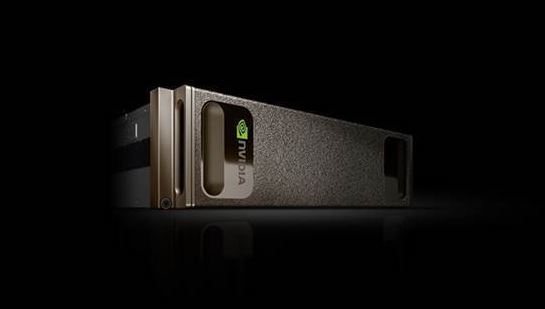
NVAIL, operated by Nvidia, brings together leading universities and research institutes from around the world. In particular, research teams from University of California Berkeley, Swiss AI Research Institute IDSIA, and University of Tokyo are leading advances in the field of deep learning based on Nvidia DGX, the world's first artificial intelligence supercomputer.
In current artificial intelligence approaches, robots learn optimal response methods to stimuli through repeated work experience. Professor Levin explained that if robots could learn without such repetitive tasks, not only would robot adaptability improve, but they could also learn much more.
He stated, "Robots must go through thousands of training iterations to learn a single skill. If we could dramatically reduce the number of experiences required for such learning, we could learn thousands of skills with the same number of work iterations that previously took to learn just one skill," and added, "While it is difficult to build a machine that makes no mistakes, it is possible to build a machine that learns more quickly from mistakes, thereby reducing the number of mistakes that must be experienced."
The research team led by Professor Levin is using Nvidia DGX systems to train algorithms that adjust visual recognition and movement. Dr. Chelsea Finn, a doctoral candidate in Professor Levin's research group, presented a research paper on this work at this conference and provided a tutorial on "Deep Reinforcement Learning, Decision Making, and Control" together with Professor Levin.
Swiss AI Research Institute IDSIA: Advanced Deep Learning
The combination of Recurrent Neural Networks (RNN) and Long Short-Term Memory (LSTM) has had a significant impact on researchers in handwriting and speech recognition.
Unlike feedforward networks that automatically pass each computation to the next stage, RNNs can use internal memory to process arbitrary data such as different pronunciations or handwriting variations, and immediately leverage previous decisions and current stimuli in learning.
This means that as RNNs advance further as neural networks, they become increasingly difficult to handle and slow down the deep learning process. Researchers at Swiss AI Research Institute IDSIA provided a solution to this problem through recurrent highway networks.
Rupesh Srivastava, an AI researcher at IDSIA and co-author of a research paper in this field presented at ICML, explained, "Until now, training recurrent networks was very difficult even in situations where layers doubled in sequential propagation, whereas thanks to recurrent highway networks, it is now possible to smoothly train recurrent networks even when layers increase to ten in repeated propagation."
The Srivastava research team enhanced training speed by utilizing Nvidia Tesla K40, K80, TITAN X, and GeForce GTX 1080 GPUs along with CUDA and cuDNN for deep learning. Srivastava noted that with the adoption of the DGX artificial intelligence supercomputer, "experiment cycles have been significantly accelerated, and progress on all lab projects has become very rapid."
University of Tokyo: Deep Learning Deception
By leveraging the capabilities of DGX, "pseudo-labels" were assigned to unlabeled data in target domains. The team reported developing methods to avoid various challenges in autonomous domain adaptation. This allows deep learning models to apply what they learn from a source domain, such as the classification ability of book reviews, to a completely different target domain, such as movie reviews, without needing to train a new model.
The University of Tokyo research team proposed a concept called "asymmetric tri-training." This concept assigns different roles to three classifiers and utilizes three different neural networks. Two networks are used to assign labels to unlabeled target samples, while the remaining network conducts training with target samples that have been assigned pseudo-labels.
The related research paper with Professor Harada as a co-author was presented at ICML. Professor Harada stated, "Similar efforts must be made to realize the potential, and by sharing this research, we hope that related research will proceed more rapidly."
Related news
Nvidia Donates Tesla V100 to AI Researchers
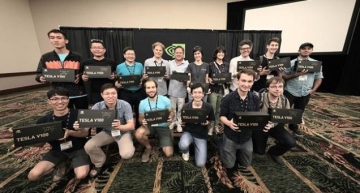
Nvidia presented the latest Volta architecture-based Nvidia Tesla V100 (NVIDIA Tesla V100) to 15 researchers participating in Nvidia's Artificial Intelligence (AI) Lab Program at 'CVPR (Computer Vision and Pattern Recognition) 2017', a computer vision and pattern recognition conference related to artificial intelligence held in Honolulu on the 22nd. Attending the conference where over approximately 150 leading artificial intelligence researchers gathered, Nvidia introduced the performance of the Tesla V100 GPU accelerator to representatives from 15 participating research institutions and presented the devices directly to them.
2017.07.26by 김자영 기자
NVIDIA Donates V100 GPUs to Researchers at the Australian Artificial Intelligence Conference
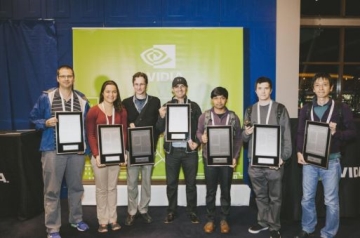
Nvidia presented 15 researchers participating in the Nvidia AI Lab program with accelerators based on the latest Volta architecture—Nvidia Tesla V100 GPUs—at ICML (International Conference on Machine Learning) 2017, held in Sydney from August 6-11 (local time). Prior to this, at CVPR (Computer Vision and Pattern Recognition) 2017, a computer vision and pattern recognition conference related to artificial intelligence held in Honolulu, Hawaii the previous month, Nvidia also presented Tesla accelerators to world-leading artificial intelligence researchers.
2017.08.10by 김자영 기자
ST Microelectronics and NUS Establish Joint Research Center 'HELIX' for Edge AI
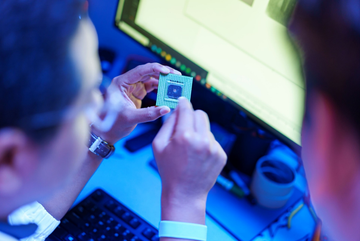
ST Microelectronics and the National University of Singapore have established the 'HELIX' joint research center aimed at implementing embedded AI in edge environments. Over a four-year period, the center will conduct research across the entire technology stack from algorithms to silicon, focusing on memory-centric architecture leveraging ST's 18nm FD-SOI technology and embedded PCM. The core objective is to implement intelligence directly in physical devices such as robots and drones while minimizing energy consumption.
2026.08.28by 배종인 기자

ams, Enhancing Humanoid Robot Sensing and Communication with Digital Photonics
ams OSRAM has unveiled solutions that leverage digital photonics technology to enhance the sensing and communication capabilities of humanoid robots. The company implements environmental awareness and precision manipulation through dToF sensors, optical force sensors, and structured light emitters, while supporting LED-based non-verbal communication through the EVIYOS and ALIYOS platforms. According to market research, the humanoid robot market is projected to grow from $600 million in 2025 to $51 billion in 2035, with improvements in robot sensing capabilities expected to serve as a key growth driver.
2026.08.27by 배종인 기자
Nvidia Unveils Jetson Orin Nano 2…78TOPS·2x Inference Performance
Nvidia has unveiled the Jetson Orin Nano 2. It delivers 78TOPS AI computing performance and 2x inference performance compared to the previous model while reducing power consumption by 40%. The device is scheduled for launch in the first half of 2027, and major robotics and drone manufacturers including Cognex, Doosan Bobcat, Matic, and Wing are currently reviewing early adoption.
2026.08.26by 배종인 기자











