


Hyundai Autron applies control and semiconductor technology to compact SUV 'Kona'
 Published2017.08.25 13:31
Engine controller with VCI (Valve Controlled Injection) function that helps reduce fine dust
Fine dust, which has recently become a hot topic worldwide, is known to be generated from power plants, factories, automobile exhaust fumes, etc. and to have a negative impact on the respiratory system and health. Developed countries are working to reduce fine dust by establishing various regulations.
In particular, the European Union (EU) has established a strengthened exhaust gas regulation called 'Euro 6c' and is increasing the level every year to induce reduction in fine dust emissions from new vehicles.
To effectively respond to this, Kona was equipped with a 1.6 gasoline turbo GDI engine with VCI (Valve Controlled Injection) function.
This engine injects fuel directly into the combustion chamber, so it is advantageous in terms of engine output and fuel efficiency, and it injects fuel multiple times, which contributes significantly to reducing fine dust. However, in order for this engine to operate properly, the engine operation control of the 'controller' is essential, and the VCI controller jointly developed by Hyundai Autron, Hyundai Motor Company R&D Center, and Hyundai Kepco plays a key role in this.
The engine controller with VCI function calculates the opening/closing time of the injector to control the injector injection amount/opening/closing timing and corrects errors that occur when performing multiple fuel injections. Hyundai Autron, together with Hyundai Motor Company, was in charge of core development including VCI software control logic that reduces fine dust, as well as basic software that operates the controller, controller circuit, and mechanical design.

Automotive semiconductors made with Hyundai Autron’s technology
The gasoline engine controller with VCI function also uses two types of semiconductors developed by Hyundai Autron. The main characters are the 'composite power semiconductor' that supplies optimized power to each circuit that makes up the controller, and the 'GDI engine control function integrated semiconductor' that is in charge of the control functions of the high-pressure pump and high-pressure injector of the GDI engine.
The composite power semiconductor, which began mass production in August 2015, integrates three types of semiconductors: a monitoring semiconductor, a transmission controller power supply semiconductor, and an engine controller power supply semiconductor. It is a product that implements the optimal performance required for the controller. It has already been applied to Gamma, Kappa GDI engine controllers, and front/rear 8-speed transmission controllers, proving its excellence. This semiconductor was recognized for its contribution as the first domestic powertrain semiconductor in Korea, and was honored with the grand prize at the 'Change and Innovation Leaders Awards', an award ceremony held within the Hyundai Motor Group in 2015.
The functional integrated semiconductor for GDI engine control is the core semiconductor of the VCI control logic. This product implements the fuel injection injector, high-pressure fuel pump, and ignition coil drive functions into a single semiconductor, and can be used in a variety of vehicle types from compact to mid-sized cars.
Hyundai Autron said it will continue to focus on developing electronic control technologies to be applied to vehicles manufactured by Hyundai and Kia in the future, and will also work hard to cooperate with various parts affiliates within the Hyundai Motor Group to contribute to exports of Korean automobiles and automobile parts.
관련뉴스
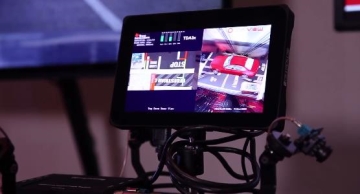
[Interview] TI's Driver Assistance SoC Provides Everything You Need for ADAS Design
지난 4월 일부 개정안을 마련한 ‘교통안전법 시행령 및 시행규칙’이 이달 18일부터 시행한다. 버스와 화물 등 대형 사업용 차량에 졸음 운전 등 운전자의 의도와 무관하게 차로를 벗어나는 것을 경고하는 ‘차선유지 보조시스템(LDWS)’ 장착을 의무화하는 것이다. 최근 대형버스의 졸음운전으로 인해 충돌사고가 일어나면서 첨단운전자보조시스템(ADAS) 장착 의무화에 대한 목소리가 커지고 있다. ADAS는 LDWS말고도 전방추돌 경보시스템(FCWS), 주차조향 보조시스템(IPAS), 차량자동 항법장치(CNS), 후방주차 지원시스템(RPAS), 보행인식 경보시스템(PCWS)으로 6가지가 포함된다. ADAS 기술은 카메라가 상황을 인식하는 기술인 만큼 제품별로 성능의 차이가 있다.
2017.07.17by 김지혜 기자
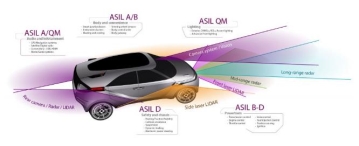
ISO26262 2nd Edition Expands to Semiconductors, Difficulties in Responding to Domestic Standards
A venue was prepared to actively inform domestic semiconductor companies about ISO26262 2nd, which will be officially announced in May of next year. The second revision expands the scope of application to the semiconductor sector, requiring responses from the automotive industry. On the 26th, the 'ISO26262 2nd Vehicle Semiconductor Safety Design International Standard Guideline Seminar' was held at Yang Jae El Tower, organized by the Korea Semiconductor Industry Association and sponsored by the National Institute of Standards and Technology. Jeong Dong-hee, Director of the National Institute of Standards and Technology, stated, "Domestic standard proposals have been stagnating significantly. Looking at IEC and ISO, the number of standard proposals from our country has been declining since 2009," and added, "In the era of the fourth industrial revolution, we need to lead with advanced standards rather than follow existing ones," commenting on awareness regarding standards.
2017.07.27by 김지혜 기자

Microchip Surpasses 50 Million Units of INIC with Vehicle Infotainment Technology
Microchip Technology announced that shipments of its 50Mbps Intelligent Network Interface Controller (INIC) products with MOST (Media Oriented System Transport) technology have surpassed 50 million units. Microchip's MOST50 technology includes an electrical physical layer (ePHY) optimized for use with UTP (Unshielded Twisted Pair) copper cable, and is being adopted by major automotive companies worldwide including General Motors and Toyota across various vehicle types ranging from compact cars to premium SUVs. MOST technology is a solution for high-bandwidth vehicle infotainment systems, currently widely used and represents a clear and proven networking solution. MOST technology can efficiently transmit audio, video, packet, and control data in a predictable manner without the burden of complex time synchronization protocols.
2017.07.27by 김지혜 기자

A single misaligned light means 'defect'… Vehicle interior lighting now guarded by semiconductors and software
자동차 실내조명이 '보조 조명'의 자리를 벗어나고 있다. 색상과 애니메이션으로 브랜드 아이덴티티를 드러내고 운전자 취향을 담아내는 사용자 경험(UX)의 핵심 요소로 올라서면서, LED 실내 앰비언트 시장도 빠르게 커지는 중이다. 이에 관하여 '미래 자동차를 밝히는 지능형 LED 실내 조명 솔루션' 이라는 내용으로 기술 웨비나 세션을 발표하는 최영재 다보코퍼레이션 연구위원을 앞서 만나, 시장의 온도와 설계 요구의 변화를 들었다.
2026.08.28by 명세환 기자
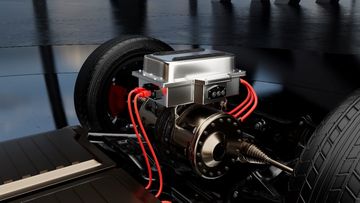
TI, HEV·EV 트랙션 인버터용 다축 코어리스 전류 센서 TMCS2100-Q1 공개
Texas Instruments가 HEV·EV 트랙션 인버터용 다축 코어리스 홀 효과 전류 센서 TMCS2100-Q1을 공개했다. 수평·수직 자기장을 동시에 측정하는 다축 센싱 기술로 기존 단일 축 센서 대비 최대 20배 높은 정확도를 달성하며, 버스바 무개조 설계로 기계 설계 유연성을 확보했다. 800V 아키텍처 확산에 따른 고정확도 요구 충족과 소형화를 동시에 구현한다.
2026.08.27by 배종인 기자











