



"We will expand specialized graduate schools to regional areas to nurture security developers who are in short supply"
 Published2017.09.12 15:10
Plans to build cyber security big data center capable of analyzing data
"Unlike the past when cyber threats targeted system disruption or information leakage, cyber risks are now evolving toward ransomware aimed at financial gain"
As smart homes, smart factories, autonomous vehicles and other cloud services proliferate, creating a hyper-connected society, cyber attack targets have expanded uncontrollably.
At the 5th Security Next Conference hosted by ZDNet Korea on the 12th, Heo Sung-wook, Director of Information Security Planning at the Ministry of Science and Technology, Information and Communication, delivered the keynote address, stating, "Cyber threats can no longer be addressed by a single private enterprise, a single government ministry, or a single nation," and noted that cyber attacks are directly linked to national economy, security, public safety, and social trust.
The Ministry of Science and Technology and the Korea Internet & Security Agency (KISA) announced that they will address uncertainties in the Fourth Industrial Revolution era by securing cyber safety through △advancing cyber threat response systems, △ensuring ICT safety in daily life, and △strengthening cyber security fundamental capabilities.
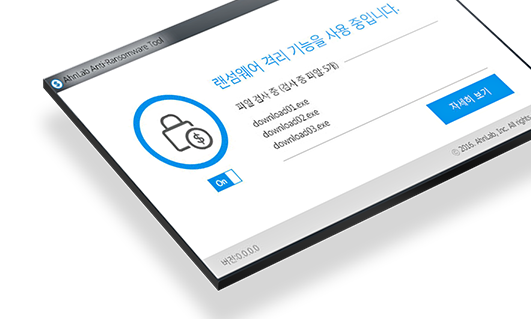
The policy is to diagnose vulnerabilities targeting key facilities and multi-use services and strengthen collaboration between public and private sectors and across various fields. The plan is to expand detection scope to cover growing IoT and unstructured data and conduct monitoring based on artificial intelligence for proactive prevention. As a main project, a cyber security big data center will be established to collect attack data and share analysis information with enterprises.
The ministry announced it will expand security consulting for small and medium enterprises to help them build response capabilities and revitalize cyber insurance.
Director Heo stated, "IoT requires hardware-level security. It is difficult unless security is embedded from the product development stage," and "Once ransomware strikes, there is no solution. Proactive prevention is important, and all we can do after an incident is prevent damage from spreading," adding that security guidelines for ICT convergence industries will be prepared.
To strengthen cyber security fundamental capabilities, investment in security technology development will be expanded to 100 billion won by 2022, and next-generation security technologies such as biometric authentication, forensics, and blockchain will be developed. The ministry is also reviewing ways to monetize pricing for security continuous service requested by security companies and make disclosure requirements mandatory for companies above a certain scale regarding corporate security status.
Director Heo noted, "It is difficult to find security developers," and stated, "Now, to secure fintech, we need people who understand finance to handle security, not just those who know security alone," adding that security-specialized graduate schools for strategic industries by region will be expanded from the Seoul metropolitan area nationwide to foster specialized security talent.
In addition to talent cultivation, plans are underway to build an information security cluster in Pangyo to foster startups and create jobs to nurture the security industry.
Related news
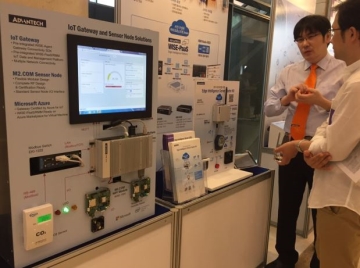
Advantech "No IoT Standards Yet, Must Build Ecosystem First"
"IoT exists across all fields including smart farms, parking lots, roads, smart metering, and logistics. We must achieve innovation for future lifestyles. However, since there are no standards in IoT, we must build an ecosystem to drive innovation," said Miller Chang, president of the Embedded IoT Group, at the 2017 Advantech Embedded Design-in Forum. He continued, "We will establish close collaboration with various ecosystem partners and pioneer the IoT market to create real business opportunities." In the past, discussions with customers primarily focused on I/O and optimization-based functionality, but in the IoT era, 'connectivity' has become the priority. Additionally, he stated that services related to security and data analysis, as well as remote device management, have become increasingly important.
2017.09.07by 김자영 기자

The Backlash of IoT Security: Intact Drones Crash and Moving Cars Stop
There have been cases where refrigerators opened and closed multiple times a day, vacuum cleaners that traverse throughout the home, and TVs that people sit facing have been hacked. In 2014, when IoT security was being discussed, Proof Point, an American security company, revealed that malicious emails were being sent three times a day in units of 100,000 to not only enterprises and individuals but also home appliances. It goes beyond simply receiving them—hackers can control cameras attached to devices. The cameras in vacuum cleaners and TVs can become the eyes of hackers, allowing them to photograph every corner of the home.
2017.09.07by 김자영 기자

Limelight, Customized Support from Fast Content Delivery to Security
"As the internet environment changes, enterprises need to adopt CDN (Content Delivery Network)," said Seokin Yoon, Technical Director of Limelight Networks Korea, at a press briefing held on the 8th at Finance Center in Jung-gu, Seoul, on the topic of "CDN Technology Trends and Technology Strategy." As online business shifts from text-centric to multimedia, complexity is increasing due to diverse access devices, various file types being transmitted, connection speeds, and delivery methods. In particular, to provide high-quality content delivery services, factors such as object size of transmitted content, library size, number of users, and object popularity must be considered.
2017.09.08by 김지혜 기자
.png)
Databricks Unveils Open AI Security Monitoring 'Lakewatch'
Databricks entered the security market on March 24 by unveiling LakeWatch, an open-source agentic SIEM. The core functionality of this product is to integrate and analyze security, IT, and business data in a single environment to support AI-based threat detection and investigation. The company explained that it reduces the limitations of existing security operations centers, which have had to forgo some data due to high cost structures, and enables large-scale data analysis and automation based on open formats and ecosystems. LakeWatch is currently offered as a private preview, with Adobe and Dropbox mentioned as early customers. Databricks also announced an expanded partnership with Anthropic as well as the acquisition of Antimatter and SiftD.ai.
2026.03.26by 배종인 기자

Kaspersky Unveils Revamped 'NEXT' Combining SOC Integrated Management and AI Analytics
As enterprises increase demand for integrated management and automation in the construction and operation of Security Operations Centers (SOC), Kaspersky has disclosed updates to its B2B security product suite 'Kaspersky Next'. This update expands EPP, EDR, XDR, and SIEM integration through a single console based on OSMP, incorporates AI capabilities such as DLL hijacking detection and suspicious account takeover behavior identification, and includes integration with generative AI assistant tool KIRA. The company stated that in large-scale deployment environments, EDR Expert can reduce resource requirements by up to 30%, and XDR Expert by up to 60%.
2026.03.25by 배종인 기자











