This page was machine-translated and may differ from the original. View original
What is included in the next 15-year plan for robot technology, a future growth engine?

Ministry of Trade, Industry and Energy Announces Robot Industry Technology Roadmap
Divided into 6 chapters, containing each challenge and periodic plan
As artificial intelligence technology becomes a hot topic, a new wind of change is blowing through robot technology as well. The influence of robots is expanding across society to the extent that the definition of them as machines that simply mimic humans and operate autonomously is becoming meaningless.
Accordingly, the Ministry of Trade, Industry and Energy and approximately 80 experts from industry, academia, and research institutes developed the "Korea Robot Industry Technology Roadmap" through sector-specific subcommittees operating from January to June of this year. A public hearing was held in early June to review the draft and discuss future improvement plans. On the 15th, the completed "Korea Robot Industry Technology Roadmap" was presented at "RoboWorld 2017," held at KINTEX in Ilsan.
The roadmap is divided into six categories: manufacturing robots, professional service robots, personal service robots, robot components, software and intelligence, and standardization. Each chapter contains the current status, market, demand and outlook, as well as challenges and cyclical goals.
First, the manufacturing robot market is growing rapidly within the robotics sector. In Korea, as manufacturing is a key industry, robots hold a significant position in production and application. While the automotive industry robot market is substantial, the electrical and electronics industry robot market is growing rapidly. In particular, the market for assembly and collaborative robots is experiencing substantial growth. It is viewed as a niche market that is easier to enter than other robots.

The Roadmap Task Force believes that automation is essential due to high domestic labor costs and has identified securing safety technology for manufacturing robots, assembly robot technology, and cost-effectiveness technology through the application of domestic robot components as key tasks. The plan is to proceed in stages, aiming to implement cable handling and jigless assembly technology for assembly robots using dual arms, similar to humans, within 15 years. For collaborative robots, the policy also includes securing muscle-type actuator-based technology capable of guaranteeing safety under any circumstances.
Among professional service robots, the most promising field is logistics robots. Logistics robots are used in factories for packaging, sorting, loading, and transporting goods through the convergence of IoT, autonomous driving, and artificial intelligence technologies. Currently, Korea is in the early stages of market formation, and its international competitiveness is weak when considering future market share. Therefore, we have focused on developing logistics robot technology for non-manufacturing environments, where market share is expected to grow in the future.
In logistics robots, the development of technology to recognize items of various types and characteristics and perform picking tasks is absolutely necessary. Accordingly, there is a plan to develop a gripping device capable of recognizing and gripping the type and location of items.

The surgical robot market is projected to account for 60% of the total robot market. Currently, the global surgical robot market is exclusively dominated by the da Vinci robot. Due to the aging population, demand for surgical and rehabilitation robots is expected to continue. There is demand not only for the robots themselves but also for the surgical tools they use. In the development of surgical robot systems, Korea imports most components, such as precision parts, sensors, and actuators, from overseas. Accordingly, the plan is to enhance the core technological capabilities of the domestic parts industry and develop a surgical robot platform that integrates artificial intelligence and big data.
Safety robots are the field that best aligns with our country's national policies. Although the market size is not large, it has a high growth rate because it can be used for emergency rescue, disaster response, infrastructure maintenance, and security and surveillance.
It can be applied to social safety, national defense, and nuclear power, and foundational technological capabilities must be secured through the development of dedicated mobile robot platforms and components specialized for environmental resistance and work purposes in extreme environments. Due to the nature of the task, it is necessary to solve problems on-site through autonomous judgment; however, since this is difficult to achieve in the short term, we prioritized collaborative robots over fully autonomous robots.

Personal service robots, which are non-commercial service robots used by individuals, are classified according to their purpose into household, healthcare, leisure support, and educational uses. While the domestic market is dominated by robotic vacuum cleaners and coding education robots, the commercial service robot market is expanding overseas.
Accordingly, there are plans to increase success stories for various products and begin developing carpet cleaning robots and lawn mowing robots capable of exporting overseas. Additionally, the company has set as a goal to secure social robot and software framework technologies by acquiring core technologies for speech recognition, synthesis, and conversation engines.
Robot components, such as sensors, actuators, and controllers, are core elements that determine the performance and reliability of finished robot products and are a crucial factor in determining their price and performance. While manufacturing robots have become lighter and more cost-effective due to component modularization, professional and personal service robots remain highly dependent on foreign components. Due to the difficulty in securing price competitiveness relative to performance, it is necessary to foster ecosystems between component and system companies, as well as between products and components. The goal is to develop domestically produced actuators and controllers that offer price competitiveness while delivering performance superior to foreign products.
Robot software is software that drives robots and automated machinery and supports maintenance; it is a technology that integrates artificial intelligence, cloud computing, big data, and other technologies. Domestic and international markets have not yet been 활성화 (activated/developed), and the current situation is that robot software is not recognized as an independent product.
Research on AI convergence for mobility and work intelligence applicable to non-structured work environments is underway worldwide, and it is necessary to secure source technologies in this area. The goal is to develop: △ robot OLP software based on digital virtual production, △ SW modularization and robot middleware AI framework technology, and △ an AI SW framework capable of collective learning and the transfer of learning results.

Finally, standardization is proceeding competitively, centered around developed countries. General standards regarding vocabulary and safety are being developed under the leadership of ISO, while IEC is developing standards for cleaning and lawn mowing robots, OMG for robot middleware, and ASTM for structural robots.
In Korea, there is an urgent need to secure technology related to verification and test methods for CE certification based on ISO 13482 for personal support robots and the safety standard for collaborative robots (ISO TS 15066), centered around the Korean Agency for Technology and Standards. Accordingly, the task has been set to establish standardization and preempt the standardization of robot performance evaluation.
The Roadmap Promotion Team stated, “We hope the Robot Industry Technology Roadmap will play a role in presenting future policy directions for technological development,” adding, “Sectors such as unmanned vehicles and drones will also be discussed and finalized in the future.” "In addition, issues regarding workforce development related to robots, as well as legal, ethical, and economic matters, also need to be discussed," he stated.
The robot industry technology roadmap is scheduled to be released for public viewing in September.
Divided into 6 chapters, containing each challenge and periodic plan
As artificial intelligence technology becomes a hot topic, a new wind of change is blowing through robot technology as well. The influence of robots is expanding across society to the extent that the definition of them as machines that simply mimic humans and operate autonomously is becoming meaningless.
Accordingly, the Ministry of Trade, Industry and Energy and approximately 80 experts from industry, academia, and research institutes developed the "Korea Robot Industry Technology Roadmap" through sector-specific subcommittees operating from January to June of this year. A public hearing was held in early June to review the draft and discuss future improvement plans. On the 15th, the completed "Korea Robot Industry Technology Roadmap" was presented at "RoboWorld 2017," held at KINTEX in Ilsan.
The roadmap is divided into six categories: manufacturing robots, professional service robots, personal service robots, robot components, software and intelligence, and standardization. Each chapter contains the current status, market, demand and outlook, as well as challenges and cyclical goals.
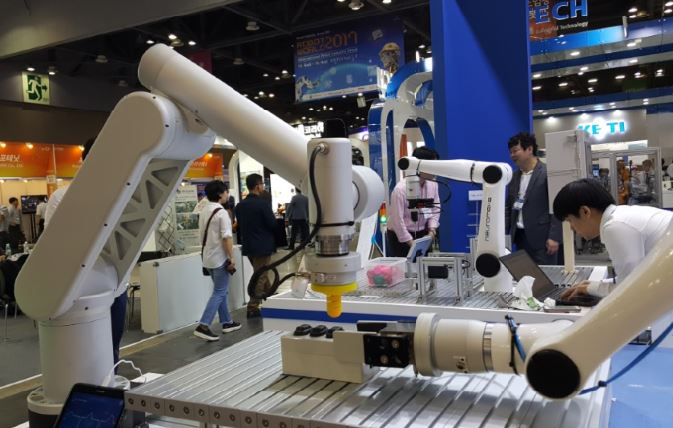
First, the manufacturing robot market is growing rapidly within the robotics sector. In Korea, as manufacturing is a key industry, robots hold a significant position in production and application. While the automotive industry robot market is substantial, the electrical and electronics industry robot market is growing rapidly. In particular, the market for assembly and collaborative robots is experiencing substantial growth. It is viewed as a niche market that is easier to enter than other robots.
A manufacturing robot company featured at the Robot World exhibition held on the 13th.
The Roadmap Task Force believes that automation is essential due to high domestic labor costs and has identified securing safety technology for manufacturing robots, assembly robot technology, and cost-effectiveness technology through the application of domestic robot components as key tasks. The plan is to proceed in stages, aiming to implement cable handling and jigless assembly technology for assembly robots using dual arms, similar to humans, within 15 years. For collaborative robots, the policy also includes securing muscle-type actuator-based technology capable of guaranteeing safety under any circumstances.
Among professional service robots, the most promising field is logistics robots. Logistics robots are used in factories for packaging, sorting, loading, and transporting goods through the convergence of IoT, autonomous driving, and artificial intelligence technologies. Currently, Korea is in the early stages of market formation, and its international competitiveness is weak when considering future market share. Therefore, we have focused on developing logistics robot technology for non-manufacturing environments, where market share is expected to grow in the future.
In logistics robots, the development of technology to recognize items of various types and characteristics and perform picking tasks is absolutely necessary. Accordingly, there is a plan to develop a gripping device capable of recognizing and gripping the type and location of items.
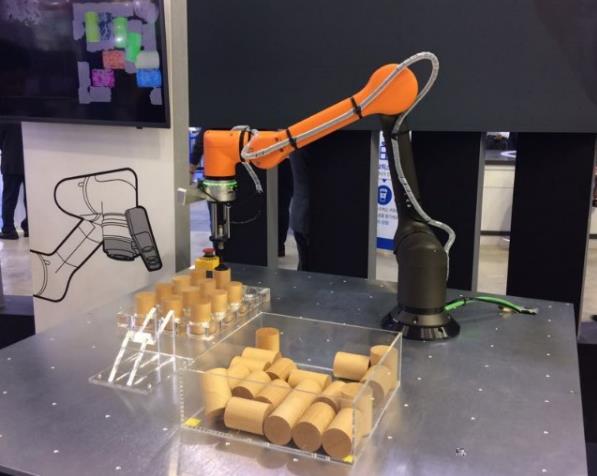
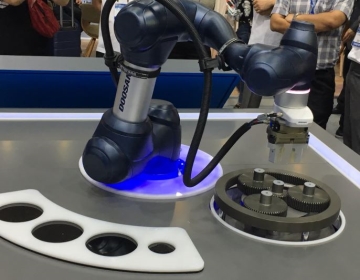
Hanwha Techwin's collaborative robot
The surgical robot market is projected to account for 60% of the total robot market. Currently, the global surgical robot market is exclusively dominated by the da Vinci robot. Due to the aging population, demand for surgical and rehabilitation robots is expected to continue. There is demand not only for the robots themselves but also for the surgical tools they use. In the development of surgical robot systems, Korea imports most components, such as precision parts, sensors, and actuators, from overseas. Accordingly, the plan is to enhance the core technological capabilities of the domestic parts industry and develop a surgical robot platform that integrates artificial intelligence and big data.
Safety robots are the field that best aligns with our country's national policies. Although the market size is not large, it has a high growth rate because it can be used for emergency rescue, disaster response, infrastructure maintenance, and security and surveillance.
It can be applied to social safety, national defense, and nuclear power, and foundational technological capabilities must be secured through the development of dedicated mobile robot platforms and components specialized for environmental resistance and work purposes in extreme environments. Due to the nature of the task, it is necessary to solve problems on-site through autonomous judgment; however, since this is difficult to achieve in the short term, we prioritized collaborative robots over fully autonomous robots.
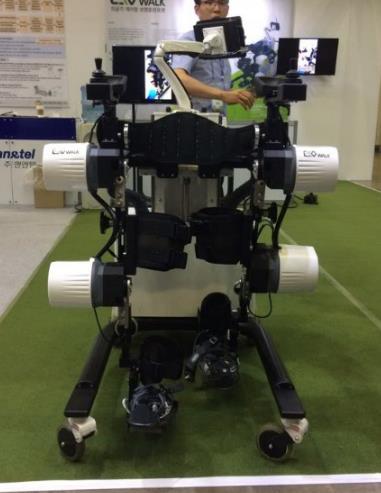
Man & Tell's rehabilitation robot
Personal service robots, which are non-commercial service robots used by individuals, are classified according to their purpose into household, healthcare, leisure support, and educational uses. While the domestic market is dominated by robotic vacuum cleaners and coding education robots, the commercial service robot market is expanding overseas.
Accordingly, there are plans to increase success stories for various products and begin developing carpet cleaning robots and lawn mowing robots capable of exporting overseas. Additionally, the company has set as a goal to secure social robot and software framework technologies by acquiring core technologies for speech recognition, synthesis, and conversation engines.
Robot components, such as sensors, actuators, and controllers, are core elements that determine the performance and reliability of finished robot products and are a crucial factor in determining their price and performance. While manufacturing robots have become lighter and more cost-effective due to component modularization, professional and personal service robots remain highly dependent on foreign components. Due to the difficulty in securing price competitiveness relative to performance, it is necessary to foster ecosystems between component and system companies, as well as between products and components. The goal is to develop domestically produced actuators and controllers that offer price competitiveness while delivering performance superior to foreign products.
Robot software is software that drives robots and automated machinery and supports maintenance; it is a technology that integrates artificial intelligence, cloud computing, big data, and other technologies. Domestic and international markets have not yet been 활성화 (activated/developed), and the current situation is that robot software is not recognized as an independent product.
Research on AI convergence for mobility and work intelligence applicable to non-structured work environments is underway worldwide, and it is necessary to secure source technologies in this area. The goal is to develop: △ robot OLP software based on digital virtual production, △ SW modularization and robot middleware AI framework technology, and △ an AI SW framework capable of collective learning and the transfer of learning results.
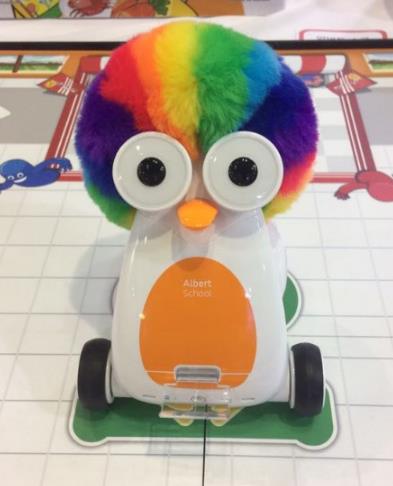
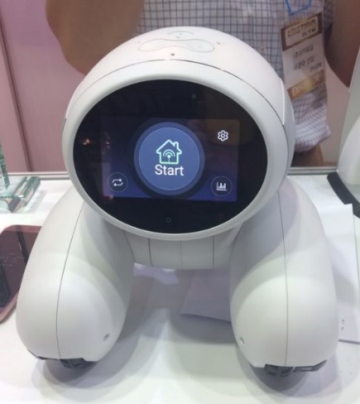
SKT's coding education robot 'Albert'
Finally, standardization is proceeding competitively, centered around developed countries. General standards regarding vocabulary and safety are being developed under the leadership of ISO, while IEC is developing standards for cleaning and lawn mowing robots, OMG for robot middleware, and ASTM for structural robots.
In Korea, there is an urgent need to secure technology related to verification and test methods for CE certification based on ISO 13482 for personal support robots and the safety standard for collaborative robots (ISO TS 15066), centered around the Korean Agency for Technology and Standards. Accordingly, the task has been set to establish standardization and preempt the standardization of robot performance evaluation.
The Roadmap Promotion Team stated, “We hope the Robot Industry Technology Roadmap will play a role in presenting future policy directions for technological development,” adding, “Sectors such as unmanned vehicles and drones will also be discussed and finalized in the future.” "In addition, issues regarding workforce development related to robots, as well as legal, ethical, and economic matters, also need to be discussed," he stated.
The robot industry technology roadmap is scheduled to be released for public viewing in September.
본 기사에 대한 정정·반론·추후보도 청구는 보도 청구 안내를, 그간 게재된 보도문은 정정·반론보도 모아보기를 참고해 주세요.