



[Discussion] Manufacturing at a Crossroads: Can It Survive Through Service Convergence
 Published2017.09.22 11:11
Must Transition to Service-Oriented Approach Through Customer Customization Strategy
"Manufacturing faces a situation where it must transform into a service industry"
As the middle class expands both domestically and globally, the capacity demanded of manufacturing is growing. However, as the workforce ages, it becomes difficult to pass down the expertise and knowledge they possess to the next generation. In this context, opinions are emerging that manufacturing must converge with services.
Professor Yong-Se Kim from Sungkyunkwan University stated, "As the technology gap between manufacturing companies narrows and product lifecycles become progressively shorter, there are limits to growth," and added, "The market is also shifting from technology-centric to human-centric focus, emphasizing consumer demands and needs. Manufacturing must also pursue customer customization strategies."
He introduced service models that can enable servitization in manufacturing, including Product Support Services (SSP) covering product functionality, distribution, parts replacement, and maintenance, as well as Customer Support Services (SSC) that enhance the experience value and capabilities of product customers.
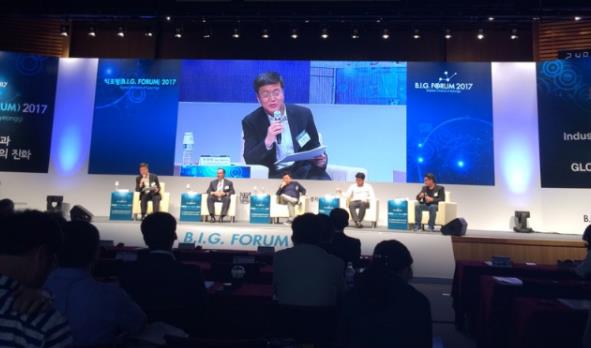
Seo Han-Seok, CEO of Jikto, which began as a wrist-worn wearable device company, stated, "I pondered the question of what value there is in merely obtaining step counts and heart rates from wearable devices," and explained, "We found a way to collect users' personal healthcare data and utilize it by connecting with card companies, insurance providers, and hospitals."
There are already examples overseas. American insurance companies collect information such as height, body mass index, and blood pressure to provide disease management support to customers or offer customized insurance services. CEO Seo advised, "Rather than simply manufacturing hardware devices, we must move toward providing services that users need."
Discussion continued regarding how government agencies, public institutions, and companies should approach converging services with manufacturing.
Professor Kim noted, "The concept is still emerging. For many companies to accept this concept, there must be success cases," and stated, "For success cases to emerge, government support is necessary. Companies must change their mindset to voluntarily shift manufacturing into a service-oriented approach."
Kang Hak-Joo, CEO of UlalaLab, remarked, "Start small with demos and prototypes. In Korea, there are no manufacturing factories that go directly from factory to B2C. The structure goes to B2B," and added, "Methodologies and frameworks suited to this structure must emerge. Results will come when government leads and the private sector cooperates together."
CEO Seo stated, "In pursuing B2C, what's common whether it's service development or device development is that it's different for each person," and advised, "Changing people through devices or services is extremely difficult. When trying to change something for someone, it must be more than 10 times easier to bring about change. Even if it's twice as easy, change won't happen. We need to approach this from the consumer's perspective."
Jo Bartholomeo, Vice President of Rockwell Automation for the Asia-Pacific region, explained, "Korean manufacturing industry has both expertise and creativity. We hope to reference many success cases," and stated, "By referencing existing cases, we must identify opportunities in manufacturing."
Related news
Manufacturing Smart Factories: "We Need to Consider Service Models Too"
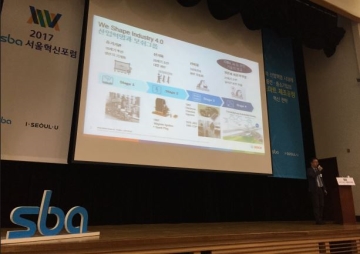
Seoul City and the Seoul Industrial Promotion Agency held the third SBA Seoul Innovation Forum on the 25th, with the theme of smart manufacturing process innovation strategies for small and medium-sized enterprises. Ha Hee-tak, Director of BOSCH Korea, explained manufacturing process innovation in machining and assembly utilizing data, using BOSCH as an example. BOSCH is realizing the fourth industrial revolution through three stages, and emphasized that the keywords are connectivity, transparency, and flexibility. He further stated, "If we start with small investments right away and apply practical smart solutions, we will be able to achieve the effect of 'improved productivity.'"
2017.07.26by 김자영 기자

If you were to define the smart factory keyword in one word, it would be ( ).
What keyword should be most emphasized for smart manufacturing processes in small and medium-sized enterprises? Experts from Bosch, SAP, Rockwell, the Institute for Advanced Engineering, and the Seoul Industrial Promotion Agency provided answers. It was the SBA Seoul Innovation Forum. Ha Hee-tack, Director at Bosch Korea: 'The Return of the King' Manufacturing, once positioned at the ultimate center, seemed to be overlooked for a time. Companies were busy relocating abroad. However, changes in the technology market are the turning point of the Fourth Industrial Revolution. Consider how to utilize the technology that has been disseminated. Factories will become capable of customized manufacturing, and the processes will become simpler and easier. This is an opportunity for manufacturing facilities to return to Korea. The approaches to take are endless.
2017.07.31by 김자영 기자
[Talking about Industrial IoT⑤] Siemens: "Domestic smart factories will increase investment after the transition period"
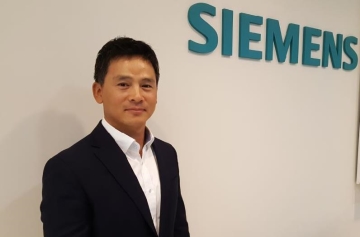
With Industry 4.0 gaining momentum, the Internet of Things and services began to be introduced into the manufacturing environment. In response, Siemens, traditionally a hardware-based manufacturing company, pursued mergers and acquisitions (M&A) to strengthen its software capabilities. Starting with the acquisition of UGS, a PLM (Product Lifecycle Management) company in 2007, Siemens has acquired 17 companies through 2016, including Mentor Graphics, an electronic design automation (EDA) firm. Equipped with not only hardware but also software for handling hardware, Siemens focused on improving productivity and efficiency rather than simply automating assembly lines in its smart factory approach. To learn about Siemens' smart factory strategy and solutions, we met with Park Yoo-soon, Director of the Smart Factory Task Force Team.
2017.09.18by 김지혜 기자
.jpg)
SalePoint Signs Multi-Year Partnership Agreement with AWS… Promoting Identity Security that Integrates Even AI Agents
Sailpoint has entered into a multi-year strategic partnership agreement with AWS and is moving forward with establishing an integrated governance system that manages both human and non-human identities together. The plan is to consistently manage access permissions in an environment where AI agents are increasing as work execution entities, while applying the principle of least privilege and automated policy enforcement. The two companies plan to jointly expand capabilities to manage the identities of various entities, including AI agents, within a single layer in the AWS environment. This collaboration is interpreted as a move to design security and governance together in corporate environments where AI adoption is expanding.
2026.03.26by 배종인 기자
.png)
Databricks Unveils Open AI Security Monitoring 'Lakewatch'
Databricks entered the security market on March 24 by unveiling LakeWatch, an open-source agentic SIEM. The core functionality of this product is to integrate and analyze security, IT, and business data in a single environment to support AI-based threat detection and investigation. The company explained that it reduces the limitations of existing security operations centers, which have had to forgo some data due to high cost structures, and enables large-scale data analysis and automation based on open formats and ecosystems. LakeWatch is currently offered as a private preview, with Adobe and Dropbox mentioned as early customers. Databricks also announced an expanded partnership with Anthropic as well as the acquisition of Antimatter and SiftD.ai.
2026.03.26by 배종인 기자











