


145 Autonomous Driving Startups Worldwide Choose NVIDIA Platform
 Published2017.09.27 18:03
NVIDIA announced at the keynote speech by CEO Jensen Huang at the NVIDIA GPU Technology Conference (GTC) held on the 26th in Beijing, China, that numerous startups developing autonomous driving vehicle solutions are using the NVIDIA AI platform.
Autonomous vehicles require artificial intelligence to explore driving scenarios that approach near-infinite possibilities. The NVIDIA AI platform provides solutions that span from cloud to vehicle. In data centers, deep neural networks are trained using the NVIDIA DGX system, while NVIDIA DRIVE PX is mounted in vehicles to implement real-time low-latency inference, enabling safe driving.
NVIDIA collaborates with world-leading automotive manufacturers such as Audi, Toyota, Mercedes-Benz, Volvo, and Tesla, while also working with startups that are creating new and significant autonomous driving solutions through innovation and originality.
CEO Jensen Huang stated, "The reason for the enormous investment being made in this field is simple," and added, "It is a field that has major societal impact, and the technologies necessary to achieve autonomy have been established, but because the problem is extremely complex, startup innovation can be sustained for a long time, and the industry itself is very expansive."
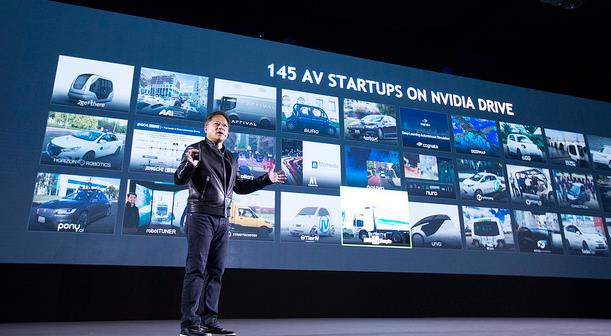
Currently, 145 startups centered in China are using the NVIDIA DRIVE platform. CEO Jensen Huang particularly emphasized six companies focusing on different autonomous driving sectors.
Cognata is a company specializing in deep learning autonomous simulation. Simulation is widely utilized in autonomous vehicle development. By constructing virtual worlds that move like the real world, they create a safe and flexible environment where artificial intelligence can learn. Additionally, such simulated environments can run continuously, allowing autonomous driving AI to train 24 hours a day, every day.
Another key technology for implementing autonomous vehicles is HD maps. DeepMap provides full-stack HD map services, and through DeepMap's products, autonomous vehicles can determine their current location and safely navigate complex traffic scenarios.
Momenta is a Chinese startup headquartered in Beijing that develops software for object perception, HD maps, and route planning. Having secured driving data through crowdsourcing, Momenta leverages millions of miles of real-world driving scenarios to train and refine its AI driving algorithms.
Zoox, one of Silicon Valley's most secretive companies, is working to completely recreate the entire mobility industry ecosystem. It is building an on-demand zero-emission shared mobility system, and in an interview with Fortune, when asked whether Zoox was developing a vehicle, founder and CEO Tim Kentley-Klay responded, "No. We are developing what comes after the automobile."
Companies like Navya and TuSimple are demonstrating that autonomy is not limited to vehicles alone. Navya is developing autonomous unmanned electric vehicles for transportation to destinations. The Navya Arma is an unmanned electric shuttle bus capable of transporting up to 15 people and is currently operating in several regions in Europe and the United States. TuSimple, also a member of the NVIDIA GPU Ventures program, is also thinking beyond automobiles and focusing on autonomous trucks. TuSimple is developing technology for autonomous long-distance freight transport and conducting test operations in the United States and China.
JingChi, a newly joined automotive company in the NVIDIA GPU Ventures program, proudly made the list of startups introduced in the keynote presentation. Founded this spring by Tony Han and Jing Wang, who led Baidu's autonomous driving business, JingChi is developing autonomous vehicles using NVIDIA GPUs and NVIDIA DRIVE PX 2.
Related news
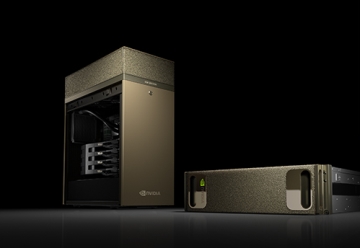
NVIDIA is applying AI to industries that use data analytics.
Nvidia announced a collaboration with GE Ventures' Avitas Systems. Through this partnership, the two companies plan to apply cutting-edge artificial intelligence computing technology to industrial equipment defect detection and inspection robots using advanced data analytics. Avitas Systems can designate specific points as inspection targets and can develop image and video data collection paths applicable to various robotics such as drones, crawler robots, and autonomous underwater vehicles (AUVs). These paths, driven by 3D modeling, are repeatable from the same angles and positions. Based on this repeatability, a wide range of diverse images captured over time are input into the Avitas Systems cloud-based platform, and advanced image analysis is performed to measure precise defects in industrial equipment such as cracks and corrosion based on the input images.
2017.09.08by 김지혜 기자
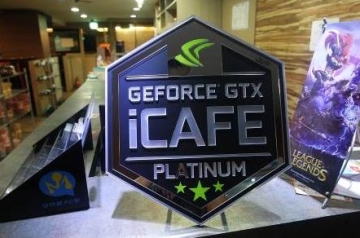
NVIDIA Officially Certified PC Cafe Equipped with 'GeForce GTX 1080 Ti' Opens
Nvidia announced that the world's first PC bang to upgrade all seats with 'GeForce GTX 1080 Ti' has been established in Korea. The facility that upgraded all 76 seats to become the world's first PC bang with GeForce GTX 1080 Ti installed in every seat is 'Eomji PC Bang,' located in Ilsan-donggu, Goyang-si, Gyeonggi-do. Despite already being a Platinum-level Nvidia-certified PC bang, Eomji PC Bang obtained the title of top-tier Platinum-certified PC bang through additional upgrades.
2017.09.13by 김자영 기자
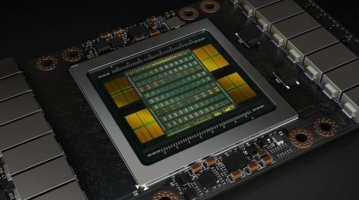
NVIDIA Volta GPUs are being adopted by Chinese cloud providers to bolster AI services.
NVIDIA announced that leading Chinese technology companies are adopting the new NVIDIA Volta GPU computing platform to accelerate artificial intelligence for various types of enterprise and consumer applications. At the GPU Technology Conference being held in Beijing, Jensen Huang, NVIDIA founder and CEO, revealed that Alibaba Cloud, Baidu, and Tencent are deploying NVIDIA Tesla® V100 GPU accelerators in their data center and cloud service infrastructure.
2017.09.26by 김자영 기자
.jpg)
SalePoint Signs Multi-Year Partnership Agreement with AWS… Promoting Identity Security that Integrates Even AI Agents
Sailpoint has entered into a multi-year strategic partnership agreement with AWS and is moving forward with establishing an integrated governance system that manages both human and non-human identities together. The plan is to consistently manage access permissions in an environment where AI agents are increasing as work execution entities, while applying the principle of least privilege and automated policy enforcement. The two companies plan to jointly expand capabilities to manage the identities of various entities, including AI agents, within a single layer in the AWS environment. This collaboration is interpreted as a move to design security and governance together in corporate environments where AI adoption is expanding.
2026.03.26by 배종인 기자
.png)
Databricks Unveils Open AI Security Monitoring 'Lakewatch'
Databricks entered the security market on March 24 by unveiling LakeWatch, an open-source agentic SIEM. The core functionality of this product is to integrate and analyze security, IT, and business data in a single environment to support AI-based threat detection and investigation. The company explained that it reduces the limitations of existing security operations centers, which have had to forgo some data due to high cost structures, and enables large-scale data analysis and automation based on open formats and ecosystems. LakeWatch is currently offered as a private preview, with Adobe and Dropbox mentioned as early customers. Databricks also announced an expanded partnership with Anthropic as well as the acquisition of Antimatter and SiftD.ai.
2026.03.26by 배종인 기자











