



Korea Has '2' Out of 100 Unicorn Companies: How to Grow the Domestic Software Industry
 Published2017.09.28 11:03
Discussion on strategies for entering the global market, including resolving labor shortages and securing references.
“Software is eating the world. Change will take place within five years. This is just like the current administration's term. The changes within this term will determine the next 30 years.”
There are 215 unicorn companies worldwide with a market value exceeding $1 billion (as of September 2017, according to CB Insights). Among the top 100 companies, the U.S. accounts for 51, China for 24, and Korea for 2. Although the domestic software industry has been sustained by government support, industry insider Kim Kyu-dong, CEO of JDF, states that "compared to international standards, the investment is less than that of a single company like Google."
In the U.S. and China, a culture has been established where established companies invest in and nurture startups and new unicorn companies. Software development itself constitutes R&D. It is not a one-time process. Customers pay a price and expect continuous maintenance. Consequently, from a company's perspective, 'management costs alone' amount to nearly 25%. In Korea, this figure ranges from a minimum of 8% to 15%.
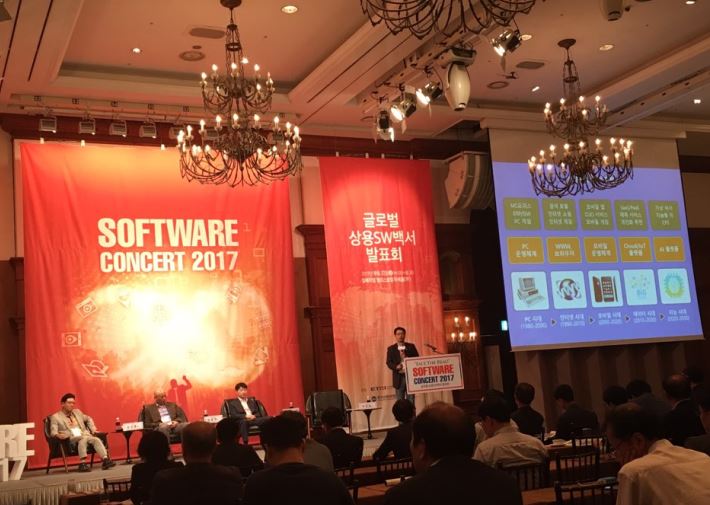
A gathering to discuss the future direction of the software industry among industry professionals was held at Software Concert 2017.
Lim Jong-hyuk, CEO of H2O Technology, stated, “Software is a value that breathes life into objects,” arguing that value enhancement is the key to success. It was pointed out that the foundation of quality lies in adherence to procedures, and that it is difficult to lead the market without standardization.
He said that while value and quality are issues that must be resolved through human action, the reality of software is that the most difficult problem is the shortage of 'people'.
Cha Young-il, Vice President of Metavuild, also agreed that the biggest obstacle in the software industry is the lack of skilled personnel. He emphasized that securing references in the domestic market is the most essential element for entering overseas markets.
Policy efforts are necessary to foster a healthy software ecosystem. In Korea, a powerhouse in IT infrastructure, if the government becomes a buyer, it can serve as a reference that resonates in global markets, including developing countries.
In addition, it was suggested that efforts for product standardization and localization should also continue.
Saltlux CEO Lee Kyung-il also acknowledged that talent is a challenge for the software industry. Noting that while the workforce output is increasing in the U.S., China, and India, it is decreasing in Korea, he stated, “Those who went abroad to study are not returning, and the average age, which used to be in their 20s, is rising to their 40s.”
He emphasized that intensive cooperation among industry, academia, and research institutes is ultimately necessary regarding methodology. He agreed that changes in the software industry would occur within five to seven years at the shortest. He predicted, “Successful companies will not be defined by how many licenses they sell, but rather by how much they have absorbed artificial intelligence, created diverse cultures, and successfully integrated them within the organization; this will be the measure of a company's performance.”
관련뉴스
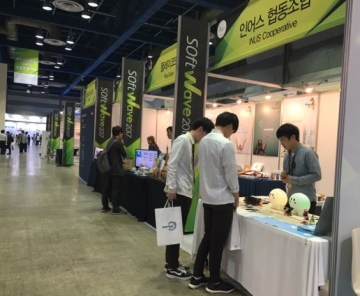
We must cultivate creative and imaginative "Pi-Plus" talent.
The 'SoftWave Summit 2017' hosted by the SoftWave Organizing Committee was held on the 15th at COEX. The summit, held together with the SoftWave 2017 exhibition, proceeded under the theme "The Fourth Industrial Revolution: Software Takes the Lead." Lee Jae-hong, Director of Venture Innovation Policy at the Ministry of SMEs and Startups, delivered a keynote address on South Korea's opportunities in the era of the fourth industrial revolution. "Until the third industrial revolution, IT was in a form of supporting people, but in the fourth industrial revolution, IT will take the leading role," he said, adding "Convergence is necessary as a future new growth engine."
2017.09.15by 김자영 기자
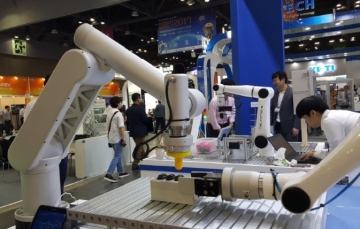
What is included in the next 15-year plan for robot technology, a future growth engine?
인공지능 기술이 화두가 되면서 로봇기술에도 새로운 변화의 바람이 불고 있다. 단순히 인간을 모방하여 자율적으로 동작하는 기계라는 정의가 무색할 정도로 사회 전반에 걸쳐 로봇의 영향력이 확대되고 있다. 이에 산업통상자원부와 산/학/연 전문가 80여 명이 올해 1월부터 6월까지 분야별 분과위원회 운영을 통해 ‘대한민국 로봇산업 기술로드맵’을 만들었다. 지난 6월 초안 검토와 향후 개선 방안을 논의하기 위한 공청회가 열렸다. 15일 일산 킨텍스에서 열린 ‘2017 로보월드’에서 완성된 ‘대한민국 로봇산업 기술로드맵’ 발표가 있었다. 로드맵에는 제조로봇, 전문서비스로봇, 개인서비스로봇, 로봇 부품, 소프트웨어 및 지능, 표준화 6개로 나누고 각 챕터별로 현황/시장/수요 및 전망과 도전과제와 주기별 목표과제를 담았다.
2017.09.18by 김지혜 기자
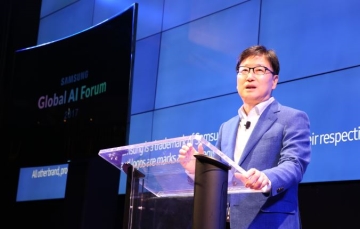
"인공지능 시대 철저한 준비가 삼성의 미래 좌우"
삼성전자가 22일(현지시각) 미국 뉴욕 삼성 837에서 인공지능(AI) 분야의 세계적인 석학들과 함께 인공지능 기술의 한계와 극복 방안을 모색하는 ‘삼성 글로벌 AI 포럼’을 개최했다. 이 포럼에는 삼성전자 윤부근 대표이사, 김창용 DMC연구소장, 한종희 VD사업부 개발팀장, 이근배 소프트웨어센터 AI팀장 등 관련 임원 30여명과 주빈 가라마니 교수(캠브리지대), 배리 스미스 교수(더블린대), 알렉산더 러시 교수(하버드대), 로브 퍼거스 교수(뉴욕대) 등 14개 대학 주요 석학 20여명을 포함하여 인공지능 전문가 100여명이 참여했다.
2017.09.25by 신윤오 기자
.jpg)
SalePoint Signs Multi-Year Partnership Agreement with AWS… Promoting Identity Security that Integrates Even AI Agents
Sailpoint has entered into a multi-year strategic partnership agreement with AWS and is moving forward with establishing an integrated governance system that manages both human and non-human identities together. The plan is to consistently manage access permissions in an environment where AI agents are increasing as work execution entities, while applying the principle of least privilege and automated policy enforcement. The two companies plan to jointly expand capabilities to manage the identities of various entities, including AI agents, within a single layer in the AWS environment. This collaboration is interpreted as a move to design security and governance together in corporate environments where AI adoption is expanding.
2026.03.26by 배종인 기자
.png)
Databricks Unveils Open AI Security Monitoring 'Lakewatch'
Databricks entered the security market on March 24 by unveiling LakeWatch, an open-source agentic SIEM. The core functionality of this product is to integrate and analyze security, IT, and business data in a single environment to support AI-based threat detection and investigation. The company explained that it reduces the limitations of existing security operations centers, which have had to forgo some data due to high cost structures, and enables large-scale data analysis and automation based on open formats and ecosystems. LakeWatch is currently offered as a private preview, with Adobe and Dropbox mentioned as early customers. Databricks also announced an expanded partnership with Anthropic as well as the acquisition of Antimatter and SiftD.ai.
2026.03.26by 배종인 기자











