



Implement machine learning with Zynq SoC demonstrating low latency
 Published2017.10.17 07:57
Zynq SoC demonstrates responsiveness with low latency
Machine learning technology, which remained stagnant over nearly 70 years starting from 1950, has significantly expanded in the past 2-3 years. It is now being used in diverse applications including translation, ADAS, autonomous vehicles, image classification, robotics, and hearing aids.
Machine learning is a field of artificial intelligence that predicts the future by analyzing vast big data such as the generation volume, cycle, and format of data. Through the combination of technologies such as deep learning, neural networks, and natural language processing, it is expected to converge into various fields including not only physical devices but also intelligent apps and mesh devices.
Different applications using machine learning have different requirements in cost, power consumption, performance, and efficiency. For example, ADAS requires high accuracy and low power consumption, while hearing aids prioritize power and latency, using smaller networks.
Xilinx enabled machine learning with Zynq All Programmable Logic to train neural networks using popular frameworks including Caffe. By configuring an ARM-based software scheduler, it generates a .prototxt file to drive a pre-optimized custom neural network (CNN) inference accelerator on the programmable logic.
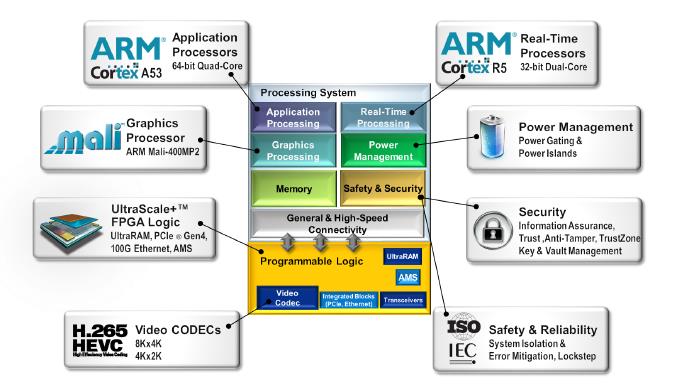
Xilinx launched the SDSoC development environment based on C, C++, and OpenCL languages to reduce design time and reduce dependency on hardware experts, but it still fell short of widespread adoption and deployment as well as addressing the complexity of machine learning. To supplement this, the reVISION stack includes various development resources for platform, algorithm, and application development. It also supports the most commonly used neural networks such as AlexNet, GoogLeNet, SqueezeNet, SSD, and FCN.
Zynq SoC can process algorithms intended to be implemented in parallel. From sensors to inference control, it demonstrates superior responsiveness with low latency. When compared in performance with embedded GPUs, it showed 6x better images/second/watt in machine learning. Additionally, it demonstrated 42x higher frames per second in computer vision processing. In real-time applications, latency is the most critical factor, and in this regard, it showed 1/5 level performance.
The advantage of this response time can be found in the fundamental architecture of Zynq SoC. Embedded GPUs frequently need to access external memory from sensors through vision, machine learning, and control processing. In contrast, Zynq SoC achieves consistent response time through dataflow batches implemented with programmable logic and significantly increased internal memory.
Jung Woong, DSP Specialist at Xilinx, stated, "When used in machine learning, GPUs are commonly used for training and Zynq has advantages in inference," and explained, "In training, FPGAs are used to accelerate some functions, while Zynq SoC is used for system implementation in embedded form at the edge. Since training itself is performed at the cloud level rather than the edge, FPGAs are used in large-scale systems and GPUs are used at the general PC level."
관련뉴스

"Complete Autonomous Vehicle Safety with Professional ADAS Testing"
자율주행차는 운전자와 탑승자, 보행자의 안전과 직결되 신뢰성이 강조되는 분야다. 최소 10만 키로 미터 이상을 주행해야 하지만 실제 주행은 어렵다. 첨단운전자 지원시스템(ADAS)에서 실제와 가장 유사하게 시뮬레이션 할 수 있는 HIL(Hardware-in-the-Loop) 테스트가 중요한 이유다. 특히 테슬라S의 사망 사고 이전까지는 레이더를 활용한 시뮬레이션이 이뤄지지 않았다. CAN통신을 활용해 브레이킹과 각 유닛이 제대로 작동하는 지 메시지 모사형으로 검사하는 오토파일러 기능이었다. 사고 이후, 실제 주행조건과 동일한 테스트가 이뤄져야 한다는 목소리가 높아진 것.
2017.09.12by 김자영 기자
On-site temperature sensor calibration: 'This one device handles it all'
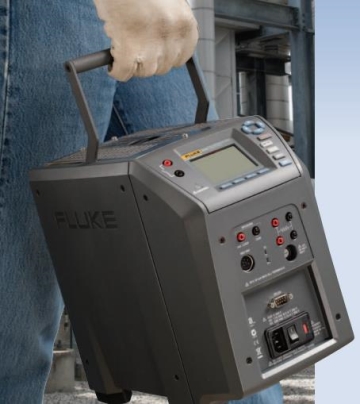
In field measurement of physical values such as temperature, pressure, and electrical conductivity, the most critical aspect of measuring instruments is the reliability of measured values. Measured values can vary depending on environmental changes, but they also vary depending on the condition of the measuring instrument. In measurement technology, calibration refers to placing a test unit and reference equipment that measures the same physical quantities under identical conditions and comparing their values with each other. If the test unit value deviates from the required accuracy, calibration of the unit itself is necessary. When calibrating temperature measuring instruments, dry well, liquid constant temperature bath, and electric furnace equipment are used. Among these, a dry well is a temperature generation device used to calibrate platinum temperature sensors. Without using liquid medium, it has the advantage of quickly implementing and maintaining desired temperatures by controlling solid heat conduction and air flow through heating and cooling. Its compact size makes it suitable for field use.
2017.09.21by 김지혜 기자
까다로운 트랜시버 테스트, 복합형 VST로 해결해요
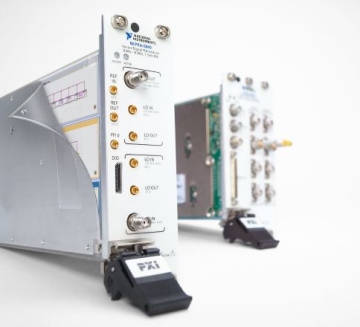
계측기로 신호를 측정할 때 고려해야 할 요인이 한둘이 아니다. 믹서(Mixer)와 리시버(Receiver), 앰플리파이어(Amplifier) 등 경력자라면 낮은 성능 계측기로도 레벨을 맞춰 척척 측정하겠지만, 쉽지 않은 일이다. 전문가들은 특히 주파수, 대역폭, 평균 노이즈 감도가 중요하다고 말한다. 또 다른 예로, 6GHz 또는 10GHz RF 신호를 측정하는데, ADC는 100MHz, 200MHz를 쓰기도 한다. ‘샘플링 값은 6GHz, 12GHz 이상인데 ADC는 왜 100MHz 밖에 안되지?’라는 의문이 들기도 한다. NI의 RF 시스템 엔지니어 고재일ㅇㅇ은 “계측기에서 주파수(Frequency)만큼 대역폭(Bandwidth)이 중요한 이유”라고 말한다.
2017.09.21by 김자영 기자
ST Microelectronics and NUS Establish Joint Research Center 'HELIX' for Edge AI
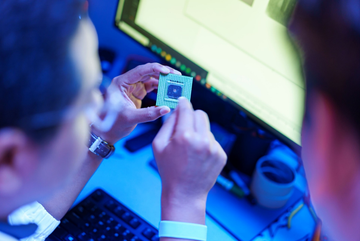
ST Microelectronics and the National University of Singapore have established the 'HELIX' joint research center aimed at implementing embedded AI in edge environments. Over a four-year period, the center will conduct research across the entire technology stack from algorithms to silicon, focusing on memory-centric architecture leveraging ST's 18nm FD-SOI technology and embedded PCM. The core objective is to implement intelligence directly in physical devices such as robots and drones while minimizing energy consumption.
2026.08.28by 배종인 기자

ams, 디지털 포토닉스로 휴머노이드 로봇 감각·소통 기능 지원
ams OSRAM이 디지털 포토닉스 기술을 활용해 휴머노이드 로봇의 감각·소통 기능을 강화하는 솔루션을 공개했다. dToF 센서, 광학식 힘 센서, 구조광 이미터 등으로 주변 환경 인식과 정밀 조작을 구현하며, EVIYOS·ALIYOS 플랫폼으로 LED 기반 비언어 소통을 지원한다. 시장조사에 따르면 휴머노이드 로봇 시장은 2025년 6억 달러에서 2035년 510억 달러로 성장할 전망이며, 로봇의 감각 능력 향상이 핵심 성장 동인으로 작용할 것으로 예상된다.
2026.08.27by 배종인 기자











