


Smart Home Made Intelligent with Cloud 'Connectivity', It's Easy to Do
 Published2017.10.20 12:14
When you visit electronics exhibitions and stores, you can encounter 'smart homes' filled with home appliances. From rice cookers to gas ranges, refrigerators, and TVs, most home appliances are equipped with IoT services. If users wish, the day is not far off when all home appliances in their homes can be furnished with products capable of IoT services.
At the center of such smart homes is an artificial intelligence speaker that acts as a 'hub'. The speaker listens to the user's commands, retrieves data from the cloud, and transmits commands to the corresponding device. This is because IoT devices have limited space to store data, and using the cloud is more efficient due to security concerns and other factors.
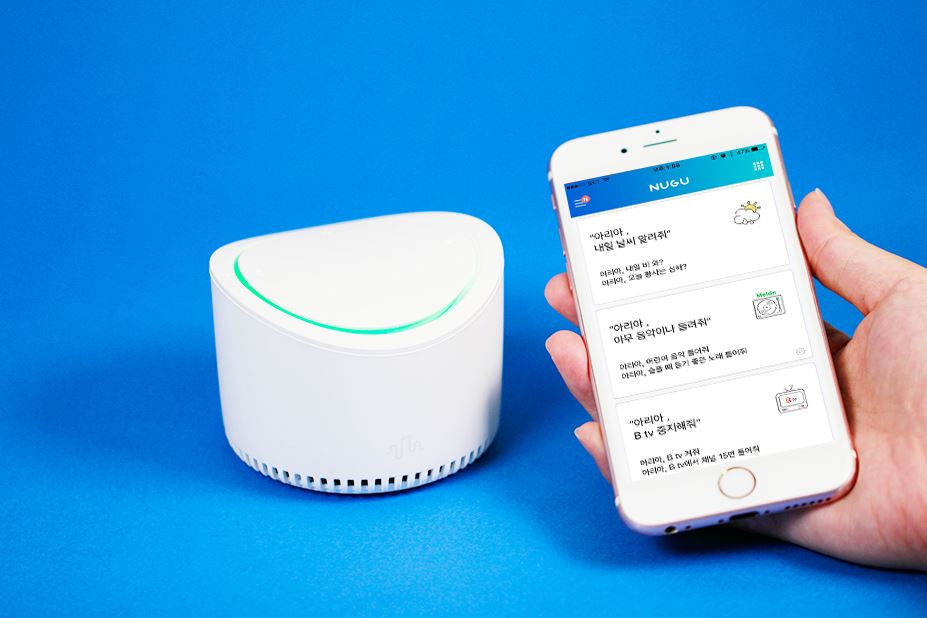
(Photo source: SKT INSIGHT)
As the number of devices that can be controlled through the hub increases, it means that the connection between hardware and software has become more active. Lee Hyun-myung, assistant manager in charge of IoT at STMicroelectronics, explained the relationship between IoT and AWS, stating that "as engineers, you must be deeply considering integrated solutions."
An IoT system consists of IoT nodes, IoT services in the cloud, and users utilizing those services.
The assistant manager said, "AWS plays the role of processing messages between nodes and users. AWS SDK adopts a method of bidirectional authentication between IoT nodes and servers. The gateway employs MQTT communication protocol, which is an ISO standard."
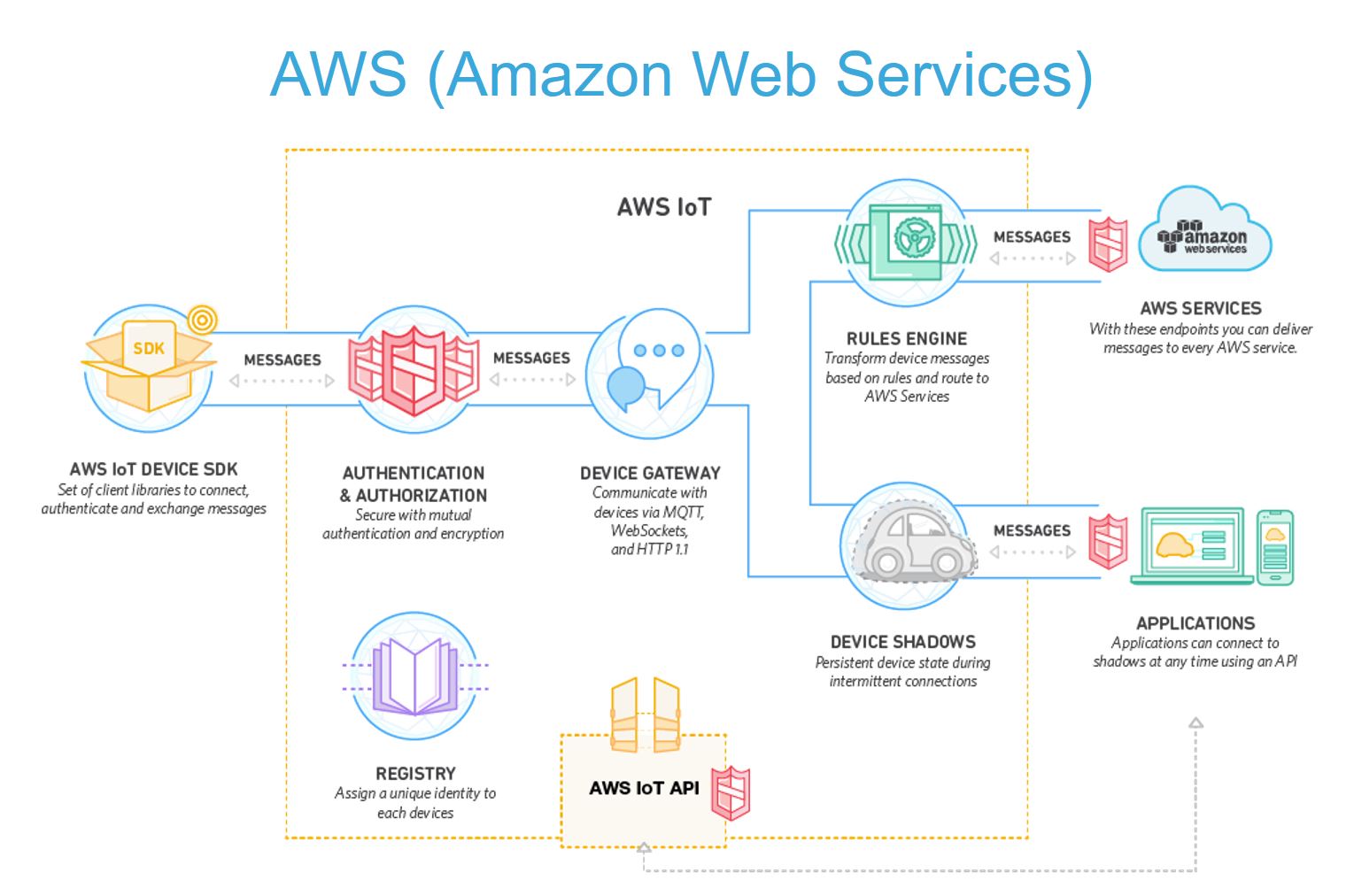
Meanwhile, the Rules Engine allows filtering only desired data to receive computing results. The Registry enables IoT APIs to register IoT nodes and distinguish their characteristics.
ST provides examples for Amazon Web Services (AWS) and Azure, offering a Discovery Kit that connects IoT nodes and users' devices as a service platform.
Key features of the STM32L4 IoT Discovery Kit (B-L475E-IOT01A) are: ▲Support for four low-power wireless standards including Wi-Fi, Bluetooth, Sub-GHz, and NFC ▲Support for six sensors including temperature/humidity, 3D gyroscope, accelerometer, barometer, 3-axis magnetometer, and 9-axis motion sensor.
The assistant manager stated, "We increased flexibility by integrating multiple low-power wireless standards and various sensors," and noted that support for other cloud service providers will be added in the future.
Comments
Related news
AWS: How Far Has It Come?
GE, a manufacturer with a 140-year tradition, referred to itself as a "startup." It meant that the company has entered an initial stage by adopting cloud technology. At the AWS Summit keynote speech held on the 19th, CEO Yeom Dong-hoon mentioned DevOps, a hybrid form of development and operations, and said, "Whereas previously it was about purchasing new versions, now we need to think about updates rather than purchases." Additionally, CEO Yeom stated, "Many companies have already finished deliberating and are implementing cloud solutions," and added, "Cloud is no longer something to deliberate about." According to his remarks, GE has migrated 9,000 enterprise workloads to AWS and plans to reduce 34 data centers to 4 within three years. Following AWS migration, current scores show 52% cost reduction compared to the previous baseline, 77% improvement in business application delivery speed, operational deployment cycle shortened from days to hours, and 240% improvement in customer and market responsiveness. Amazon's R&D process undergoes direct simulation within the company. This is how the data lake cloud storage S3 was formed. S3 provides diverse options covering Siemens, Honda, and GE, and can be converted according to convenience. Combined with Amazon's deep learning, it has programming and data algorithms as well as GPU functionality. Samsung SDS's cloud utilization case for SCM (Supply Chain Management) advancement Last year, the U.S. logistics trade publication Journal of Commerce featured a special article on Samsung SDS under the theme of "Companies driving growth in the logistics sector." At the center of Samsung SDS's logistics business is CELLO.
2017.04.24by 김자영 기자
ST Launches Intelligent Power Module to Accelerate Motor Drives
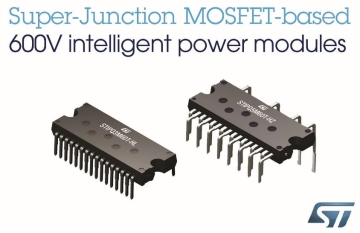
STMicroelectronics (ST) has launched additional package options for its new Intelligent Power Module (IPM) SLLIMM-nano, integrating components that accelerate motor drive development from low power to a maximum of 300W and simplify assembly. The 3A and 5A modules feature advanced 600V super-junction MOSFETs to maximize energy efficiency in equipment such as compressors, fans, and pumps. By selecting either inline or zig-zag lead-based packages, users can optimize and save space while ensuring proper pin isolation. An optional integrated slot enables easy mounting of cost-effective heat sinks. Additionally, open-emitter outputs facilitate PCB routing for single or 3-shunt current monitoring.
2017.09.18by 김지혜 기자
ST Selected as Technology Partner for E-Distribuzone's New Smart Meter Platform
ST Microelectronics Supports Open Meter Program with MCU and IC Supply ST Microelectronics announced that it is supporting E-Distribuzione's 'Open Meter' construction. E-Distribuzione is a subsidiary of Italy's Enel Group, which holds power supply service authority in Europe, and is designing and developing Open Meter, a second-generation smart metering platform. Open Meter can expand the advantages of the existing AMI (Advanced Metering Infrastructure) by introducing communication links within homes using the Meters and More protocol, an open standard. Through this, it can provide not only enhanced services such as smart home energy management and dynamic electricity rate optimization, but also more complete usage information for customers. ST supports E-Distribuzione's Open Meter program by supplying its latest PLC SoC (System-on-Chip) programmable platform as well as energy-efficient 32-bit application microcontrollers, high-efficiency power supply ICs, and discrete semiconductors for power control and switching. Through the excellent functional integration and performance of these devices, smart devices within homes can be easily connected to smart grids and the cloud, so even as consumer demands and environmental issues continue to intensify, resource management can be improved and a safe and robust infrastructure can be established. Domenico Arrigo, head of ST's Industrial and Power Conversion business unit, stated, "ST has supported Enel's innovative smart metering construction project since 2001 and has successfully implemented programs in Italy, Spain, Eastern Europe, and Latin America," and added, "ST is now supplying Enel with the latest state-of-the-art PLC and smart metering technologies to move forward to the next stage."
2017.09.28by 김지혜 기자
ST and Opgenius Launch Collaboration for High-Speed LoRa Network Connectivity to IoT Nodes
STMicroelectronics (hereinafter ST), a board member of the LoRa Alliance, and Objenious, a founding member of the LoRa Alliance and the first to supply LoRa networks throughout France, are collaborating to accelerate LoRa network access for IoT nodes. ST development kits that have completed Objenious network validation are currently being sold, and their use can significantly reduce the research and development effort and time-to-market required to create new LoRa devices. LoRaWAN is a Low Power Wide Area Network (LPWAN) based on LoRa technology, offering new possibilities in network configuration that enables interconnected devices to operate ideally in various IoT applications. LoRa technology is particularly suitable for nodes with limited power capacity, difficult accessibility, or those that do not require high bandwidth for data transmission. Therefore, it can target a wide range of applications such as tracking and proactive maintenance operations. According to industry analysis, tens of billions of connected devices will be deployed globally by 2020.
2017.10.19by 김지혜 기자
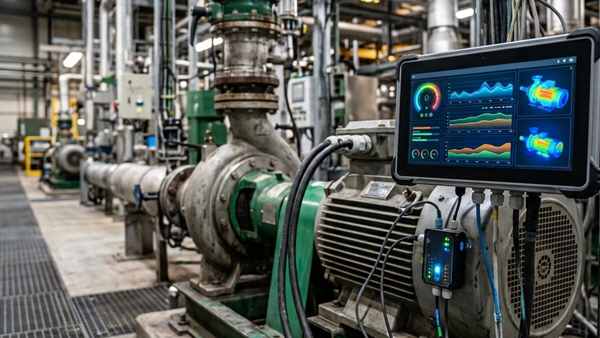
[Technical Contribution] Mouser: "AI Agents Help Accelerate and Standardize Industrial Field Maintenance Operations"
Abhishek Jadhav from Mouser Electronics discusses how to leverage agentic AI for predictive maintenance in industrial automation.
2026.10.23by 편집부











