


How to Get Started with Mixed Reality (MR)? 5 Things to Consider Before Adopting
 Published2017.10.24 10:29
How to Increase Efficiency, According to MR Content Creators
Virtual training and services utilizing VR and AR are being widely adopted. Last month, the Ministry of Science and ICT announced that it would expand the scope of content in the VR/AR demonstration field over the next two years through the Digital Content Flagship Project, which will end in 2018.
Broadly speaking, the medical, defense, and manufacturing sectors are the main focus, but convergence content used in other businesses is also attracting attention in the B2C market.
Recently, a cosmetics store set up a "VR experience zone" and screened video content. While this may have helped establish a nature-centric image, it's difficult to expect any real impact, as it's simply a "video experience." A VR industry insider reported, "The most frequently inquired areas are architecture and real estate."
This year, real estate apps Zigbang and Dabang partnered with Cupix, a startup that provides virtual space tours using VR, to allow users to explore virtual spaces. Users can view the lighting and view through windows without physically entering the home. It allows you to virtually set up your desired interior, satisfying both landlords and tenants, and also increases the efficiency of real estate operations.
When introducing VR/AR to a business, it's important to consider whether the company can expect profits, how much it will contribute to increased productivity, and whether it will help with entertainment and safety.
“Before implementing mixed reality (MR), it is important to experience it from the user’s perspective,” said Philippe Lewicki, CEO of AfterNow, a US company that produces MR content in collaboration with companies such as Marvel, Disney, and HTC.
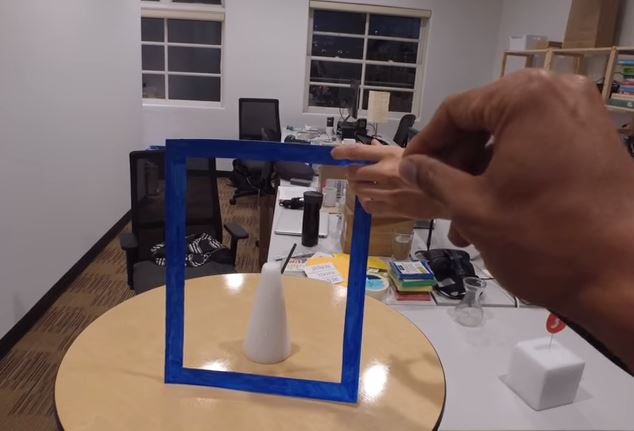
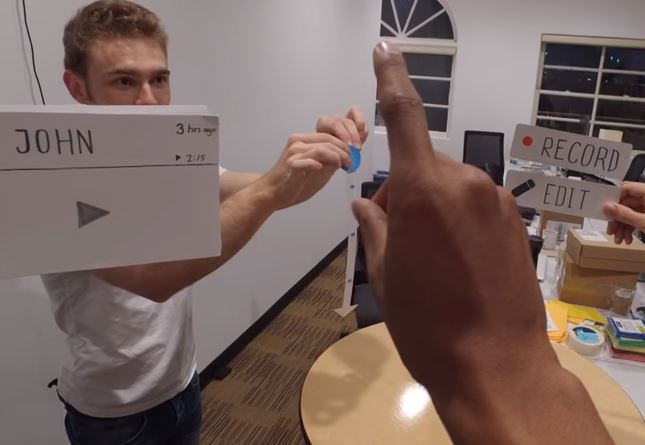
This involves testing when and how to create a user interface (UI) within a program that requires users to hold their gaze still or use a controller to click while wearing a VR or MR device (head-mounted display: HMD). Considerations must include the 3D world, UI, and interaction. The steps needed to introduce VR/MR, as he explains, are as follows:
First , find participants. Gather diverse people, including representatives and technical team members. Limited participants won't allow for diverse ideas. Start with a concept and gather ideas on how to implement it.
Second , we outline the reasons for implementing VR/MR and the challenges involved. We then hold a vote on the ideas and flesh out the method.
Third , this is the stage where we implement virtual reality. Without a basic understanding of virtual reality, we don't know what kind of effects we can achieve. Unlike designing for the internet or mobile environments, none of the participants have experience with mixed reality. We recreate the UI on paper and test it out. We consider things like what shape the buttons will be to move between real and virtual space. For example, in a museum, we might provide a curator role to guide visitors through the artwork. This stage involves discussing effective methods, such as which button to press to hear the explanation, and the appropriate size of the explanation window.
Four . Complex UIs utilize Google's 3D sketch tool, Tilt Brush. It allows you to quickly sketch out ideas, create holograms, and even create overlays.
five . By combining paper and VR, users can use the entire VR device and receive immediate feedback on their understanding.
CEO Philip said this process is necessary because "designers still use 2D and Photoshop, and implement 2D in a 3D environment."
관련뉴스
[Decisive IT Scene] Architectural Design with Mixed Reality (MR)
Trimble announced plans to introduce wearable holographic technology into the construction industry through collaboration with Microsoft. This enables construction professionals to take architectural models off-screen. It allows for efficient interpretation and interaction with spatial relationships between physical and digital information.
2017.03.27by 김자영 기자
[Discussion] "The Future: Coexistence of Mixed Reality and New Media, HMD Devices Must Be Actively Developed"
"The Fourth Industrial Revolution will take the form of a hybrid of mixed reality (MR) and new media" A discussion session on the Fourth Industrial Revolution and the coexistence of augmented reality and technology was held on the 23rd. The discussion was conducted with presentations and debates by Yoo Beom-jae, Principal Researcher at the Korea Institute of Science and Technology (KIST), and Yoon Shin-young, Editor-in-Chief of Science Donga. Principal Researcher Yoo explained new media as a coexistence space—an expanded space where immersive experiences are exchanged and human sensory responses are enabled. 'Reality-virtual-remote space' becomes one unified space. Users expand this space through avatars or smart devices, exchanging immersive experiences and human sensory interactions with others. His motivation for researching coexistence space is the same as the reason the smartphone market became established rapidly. As single-person households increase, the value of "alone yet together"—where people communicate through increasingly prevalent SNS—is driving a second smartphone market boom. Looking at Social VR announced by Facebook early this year, participants wearing Oculus HMDs play card games or sword fights in virtual spaces. On the 21st (Wednesday), Google announced 'XE23', an update supporting Bluetooth functionality three years after the launch of 'Google Glass'. This demonstrates that Facebook and Google are conducting research into coexistence reality.
2017.06.26by 김자영 기자
VR: A New Growth Engine: Finding Leaders
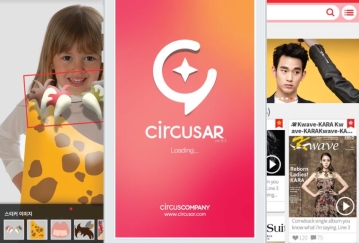
The Ministry of Science and ICT held the 'VR Award' ceremony on September 20th at Nuri Dream Square in Sangam, Seoul, to recognize individuals and teams that achieved outstanding results in the Grand Challenge initiative aimed at discovering content developers and companies to lead the virtual reality (VR) industry, a new growth engine of the Fourth Industrial Revolution. The Grand Challenge, now in its second year following last year's inaugural event, consisted of a student division and a general division. The EDPI-VR team's 'Body Adventure' won the Minister's Award in the student division, while the Circus Company team's 'Magic AR Box' won the Minister's Award in the general division. To enhance the completeness of submitted content, the Ministry of Science and ICT provided a three-month pre-development period. Multiple companies including Lotte World, 3D Factory, and Sconec participated as mentors, providing support for devices such as HMD (Head Mounted Display), infrastructure like servers, and technical coaching. Additionally, the ministry provided development space within Nuri Dream Square to ensure smooth development for the participants.
2017.09.21by 김지혜 기자
Why AR, Expected to Surpass the VR Market, Is Attracting Attention in Terms of Commercialization
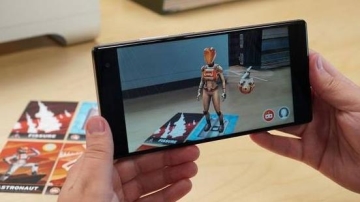
Among the technologies showcased in Apple's new iPhone X, released in its 10th anniversary, the standout technology is 'facial recognition'. This technology is implemented through the TrueDepth camera system, a 3D camera based on a 3D sensing module. There is another technology made possible by a 3D camera that measures depth. That is 'augmented reality (AR)'. In June, Apple unveiled 'ARKit', an augmented reality platform, at its developer conference 'WWDC 2017'. Subsequently, it announced that it was developing an app utilizing AR technology through collaboration with IKEA. The iPhone X is equipped with an OLED display and a 3D depth camera for AR implementation. Market research firm Counterpoint Research predicted that the AR market would reach 60 billion dollars by 2021 in next-generation technology competition, growing faster than VR. Why is AR garnering attention from a business perspective?
2017.10.11by 김지혜 기자
The Problem with AI is Not Performance, but Trust
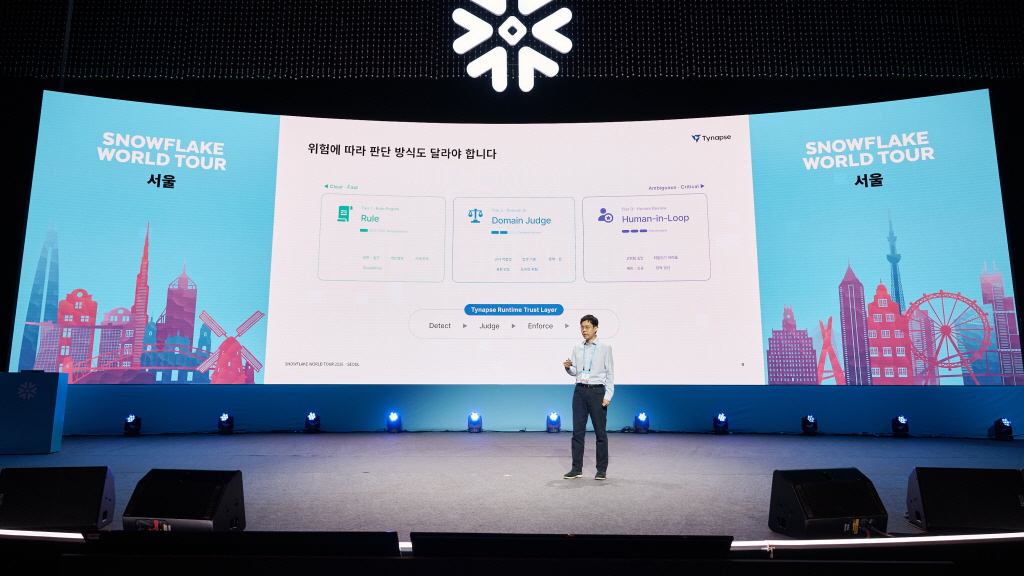
CEO Kang Min-seung emphasized at Snowflake's World Tour Seoul that generative AI has entered a phase where "trust" rather than accuracy becomes the key competitive advantage. As AI is applied to various tasks including consultation, risk management, and operational automation, incorrect data, erroneous responses, and bias are creating actual business risks. He pointed out that enterprises must build a trust layer above AI. To achieve this, accurate data management, semantic structuring, governance, and prompt security are essential. He explained that AI is not merely an automation tool but a technology that reorganizes the entire organization's workflows and decision-making systems. Snowflake provides a platform that supports this trust-based AI operation, emphasizing that enterprises should build "trustworthy AI" rather than "intelligent AI."
2026.08.28by 배종인 기자











